Unknown's avatar

Posts by Adron

See: http://compositecode.blog/about

Funny, The 2 Lanes Are Still There in the Plans, But Somebody Says They Aren’t… *Mynorthwest* Nonsense.

I’m re-publishing my comment here, that I recently posted on this hyperbolic piece about “Seattle sacrifices two lanes for…” which I’m unsure if they’ll post. It “seems polite” to me but doesn’t tow the line of thinking that the KIRO Radio comments usually tow.

“First off, totally inaccurate way to actually frame the situation. Two lanes aren’t disappearing. It’s not like they’re going to put housing or plant trees in two lanes and lot allow movement there.

Instead they’re using those lanes for things like streetcars, buses, and related vehicles that can actually move a LOT of Seattleites vs. a very few Seattleites. The project, the 170 mil isn’t exactly for the “streetcar” either if one looks at the actual cost breakouts. Most of it is actually for redesigning the street so it is more effectively used to move actual people, vs. have people move a few cars.

First, getting the details on modal options load capacity: https://www.thoughtco.com/passenger-capacity-of-transit-2798765

The streetcar would operate in this corridor most comparably like BRT or light rail. Easily reaching a load throughput capacity of 2000+ per hour. Being it will be mostly grade separated it could easily be used to achieve a capacity far in excess of 2000+ per hour and more around 3000-4000 and still be at half of peak capacity.

Meanwhile the throughput of the current lanes, even if configured with zero lights, zero parking, and zero stops couldn’t exceed 1200 per lane. At their current configuration it is unlikely they exceed even 600-800 per hour per lane. To note, there will still be a full lane that will be dedicated to single occupant motor vehicles like cars, which will still allow for closer to the theoretical range of 1200 per hour. With the two lane configuration as is, it’s unlikely it even reaches 1200 per hour with both lanes in use and limited to single occupant motor vehicles.

The new configuration will easily allow for about 800-1200 vehicles per hour (and possibly the respective ~1200 or so persons that will come along with those cars), with one lane, and also allow for 2000-4000 per hour with the streetcar and 2nd lane usage, street safety improvements, and related changes.

In the end, Seattle wins. Seattle gets higher throughput for the most people (much of Pike Place Market shoppers – to use as an example – are from ships; ferries, cruise ships, transit, and walking from areas within the city anyway, and few and fewer arrive by car while the number of total shoppers increases). Seattle will get more shoppers at Pike Place. Seattleites can enjoy a connection from the South Lake Union technology hub to the southern technology hub of companies in Pioneer Square. International District will now be connected to the central business district with a seamless ride, and the housing (30k+ persons) will be connected in Pioneer Square & Waterfront to Capital Hill & First Hill (Another 30k+).

With the numbers currently, that means about ~1500 people *might be* inconvenienced slightly – many of whom may not even be Seattleites, while over 60k Seattleites have a more convenient method of traveling throughout the downtown core of the city.

Also, to add. Even if this were BRT or some bus variant, to increase actual throughput (because buses and streetcars used to ply this street before) the street would need to be reconfigured to how it operated before, plus changes related to appropriate diversion and safety, would still require a huge lump some of cash near the streetcar cost. But it would come without the added benefit of pulling people to it, and thus to explore additional areas of the city, like a streetcar will. Over time the operational costs are also minimalistically different than buses using and providing the same throughput, without providing the same advantages.

I now digress, learn about it or ignore it and keep playing the oblivious hand… it’ll get built. Take advantage of it or keep complaining. The complainers won’t get any advantage out of the situation. In other news, I’ll see ya’ll out and about if you’re actually in the city. Cheers!”
Don’t Let the City Council Defund the Seattle Central City Connector!

I recently read x-council member’s public letter to the Seattle City Council about defunding the Central City Connector. My response is as follows. I hope you too will write and tell the council to NOT defund this connector. With this project completed the streetcar finally becomes a fully viable connector between disparate and often hard to travel to points within the city of Seattle. More information besides my letter below can be found here.

My letter:

Dear Seattle City Council,
I’m writing after hearing about and reading the alarming news about the possibility of the central city connector (streetcar extension to connect the two disparate lines) being defunded. As someone who just invested in becoming a full time and permanent Seattleite I do NOT want this defunded. This can and will be a frequent transportation connection that I used between Pioneer Square, South Lake Union, and Central City. Something that I and many other I work with in the startup community would use daily to connect with businesses in each of these areas.
I currently live in Ballard, and will be here for many years. I bike into the city everyday (I don’t pose more cost to our overburdened road network, it’s 17th street bike boulevard and then 15th street trail through the rail yards and into the city). With this being built it provides an easy, car-free way to deal with traveling between Amazon, Pike Place Market, Russell Investments Building, Pioneer Square, and even in some cases up to Capitol Hill. These are all places I do extensive business, and yes, there is *some* bus service, but this provides effective service through the area that is more convenient, more business friendly, and will work for our constituents where as current bus service does NOT work. Matter of fact, out of town visitors generally won’t use the bus service for a number of reasons.
So I ask you to please consider funding the central city connector fully and building this high quality piece of infrastructure that the city – and residents, new and old, will be able to make use of throughout the city.
Please write and tell the council they shouldn’t cancel the funding for this project. Email them at Council@seattle.gov!
More on US Streetcars in the future, but for now this one needs to be built!

Upcoming Sounder Sleuth Roundtrip to Lakewood

I’m planning a new transit trip, as I want to see what it’s like to take the Sounder from Seattle to Lakewood, and then back again. In the coming days, maybe as early as next week I’m going to ride this schedule and see how it works out.

  1. King County Metro Bus 15X departing from Ballard @ 7:00am from NW 70th & 15th to Seattle King Street Station.  ($2.50)
  2. Sound Transit Sounder Train #1505 departing from Seattle King Street Station @ 7:55am to Lakewood Station. ($6.00)
  3. Sound Transit Sounder Train #1518 departing from Lakewood @ 10:16am to Seattle King Street Station. ($6.00)
  4. Get to work, enjoy Seattle.

Ballard Light Rail!

…in 2035 LOL if that’ll even be useful for me or we even stave off mass destruction but HEY… let’s talk about this.

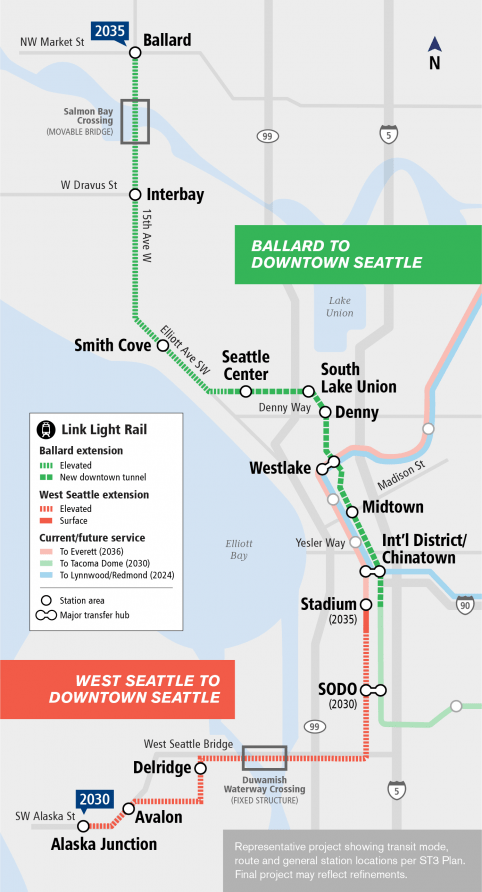
Light rail is coming to Ballard in 2035, so says Sound Transit. I read about it here, which you should too if you have any vested interest in Seattle, Ballard, or for that matter West Seattle! The build out, at least this initial idea, looks great. Here’s a simple little map of the plan (from the post I linked). Overall I’m super stoked for it to be done!

Sound-Transit-West-Seattle-Ballard-.pngWhich brings up another point, get registered and GO VOTE THIS UPCOMING ELECTION SEATTLE! You candidates are Cary Moon and Jenny Durkan. I’m going for Cary Moon, as she seems to have the most legit interest in this and the city. She’s also the only one of the two that wants to put forth a bond to push the scheduled start date for construction up by a gazillion decades. This would be huge, and would help and benefit us currently alive and breathing souls in a huge way.
The major points I see right off, which would add thousands and thousands of new LINK riders per day, would be South Lake Union to Westlake and Midtown. That connection alone would likely add more than most of the other connections, which will be great for overall ridership number. Throw that in with the added mobility to Alaska Junction, Ballard, and the respective commuter contingent that would happily opt for LINK over the Red Line Faux BRT routes! Anyway, I’m looking forward to it.

The other aside, as I ponder being 60 years old or some other older age when these routes are finished, is the increased bike-ability of the metro area. Right now, if I want to go anywhere outside of my current commute (Ballard to downtown Seattle) then things get treacherous really quick. Getting U-District and locations off of the Burke Gilman Trail are pretty easy, and very nice trips, but elsewhere; SODO, Alaska Junction, West Seattle anywhere, White Center, and elsewhere are a serious pain. They’re often fraught with dangerous intersections and areas where motorists are very unlikely to be paying attention or behaving and operating safely. This connections resolve and huge number of those points.

But I digress, not a lot to really say about it all until design and related efforts begin. I will be getting involved in those efforts, and hope to see more of my fellow Seattleites there. In the meantime, happy transiting.

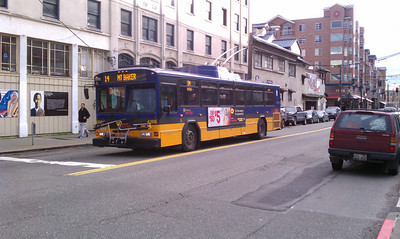
14 Mount Baker

Back to Ballard. Win!

In 2011 I lived in Ballard. I rode my bike into the city sometimes and other times I rode the bus. At the time the bus I took was the 18. Sometime over the years King County Metro took the 18 and the 75, killed those local routes and rolled them into route 40. There is still the 18x, which is a morning and evening rush hour express bus, and follows the path of what was the 18 route in 2011. Life working in circles, I am now located in Ballard again! Yay!

Honestly, I’m stoked. After the torture of Redmond I’m euphoric at having legit amenities, breakfast, lunch, brunch, dinner, drinking, and related joints, plus a plethora of serious coffee joints all within a short walk or bike ride away. Instead of just QFC and a Whole Foods, I’ve now got bike, transit, and walking access to… ok, I was about to start writing this list inline, but let me actually bullet list this sucker, because wow.

Redmond Options Within 6 kilometers:

  • QFC #1
  • QFC #2
  • Whole Foods

Ballard Options Within 6 kilometers:

  • QFC #1
  • QFC #2
  • Safeway
  • PCC
  • Whole Foods
  • An actual local butcher (Better Meat)
  • Ficherman’s Docks
  • Market 1
  • Market 2
  • Ballard Market

Needless to say, I like the options and unique characteristics of many of these places. It’s why I love cities and am bored to brainless apathy when trying to deal with the lack of legitimately unique suburban options. They simply just don’t exist. But I digress.

The Smoky Hellfire Furnace of Cascadia! AGGGGHHH!!!!

Being back in Ballard I’m now biking to work every day. However on 3 days out of the two weeks of living in Ballard so far, I’ve taken the bus to and from. Today was one of those three days, because of this smoky low quality nasty air. It’s rough outside, and combined with the high temperatures, it’s a recipe for ailments if you go tearing through the air soup of smoke. Today, to resolve the issue as best as one can, I rolled into downtown Seattle on route 40.

Now, I’ve ridden route 40 a number of times before. I’ve also ridden it a number of times over the years on trips up to the area. I have in the past tended to swing out the Ballard even when not living in the area. So let’s talk transit sleuthing on the 40.

Route Description

On the south end, the route starts just across the street from King Street Station. That makes it an extremely convenient bus route to connect with Amtrak or Sounder at King Street Station. The bus then heads north through the city on 3rd Street, which is basically Seattle’s bus mall style street, which then cuts over to Westlake and goes through the South Lake Union area where Amazon and such is located. From there, it follows Westlake along the western edge of Lake Union. Then it’s across the Fremont Bridge into Fremont, past “the center of the universe” and then along Leary Way into Ballard. In Ballard it cuts from Leary onto Market Street heading westward, then a right onto 24th to head north.

Now this is where the old 18 route basically was done but the 40 continues onward. The 40 then head north and eventually turns on a street heading northeast, then east, and then onward to Northgate. Basically part of what used to be route 75. I’ve not ridden the 40 past 24th & 65th at this point, and today’s commute takes me along the same route.

Progress, Move Ya Damned SOV Motorists

One of the grand changes for this route over the 18 route is the dedicated lanes and light priority in the South Lake Union area. This are has become highly notorious since before it got popular with what was referred to as the Mercer Mess. After Seattle spent a gazillion bucks to fix it, they’ve made it exponentially worse and it’s still the Mercer Mess. The other difference however, is there are about 50k employees of Amazon and other companies in the area every day and about another 20k residents that live in the neighborhood now. This makes for what could be a completely inoperable route path for the bus during rush hour. However Westlake through to Mercer has bus/transit priority lanes and at Mercer has a dedicated light that let’s the buses leap from traffic to get across Mercer. These two tweaks to this corridor literally increase the throughput for buses by a massive degree. It slows motorists somewhat, but they were stuck there being the problems that they are already. Adding a minute or two to their commutes to enable thousands upon thousands to actually get through on transit is a huge payout in time and money for Seattleites. In the end, an absolutely huge win!

That’s it for today’s observations. The 40 route, at this point is a usable and pretty heavily ridden route. I’ll have to do some sleuth work and see what the ridership numbers actually are on the various segments. I’d be curious what the overall activity is over the course of the day. Until next time, happy riding.