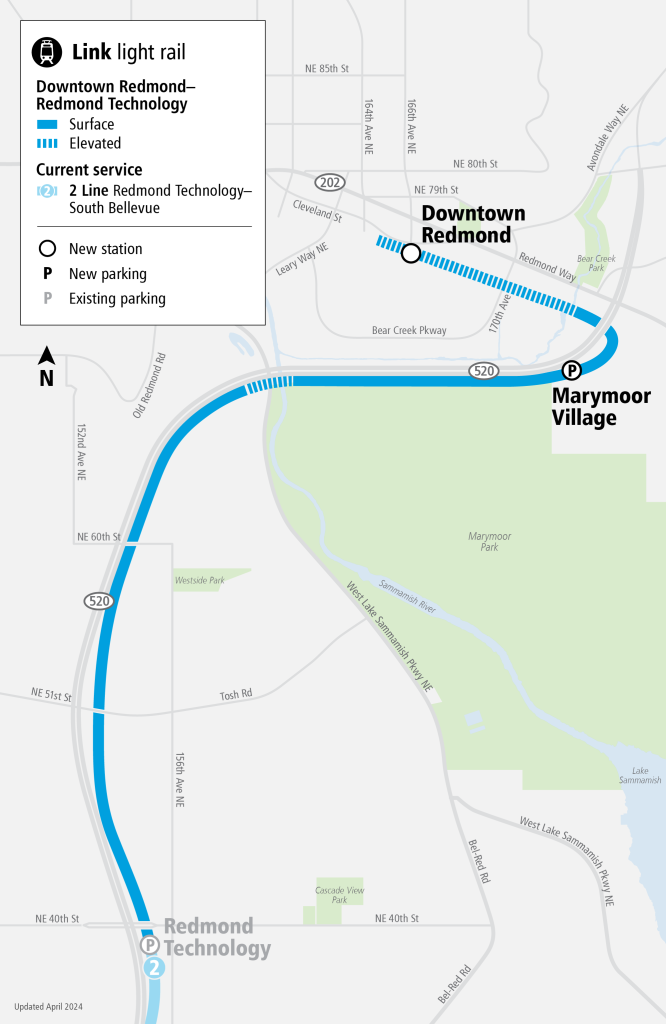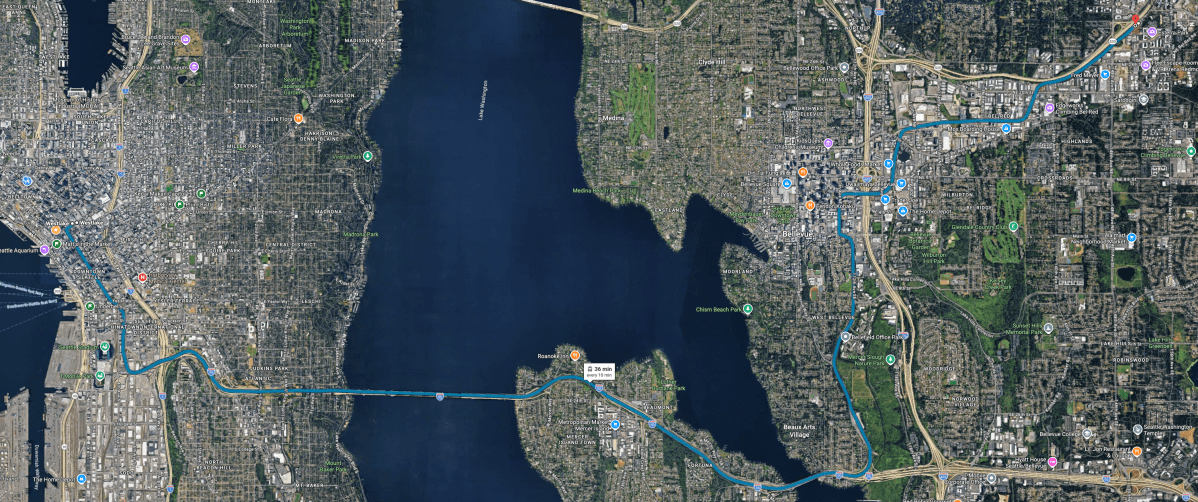
Link Line 2

The 2 Line across Lake Washington is finally real.

Not “rendering in a Sound Transit planning deck” real. Not “sometime after the next delay” real. Real as in: board a Link train, cross the I-90 floating bridge, get off on the other side, and go about the rest of your day without negotiating with traffic on 520, I-90, Bellevue Way, Mercer, or whatever other regional asphalt car sewer ritual the day was threatening.

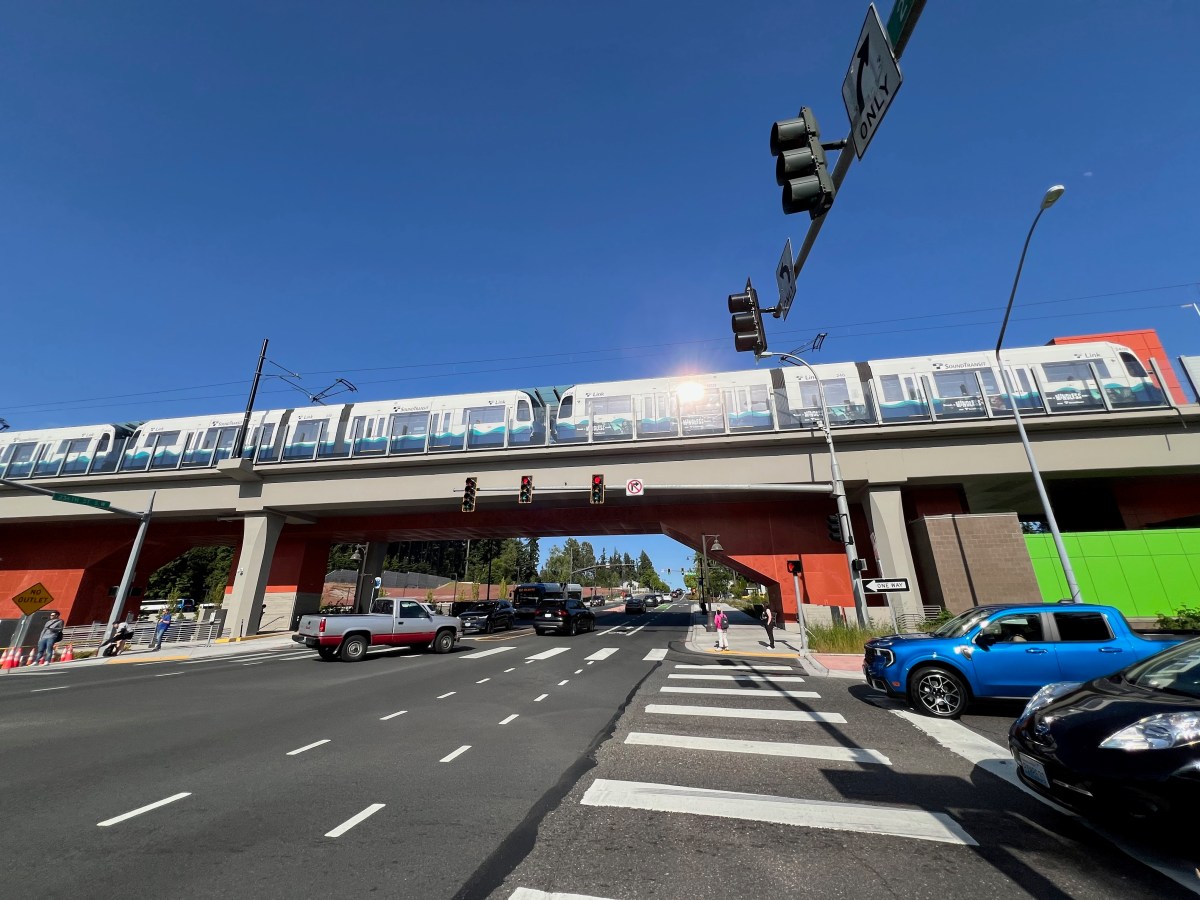
Sound Transit opened the Crosslake Connection on March 28, 2026, completing the 2 Line and connecting Redmond, Bellevue, Mercer Island, Judkins Park, downtown Seattle, and Lynnwood into one operating line. The agency notes that this brings the Link system to 63 miles and 50 stations.

That is a big system now. Not a theoretical one. Not a “starter line.” A real regional rail spine with two overlapping lines through the Seattle core.

And technically, the cross-lake segment is the interesting bit. This is light rail running across a floating bridge, in passenger service, over Lake Washington. That is not normal. That is not a thing most rail systems have to solve. It is the kind of civil and systems engineering problem that sounds like a dare.

The Alignment Is the Feature

The 2 Line’s new connection is just a handful of miles, but it changes the entire topology of the system and the key areas that the Link system connects is substantial. Bellevue for example is a city center and a surrounding population of about 150k people and then beyond that is Redmond, a city that has a population around 90k.

Before the cross-lake opening, the Eastside segment was useful but isolated. It was a nice rail line doing Eastside things, but operationally it was not yet part of the regional pattern most riders think about when they think “Link.” Once the I-90 segment opened, the line stopped being a segment and became a network connection.

The trip from Bellevue or Redmond to Seattle is now a rail trip, not a bus-to-traffic probability exercise. Mercer Island is no longer just a park-and-ride transfer geography. Judkins Park becomes a real rail access point for the Central District and I-90 corridor. International District/Chinatown becomes the key hinge where the 1 Line and 2 Line overlap and then split.

Sound Transit says peak service at the new stations runs about every eight minutes, with 10-15 minute service the rest of the day. Between Lynnwood City Center and International District/Chinatown, the 1 and 2 Lines interline for roughly 4-5 minute headways. That is the important operational detail. The cross-lake opening is not just a new branch. It adds frequency through the shared trunk.

The Floating Bridge Part Is Still Wild

The engineering problem here is not “put tracks on bridge, run train, enjoy lake views.”

Floating bridges move. They flex. They rise and fall. They respond to wind, water, traffic loading, temperature, and the general reality that Lake Washington is not a static CAD file. Rail, meanwhile, is not fond of sudden geometry changes. Steel wheels on steel rail want alignment, predictable tolerances, smooth transitions, and electrical systems that do not behave like someone built them during a team offsite.

That is why this segment took real systems integration work. Sound Transit spent 2025 moving from unpowered tow testing to powered testing, pre-revenue operations, simulated service, and then passenger service. That progression matters because rail openings are not just construction completion. They are operational proof. The train has to work as a vehicle, as part of the signaling system, as part of the power system, as part of the operator training regime, and as part of the daily schedule. Even when it seems simple – and that’s the aim – it really is much more complex than that!

Crossing the bridge feels smoother than the engineering challenge would suggest, which is exactly what good infrastructure should do. The public experience should be boring in the operational sense. The extraordinary part should disappear under the regularity of service.

The Vehicles: Familiar Link Hardware, New Operating Pattern

The vehicle fleet itself is familiar Link light rail equipment. Sound Transit’s Link fleet includes older Kinkisharyo Series 1 vehicles and newer Siemens Series 2 vehicles. When the first Series 2 cars entered passenger service, Sound Transit described them as Siemens-built vehicles joining the original Kinkisharyo fleet, with larger windows, more bike racks, wider center aisles, and updated passenger information systems. They are now part of the same general Link operating model: coupled light rail vehicles running as a trainset.

Each Link “car” is itself an articulated light rail vehicle with cabs at both ends, and trains are formed by coupling multiple vehicles together. Sound Transit documents from recent fleet and safety materials describe the Link fleet as a mix of Kinkisharyo Series 1 and Siemens Series 2 LRVs, designed to operate in multiple-car consists.

The train-length pattern is one of the more interesting operational differences right now.

The 1 Line has been associated with longer 4-car trains, especially through the busiest Seattle core and for major event loads. That makes sense. The 1 Line carries the airport spine, downtown Seattle, University of Washington, Northgate, Lynnwood, and now Federal Way. It has the mature demand profile and the big event surges.

The 2 Line across the lake is not running with that same constant 4-car feel. The operating pattern I have seen is more in the 2-car and 3-car range, which fits the current demand profile. This is a good example of Sound Transit matching capacity to actual load rather than simply maxing every platform slot because the system can theoretically support it.

That has tradeoffs.

Shorter trains mean lower operating capacity per trip, but they also mean the agency can keep frequency meaningful without hauling around excessive empty capacity all day. For a new cross-lake service still building travel habits, frequency is likely more important than maximum consist length at every hour. People need to trust that the train will be there often enough to stop checking the schedule like it is a ferry.

The 2 Line does not need to cosplay as peak-direction 1 Line event service all day. It needs to be reliable, frequent, legible, and comfortable enough that riders start changing default behavior.

Passenger Loads: Steady, Not Crushed (Thank Goodness!)

The passenger load is the part that feels most telling.

This is not an empty ceremonial train. People are using it. The ridership feels steady, real, and distributed across the line rather than concentrated only in one novelty segment. But it is also not packed in the way the 1 Line can get around stadium events, airport surges, or the UW-downtown crush.

That is not a failure. That is actually what you want to see early. It’s also something i’m really enjoying, considering I spent YEARS in Portland in crush capacity passenger counts on the MAX. That system is more expansive, but good God when it hits crush capacity and it is elbow to elbow only space – super annoying. That system had gotten to that points decades ago on the main trunk, and only after the pandemic wrecked ridership has it leveled back out some (albeit maybe leveled out too low). The Link trains on the other hand have leveled out at a pretty high ridership – but at 2, 3, and 4 car trains – hitting crush capacity is on the edges of some rush hours and game days, not every single day.

An overpacked new line is a capacity problem. An empty new line is a demand problem. A steady-but-not-crushed line is a habit-formation phase. Riders are testing it, commuting with it, using it for airport connections, cross-lake trips, downtown transfers, and the occasional “I just want to ride the new train across the bridge because obviously I do” (guilty as charged) trip.

The key metric will not be that opening-week enthusiasm, cuz it was packed then! It will be whether weekday usage settles into a durable pattern after the novelty fades and after bus restructures, employer commute patterns, university schedules, event traffic, and general regional behavior have had time to adapt.

Sound Transit has not yet published enough line-specific post-opening ridership detail to make grand claims about daily 2 Line volumes across the lake. So the honest read is observational: the trains are carrying people steadily, but the line has headroom. The system is not at crush capacity, and that gives the agency some operating flexibility while demand matures.

That is a good place to be for Seattle (and Bellevue, Redmond, and the other cities along the route!).

The Ride Quality and Passenger Experience

The ride itself is straightforward Link, which is mostly a positive.

Stations are legible. Transfers make sense if you already understand the Link pattern. The vehicles are familiar. The lake crossing is visually excellent without turning the trip into a tourist contraption. You are still on transit, not a theme ride, and that distinction matters.

The new stations at Mercer Island and Judkins Park are great practical additions. Mercer Island finally gets the rail station that has been argued about, designed, delayed, litigated in public discourse, and awaited for what feels like several geological eras. Judkins Park is the sleeper station in the set, because its value will grow as the surrounding bus, pedestrian, bike, and neighborhood access patterns mature.

The operational merge at International District/Chinatown is the piece to watch. Shared trunk frequency is useful, but reliability depends on maintaining schedule discipline where the two lines overlap. The more the system expands, the more Sound Transit has to behave like a mature rail operator rather than a project-delivery agency that happens to run trains.

What Works

The big win is obvious: the geography finally makes sense.

For decades, the region has had economic integration without transportation integration. Seattle, Bellevue, Redmond, the airport, the university district, and the northern and southern suburbs operate as one labor and cultural market, but the transportation network has forced too much of that movement through car traffic and highway buses.

The completed 2 Line changes that.

It does not solve every commute. It does not make Eastside land use magically dense. It does not eliminate the need for buses, bikes, sidewalks, park-and-rides, or better local connections. But it creates a rail option where one very obviously should have existed a long time ago.

The other win is the combined frequency through the core. More trains between Lynnwood and International District/Chinatown is not glamorous, but it is the practical improvement riders feel immediately. When a train is coming every few minutes, transit stops being an appointment and starts being infrastructure.

What I Would Watch

The first thing I would watch is reliability across the bridge and merge points. This is a technically unusual segment. It needs boring reliability over seasons, storms, heat, maintenance cycles, and peak service.

The second thing is train length. If 2-car and 3-car consists stay comfortable, great. If demand builds faster than expected, Sound Transit will need to add capacity without undermining reliability or starving the 1 Line fleet plan. The fleet has to serve the whole system, not just one photogenic crossing.

The third thing is bus integration. Rail lines do not reach their full value unless the local bus network feeds them well. The 2 Line can be excellent and still underperform if the last-mile and transfer patterns are clumsy.

The fourth thing is downtown transfer clarity. As the system adds lines and branches, passenger information has to get better. Occasional riders should not need a transit hobbyist friend to explain which train goes where or why things unfold during a routine trip in a certain way.

The Bottom Line

The Link crossing over Lake Washington is one of the more technically interesting transit openings in the United States, and it mostly behaves exactly how it should: like normal transit.

The infrastructure is unusual. The ride is ordinary. The trains show up. People board. The lake slides by. Bellevue, Mercer Island, Judkins Park, downtown Seattle, and Lynnwood become part of a single rail trip.

The 2-car and 3-car trains feel appropriate for current demand, especially while the line builds its regular ridership base. The 1 Line still carries the heavier 4-car identity through the busiest trunk and event-heavy portions of the system. The passenger counts, at least from observed loads so far, feel steady but not overloaded.

That gives the 2 Line room to mature.

And that is the real story. This is not just a new ride. It is the moment the regional rail map starts behaving like a regional rail map.

It’s about damn time too. Seattle has only been waiting for about 80 years to have rail service to the east side again. (IYKYK)
Crazy Pho Cajun: A Fusion Stop Near the Federal Way Station

I rode the Link 1 Line down to Federal Way the other day. That’s what you do when new stations open, right? You check them out. You see what’s around them. You figure out if they’re actually useful. Or you determine if they are just in the middle of nowhere. Maybe they are in the middle of ticky tacky boring and uninspired suburban roads and sprawl. But at least you’ll know then to avoid any trips to those places! 🤣

Turns out, there’s actually something worth stopping for near the Federal Way Downtown station. It’s Crazy Pho Cajun. This place does exactly what the name suggests—mixes Vietnamese pho with Cajun food. It’s a weird combination, but sometimes weird combinations work.

The restaurant is right near the new light rail stop. This location makes it convenient if you’re coming from Seattle or anywhere else on the Link line. Let’s be honest. That’s part of the point of building transit. It gives people access to places they wouldn’t normally visit. This includes restaurants that blend two cuisines that don’t normally go together.

The Menu: Vietnamese Meets Louisiana

The menu is exactly what you’d expect from a place called Crazy Pho Cajun. You’ve got your traditional pho options. Then you’ve also got Cajun dishes like gumbo, red beans and rice, and etouffee. Then there’s the fusion stuff. One example is Cajun Crawfish Pho, which combines pho with crawfish tail meat. It also includes shrimp and andouille sausage. You can pick your spice level, which is nice if you’re not trying to burn your face off.

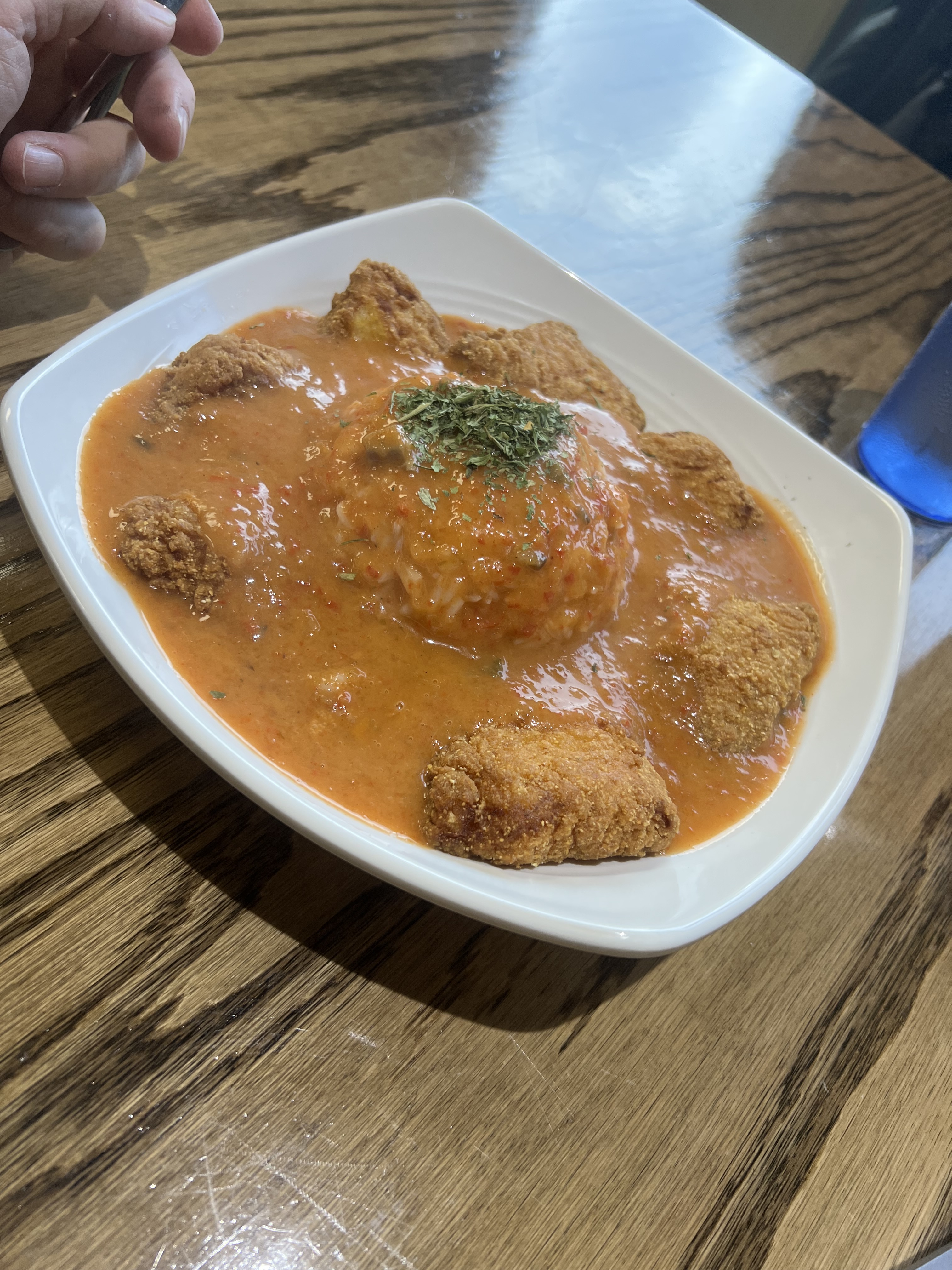
But here’s what I went for: the smothered catfish.

The Smothered Catfish

The smothered catfish is Cajun-battered fried catfish covered in a rich cream of etouffee, served over rice. It’s $11.95, which is reasonable for what you get. The catfish is crispy on the outside, tender on the inside—exactly how fried catfish should be. The etouffee sauce is creamy and flavorful, and it works with the fish in a way that makes sense.

Is it authentic Cajun? Probably not entirely. Is it authentic Vietnamese? Definitely not. But it’s good, and in the end that’s what matters. The fusion works because both cuisines have bold flavors, and they complement each other instead of fighting.

Why This Matters

Here’s the thing: Crazy Pho Cajun is exactly the kind of place that benefits from having a light rail station nearby. It’s a local restaurant that’s now accessible to people from all over the region. You can ride the train down from Seattle, grab lunch, and ride back. Transit-oriented development aims to connect people to places. It is not just about moving them from point A to point B.

The restaurant is casual, the staff is friendly, and the food is solid. It’s not fine dining, but it doesn’t need to be. It’s a good meal near a transit stop, and that’s valuable.

If you’re riding the Link 1 Line down to Federal Way, Crazy Pho Cajun is worth a stop. If you’re already in Federal Way and want to try something different, it’s a great choice. The smothered catfish is good, the fusion concept works, and it’s right there by the station. Sometimes the best discoveries are the ones you make because transit made them accessible.

For more details on their menu and offerings, check out their menu online.

Mountlake Terrace, Pizza, and Art

I reached Mountlake Terrace yesterday. It was after a short ride down the Interuban Trail from Lynnwood Transit Center. Upon arriving, and more on the route in a moment cuz it’s worth its own write up, I made a right turn away from the Link station. My intent to roll downhill to the Zeeks Pizza and grab dinner.

As I rolled downhill the utter chaos of dystopian incompetence in parking was on full display. Full suburban entitlement was evident. Car after car, among the majority parked correctly, was pulled into the PBL (Protected Bike Lane). Some were parked halfway in the road, blocking the road and bike lane, all while beside an actual parking spot. A New Yorker would be enraged at the absurdity of parking beside a empty spot filled by a ghost, maybe?! But all that nonsensical disrespectful motorist shit aside, it was a quick roll down from the station and up on to the sidewalk to park.

There was a solid staple rack right out front of the Zeeks, so I saddled right up to that. I then perused the other establishments on the street here. There’s a coffee shop that looks like it’d be legit, but closes at 3:00pm and it’s 5:30 now. There is also a beer brew joint of some sort. All of it looked like legit quality joints! Not entirely what I’d expect this far out into the suburbs, but after the ride (again more on that in a moment), this Mountlake area is one of the more quality areas in the overall metro area! It’s really nice out here!

Anyway, I strolled my happy ass into the pizza joint. One of the staff (or proprietor, I don’t know) she offered I sit anywhere. I went ahead and took a seat on a two top. She came over, and provided menus and offered some beer options upon my curiosity. We discussed beer for a minute, Pfriem specifically because holy hell are they amazing, and then delved into our children and their recent chaos! No idea how we got there but it was a great multi-minute conversation. As the waitress came up and popped around the corner, the trio of us relayed by beer option and then the waitress and I discussed the varietal of pizza options I had before me.

Zeeks

I will admit, she struck me a bit off kilter because she had enthralling dermal facial and septum piercings of a uniqueness – a very artistic uniqueness – I’d not seen. With necklace, jewelry, and other accoutrement, she had an air about her that was very bespoke. Humans in Seattle are not cookie-cutter. Standing out as unique is rare and a significant compliment for me to ponder, let alone verbally offer someone.

I ordered my pizza and chatted with the team there a bit more. I had a pilsner – ok two because the Italian Pilsner was tops. Then I wrapped up. When I paid, I verbally complimented the waitress on her artisanal bespoke style. She genuinely appreciated my word soup compliment. We discussed the idea of one’s self being presented as a human art. In all seriousness, it’s a topic unto itself, but for those that know y’all know. Hat tipped to you all!

I then left. I had a good phone chat with my kiddo. After that, I mounted my steed to claim and uphill to the Mountlake Terrace Link Station. However I did deviate again and cut right. With a slight bit more hill climb, I rolled past. I gave a good look to the claimed “center” of Mountlake Terrace. I also eyed Hemlock State Brewing. Another trip will include that brewery!

With that I made a u-turn mid-suburb and got another hill drop down to the station. Rode the elevator up and the next Link rolled in within minutes. Boarded, and off I went wrapping up this very blog entry. Until next time, enjoy your transit trips, bike rides, and adventures! Slava Ukraini, may fascism fall on its face, and may your quality of life improve endlessly!

Sound Transit Double Tall

Seattle Explorations & A Guide to Double Talls

First a bit about double tall busses. Then a bit about my trip out to Lynnwood to finally, after years of wanting to ride a double tall, doing so!

Double tall buses, also known as double-decker buses, have become an iconic part of Seattle’s public transportation landscape. These impressive vehicles offer increased passenger capacity while maintaining a smaller footprint on the road, making them an efficient solution for high-capacity routes.

The Alexander Dennis Connection

The majority of double-decker buses in the Seattle area are manufactured by Alexander Dennis Limited (ADL), a British bus manufacturer with a strong presence in North America. The company’s Enviro500 model has become the standard for double-decker operations in the region.

Sound Transit’s Fleet

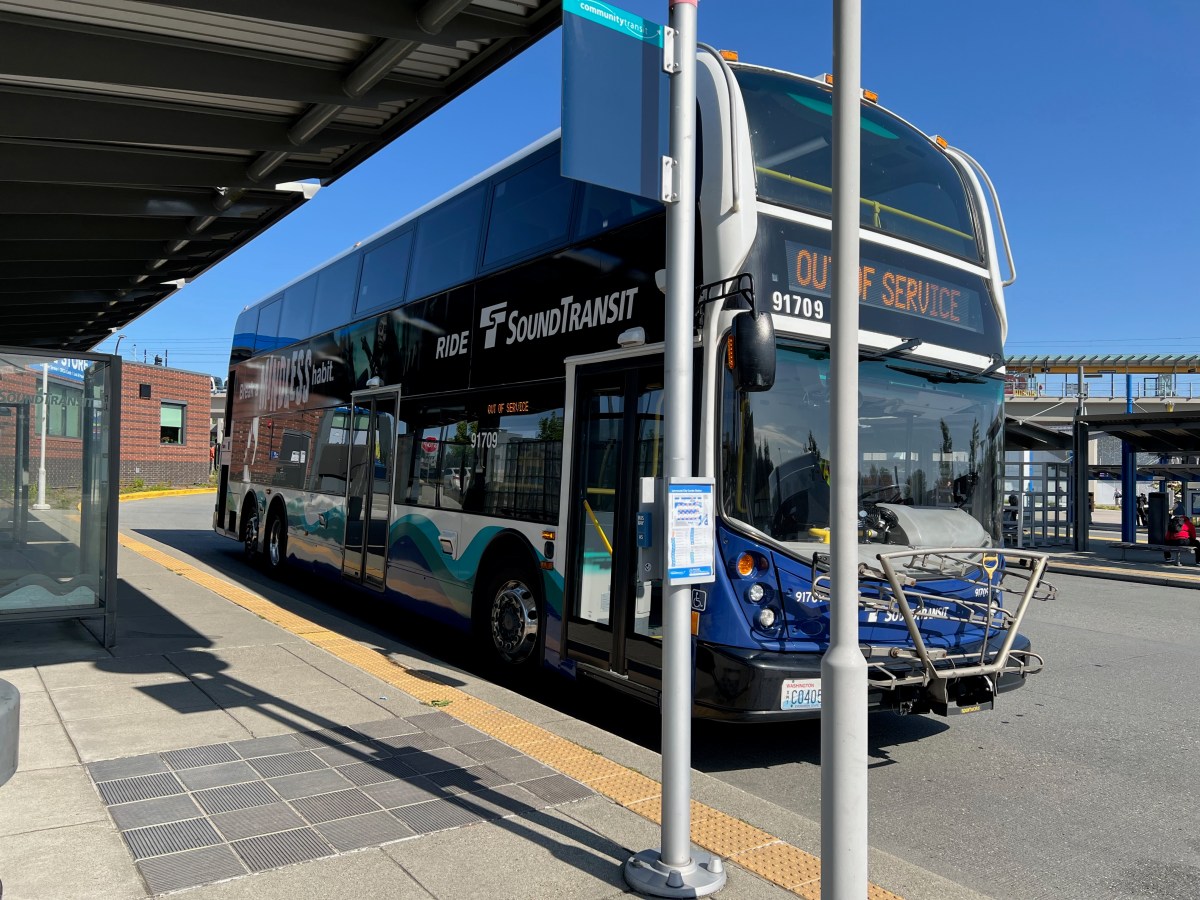
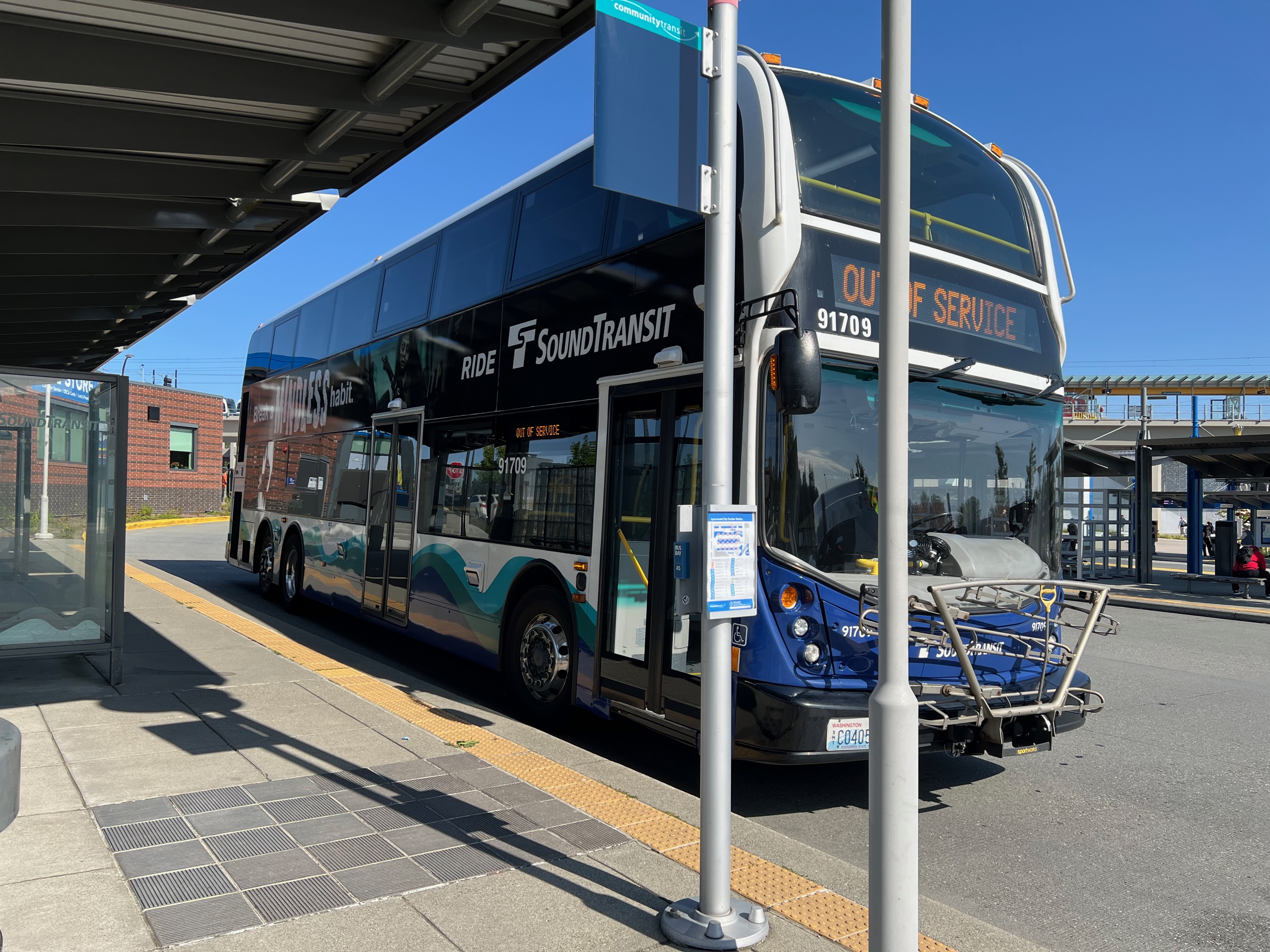
Sound Transit operates a fleet of Alexander Dennis Enviro500 buses, specifically the MMC (Multi-Modal Coach) variant. These buses feature:

  • Length: 45 feet
  • Height: 14 feet
  • Capacity: 81 passengers (57 seated, 24 standing)
  • Engine: Cummins ISL9
  • Transmission: Allison B500R
  • Air conditioning and heating systems
  • Low-floor design for improved accessibility
  • USB charging ports and WiFi

The Enviro500 MMC is known for its modern design, fuel efficiency, and passenger comfort. Sound Transit primarily uses these buses on their ST Express routes, particularly on high-demand corridors like the 510/511/512 routes between Seattle and Everett.

Other Operators

While Sound Transit is the primary operator of double-decker buses in the region, other transit agencies have also incorporated them into their fleets:

  • Community Transit: Operates Enviro500 buses on their Swift Bus Rapid Transit lines
  • King County Metro: Has tested double-decker buses on certain routes

Technical Specifications

The Alexander Dennis Enviro500 MMC features several advanced technologies:

  • LED lighting throughout
  • Electronic destination signs
  • GPS tracking and real-time passenger information
  • Advanced driver assistance systems
  • Euro 6 compliant engines
  • Composite body construction for reduced weight

Impact on Seattle Transit

The introduction of double-decker buses has significantly improved capacity on key routes, particularly during peak hours. Their ability to carry more passengers while taking up the same road space as a standard bus has made them an efficient solution for Seattle’s growing transit needs.

Taking a Ride to Lynnwood

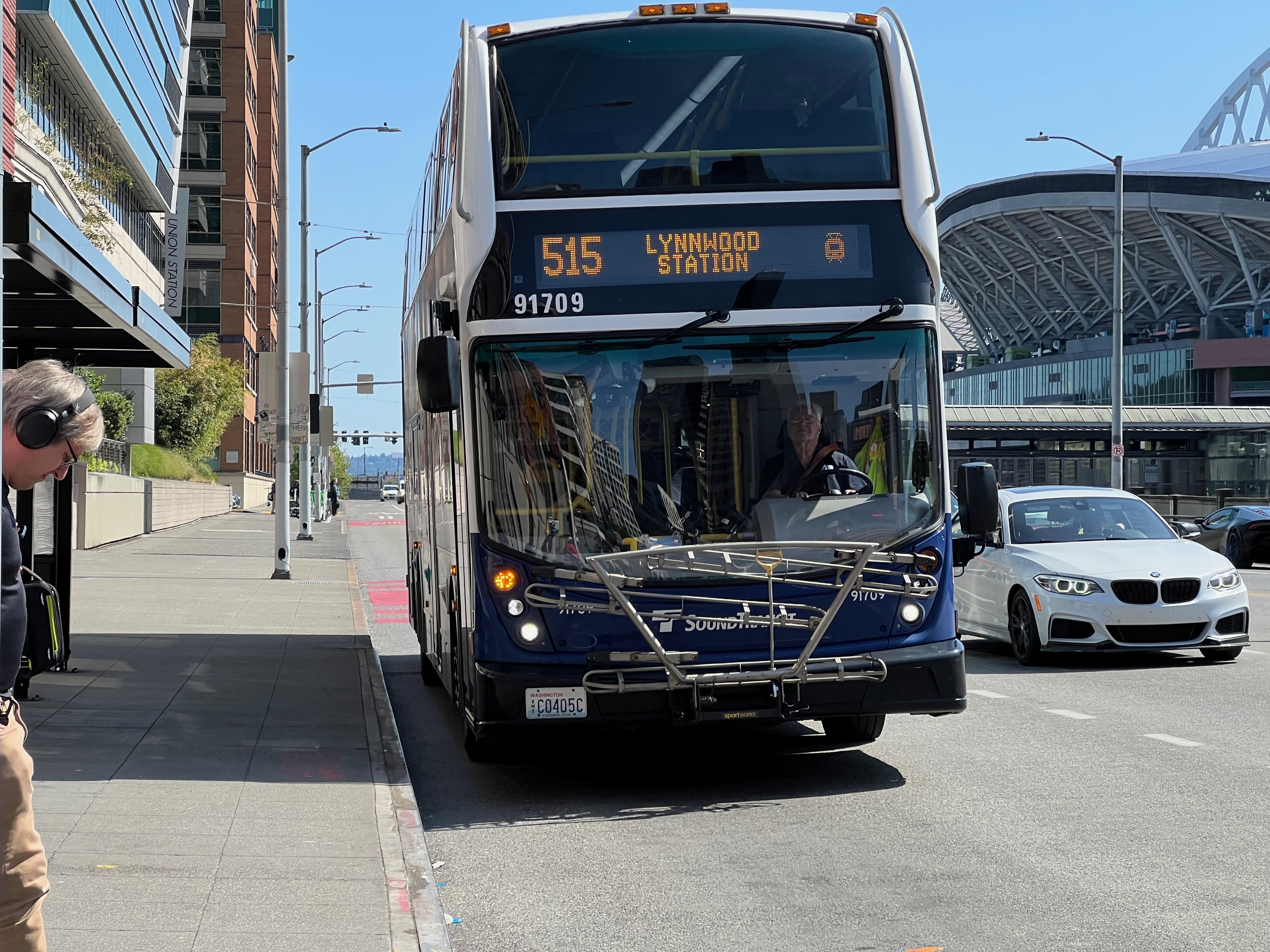
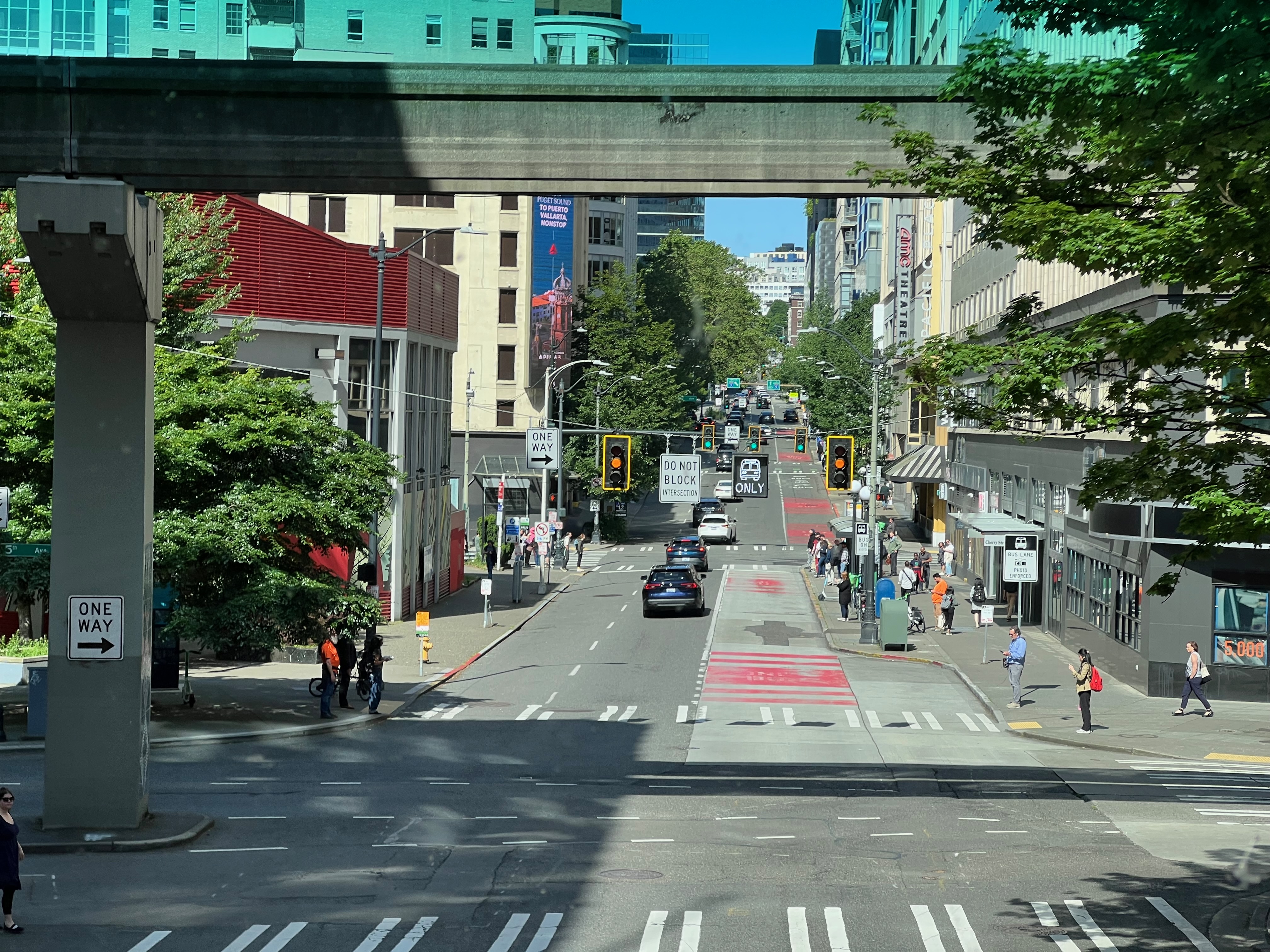
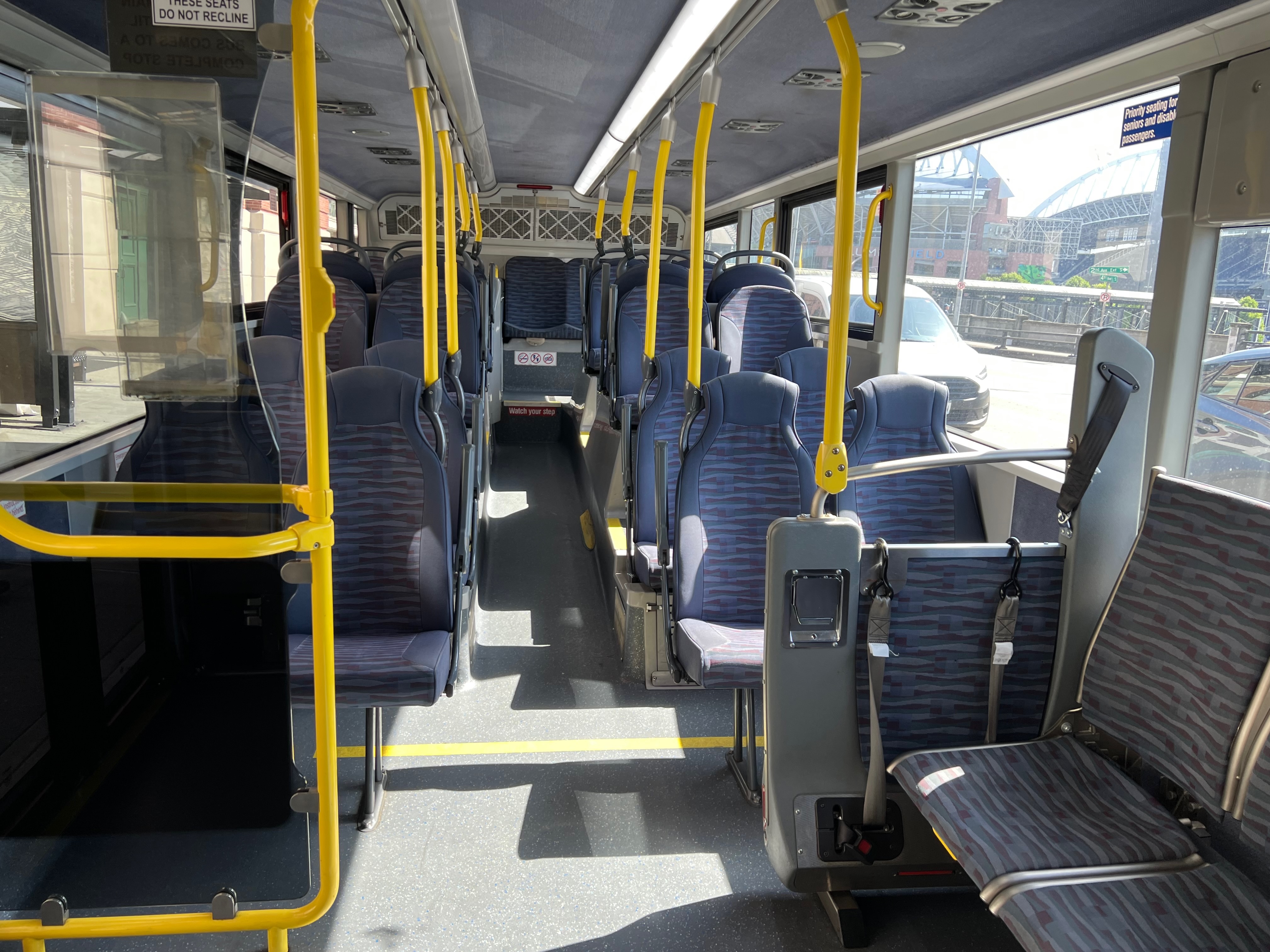
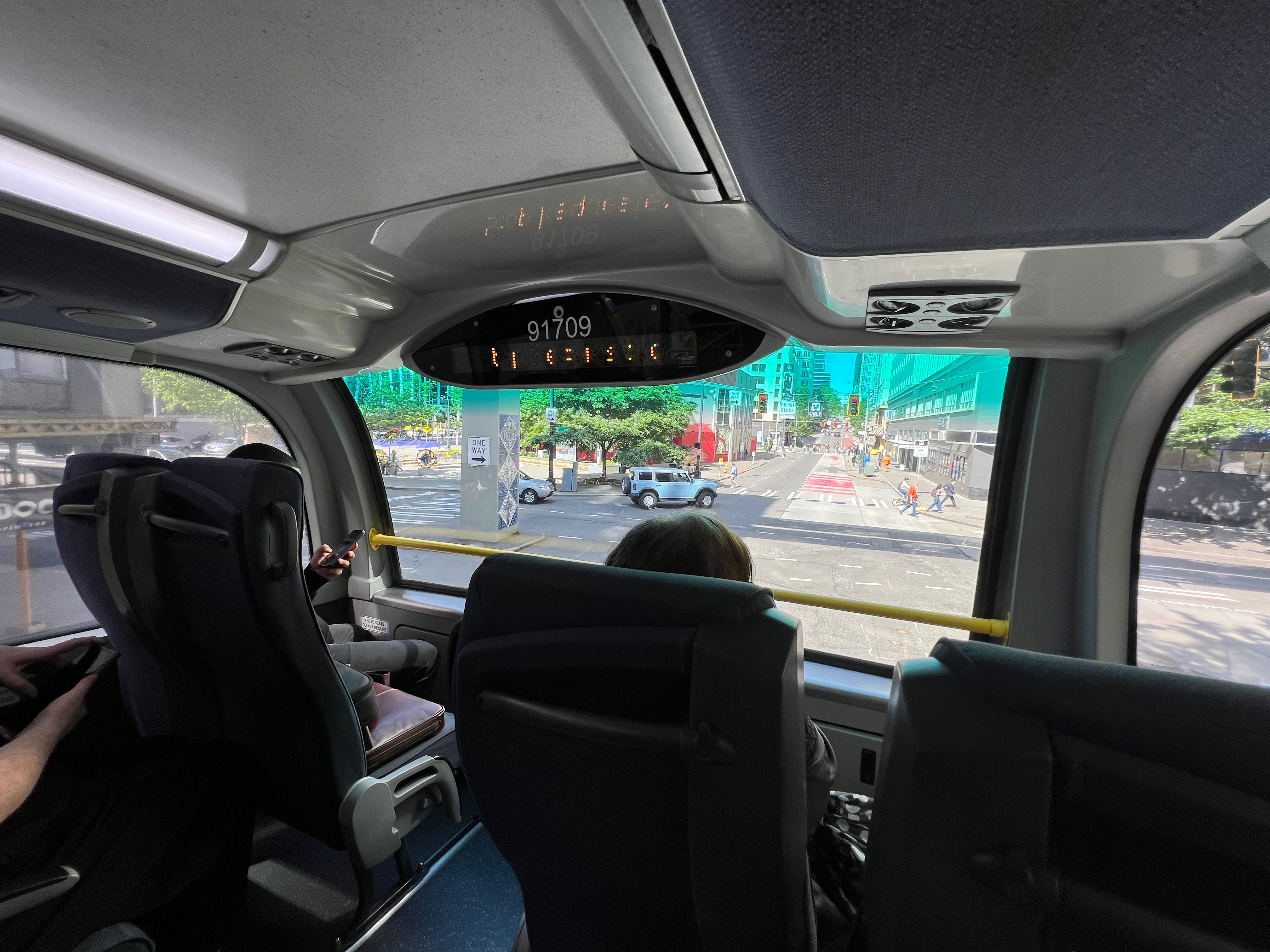
Today I took a ride, for the very first time, on one of Sound Transit’s double decker buses. I opted, since it would include some light rail usage, to take the 515 Express from downtown Seattle to Lynnwood. This is the story, of all the things I noticed along the way.

I believe it was the 4:15pm bus that I boarded between King Street Station and Union Station. I’d racked my bike, then stepped onto the bus, swiped my Orca card, took a video (see below) and climbed the steps upstairs.

The bus then carefully, and very smoothly, traveled forth through the streets of Seattle. Slowly coming to and striking branches of trees because of the height. We stopped at about a dozen stops, from the originating stop I boarded at through to the egress point from downtown. When we left, we did it in relative style because we exited via the express lanes.

To note – when I showed the “empty” bus just after the first stop downtown, it was almost entirely full by the time we left downtown. Don’t get in your head that this is an empty route, it’s a very well used rush hour service. A kind of extra interlined service, in addition to the light rail and other Sound Transit Express lines that go out this way.

However, if you watch the video all the way through, you’ll notice the enjoyment of zooming along in the express lanes comes to an end before we even got past the Greenlake and Ravenna areas! Motorized “road” transportation without right of way is, and always will be a joke when it comes to speed and throughput.

But, that didn’t really matter much because being on a double decker, in a cool air conditioned environment with big ole’ windows to see as far as thee eye could see was a joy! We carried on, as you do, at a reasonable 20-35mph. The traffic slugged into a accodian like zig zag of slow drivers stuck behind entire cavalcades of other slow drivers under the guise of the inefficiencies and stupidities of mass transportation movement via single occupancy vehicles.

In other words, we were limited by the stupidity of cars as primary modal option at rush hour.

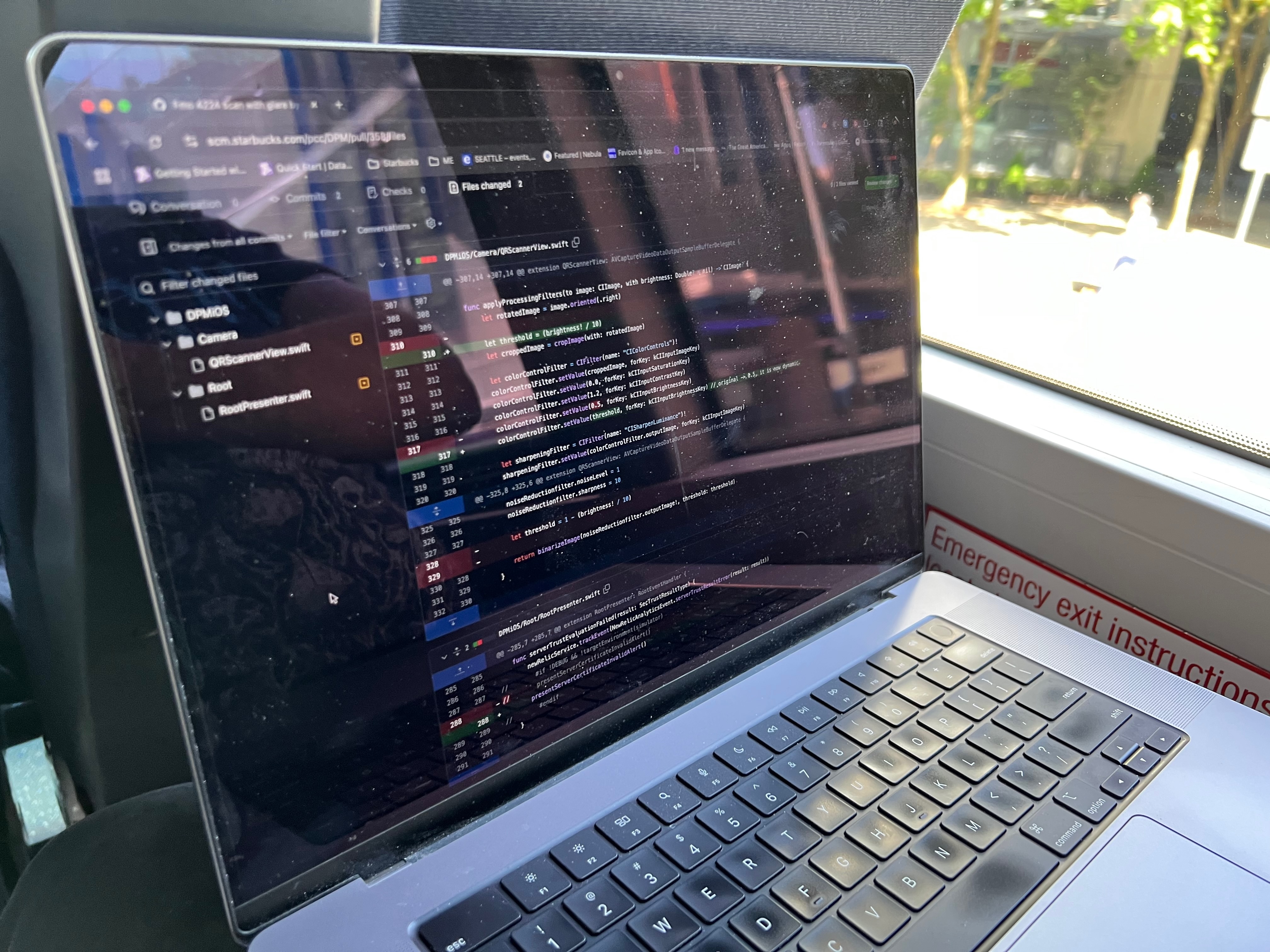
But it was entertaining and pleasant. I wrote up this blog entry and got some work done as I explored this new transportation choice for traveling north to Lynnwood.

At this point I also had zero idea what I would do once I got to Lynnwood, but I didn’t really care, I’d likely the board the Link Light Rail line back south and then take the 542 at University District back home.

The Bus Itself

The bus itself, being a double decker, is very smooth similar to one of those intercity buses. The air conditioner worked great, so it was a cool ride in spite of it being a bit warm outside.

Additional Observations

As we rolled forward and stopped, then moved forward again, and stopped, and then lurched and stopped, we made our way ever so slowly to Lynnwood. I couldn’t help but wonder, was this even faster than light rail with all this traffic? I had no idea, as I’d never even looked at the schedule vs. what time this was taking now.

At one point we just stopped for a solid 20+ seconds and sat. Traffic unmoving and a light rail train zipped by beside us, one going north full of people and one going south with a dramatically smaller number of people.

It really did seem like the light rail would have been the faster choice at this point. However this is likely the smoother option, considering how the double deckers ride! They really are not like other buses.

Drama!

In normal society fashion, at some point some guy got a phone call and began talking loudly – very “American” of him – about a financial situation that a child or someone in family was having difficulty with. He wanted to see funds and bank accounts and started “telling them” a number of things.

Why are people like this, what is the deal with the lack of situational awareness? So many parents bring up kids to become these adults that just utterly drives me nuts as a parent. I’ll take rowdy kids any day over an oblivious adult yapping drama out of the pie hole openly and loudly!

But even with that slight little interruption along the route, the ride was great. One more great way to commute in the Seattle area, so great I’d even put this up close right after “Ferries”, “Commuter Trains”, competitive with “Light Rail”, but definitely better than intercity buses!

Link Light Rail opens in Redmond

I wrote about some pedantic details in the last post here. Check that for some nuggets and the current situation logistically. But read on for some observations from opening day!

I wrote a thread on Mastadon, Threads, and Blue Sky too. Click through to check em’ out.

Thread Summary
Redmond light rail opening today: Celebrating the debut of service to Redmond Technology Station.
First southbound ride: The fresh thrill of speeding out of Bellevue, over I-405 and sprawling lots, into Redmond.
Elevated magic: The segment between Wilburton and Bellevue stations, soaring above streets in a blink—reducing a 5-10-minute slog to 45 seconds of pure “whee.”
Empty parking lots everywhere: Wild expanses of asphalt ripe for redevelopment—if the economy holds up.
Broken elevator / IYKYK: Only one failing escalator on the 2 Line over at Wilburton. That’s a seemingly good ratio for Sound Transit and escalators.
Bike corral buzz: Cascadia Bikes’ racks overflowing—major props to everyone who pedaled in.


Rolling into Redmond Technology Station for the First Time
There’s nothing quite like that first southbound trip into Redmond Technology Station. After waiting months for what I personally will now find the most useful segment of light rail in the area. It seems the wait has taken eons.

The Elevated Spectacle
Peek out the window as you depart Bellevue Station: a dizzying montage of concrete and greenery. The rail track climbs, slicing through the skyline with surgical precision. Down below, cars inch along, helplessly stuck in gridlock. Up here, you’re at street level with the brids—or at least with the tops of pine trees. It’s the kind of view that makes you feel like the future might arrive in the USA yet, albeit one powered by a modest electric motor humming serenely beneath the floor.

Asphalt Oceans & Urban Dreams
West of the station lies an ocean of empty parking lots—so vast you’d think Microsoft itself had spawned them all. It’s eerie, almost dystopian… until you remember the upside: raw redevelopment potential. Imagine mixed-use towers, live/work lofts, parks, eateries—an entire urban neighborhood rising from the asphalt. That is, assuming our economy doesn’t implode in the next couple of years, as that might lead to it not happening for decades upon decades. Fingers crossed, America, fingers crossed.

Two Wheels, One Corral
Shout-out to Cascadia Bikes for setting up a deluxe bike corral—overflowing with riders who made the wise call to pedal in. Seriously, if you rolled up on two wheels, you’re a genius. Fresh air commute, zero parking worries, and you still get to high-five your fellow cyclists. Hats off—or helmets on—to you.

Mode-Shaming: Because Someone Has To

  • Biked: You’re smart.
  • Walked/Bus’d: Good call.
  • Drove: You’re a jack-ass clogging up the pedestrian friendly area of town. Why even? Don’t do that shit.

Next time, ditch the car and catch the train. Your neighbors (and everyone’s blood pressure) will thank you.

More Technical Details

The new bike routes to the stations are spectacular, check out more about them here.