Unknown's avatar

Posts by Adron

See: http://compositecode.blog/about

Streetcar Advantages (Not Specifically Portland’s Streetcar)

I often complain that the streetcar did NOT get the X Billions of dollars spent in the Pearl.  That was because of the tax abatements, which even continue today and will via extensions, etcetera.  But what advantages do I know the streetcar to really have?

Legitimate Reason #1:  It’s stuck on the tracks, so it builds confidence along the line for developers.

This is true, you can go and ask a number of the individuals that are responsible for starting businesses along the line.  It offers longevity and a feeling of safety and comfort along the line too.  Along routes where buses are businesses often have fewer people out on the street near the line, near a streetcar though people don’t feel bothered by its presence like they do buses.

Does this counter my argument that the streetcar didn’t contribute significantly to the X billion?  No, because the X billions that where invested in the Pearl where mostly large scale developer money, which as I said before was primarily based or the organizations, structure and liveliness of the city, and of course the ability to sell units the abatements that removed the punishment doled out to residents via the excessive property/home taxes.

Legitimate Reason #2:  The streetcar is consistent.

People know what it is, what it does, and obviously where it goes.  Bus routes change regularly and disparage riders.  I’ve run in to no less than 3 individuals who asked me where a bus stop is on 3rd or 4th, to which I had to explain that the buses don’t run on 3rd or 4th anymore but on 5th and 6th now.  Those stops of course, don’t even remotely resemble what was there on the mall before, or even reflect what was on 3rd and 4th.  Even though it seems like a negative to have a consistent, unmovable route, it actually has this and the aforementioned benefit.
In turn for the “sometimes rider” from the suburbs this adds comfort to the rider.  This is one reason for games, events, and other such things in downtown Portland, millions of rides a year are taken on MAX or Streetcar that otherwise wouldn’t have been made into downtown.  The money that these riders bring into downtown, and to the city in general, equates to millions per year and hundreds of jobs.  Otherwise this money would have probably went to X-Boxes or other trite entertainment with 90% of the money going out of the United States.

Legitimate Reason #3:  This reason does NOT apply to Portland’s Streetcar.  Portland’s streetcar is outrageously expensive.  However, most streetcars are NOT even remotely as expensive as Portland’s.

Often they’re about 2-3x more expensive than a 40’ bus.  This leads most streetcar systems to be 10-30% cheaper than a comparable bus line.  If you don’t believe me, I’ll have the math coming very soon.  Currently I’m working the math out for light rail, which is a no brainer when looking at any long term transit strategy for a high throughput corridor.

Over the next 15-20 years of streetcar operations in Memphis, Little Rock, and other places the streetcars will actually end up being LESS expensive then comparable bus service.  In San Francisco and some other larger cities around the world, where streetcars have continued running for over 100 years, they’re already absurdly cheap.  In New Orleans the original St Charles line, even with hurricane repair included, is easily 30% cheaper than what bus service would cost for the same ridership numbers along that line.  Don’t even get me started on San Francisco’s lines, especially the cable cars, which pretty much under most logical accounting rules actually make a profit, but can’t say so because they operate under a non-profit accord for the city.

Legitimate Reason #4:  Electric Streetcars, just like electric vehicles of any type that run from catenary, are really easy to maintain.  An electrical motor and system is far less complex than a complex diesel engine.

Diesel engines are generally less reliable, more prone to issues during snow, heat, and other extreme conditions.  Electric engines are awesome for reliability.  In addition to reliability they’re also very powerful, often more powerful than diesel engines.

Legitimate Reason #5:  This reason is dumb, absolutely stupid, but it is a legitimate reason why streetcars have an advantage over many modes.  Matter of fact, I don’t event like this reason, but here it is anyway.

People LOVE streetcars.  Not for any logical reason, they just do.  Most people that LOVE streetcars do not have any reason they can verbalize or write down, that has a logical basis.  It might be a temporary thing, it might be a long term feeling, it might only be a myth among urbanites.  Whatever the case, fact is, the majority of people will get on a streetcar and sometimes even ride about for hours, long before they’d do the same on other modes of transport.  This plays to a much easier time of gaining political support for getting them built out.  Of course, there are some really loud naysayers, but the pro-streetcar people are actually louder these days, and thus win out.

Legitimate Reason #6:  They last forever.

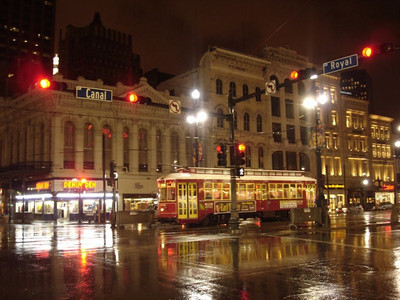
New Orleans runs streetcars that have had basic maintenance and a revamp or two, that where originally built in the late 1800’s.  Streetcars are especially easy to keep up over a long period of time.  New Orleans is a prime example, a city which has been through hell and back multiple times, has managed to keep up multiple streetcar units that are over 100 years old.  There is no reason that these ever really need replaced, as with maintenance and appropriate piece part replacement, can last forever in an economic, environmental, and usability context.  Many other vehicles eventually just get thrown away and replaced beccause it is more expensive to maintain then to buy new.  This is not the case with Streetcars.  Streetcars are more like a building, one doesn’t just tear down a building or a home every few years.  Instead a remodel, a repaint, or a simple rewiring and then back to the route.

This type of service does not bode well for buses and most rubber on road based transport.

Now don’t get me wrong, I’m also going to have the list of advantages that buses have coming soon.  So Al M, Erik, and my other hard core bus fans, don’t lynch me yet.  It’s coming.  I gotta get all this pro-streetcar, pro-light rail, and pro-commuter rail (NOT WES) out of the way first.  🙂

So everyone keep reading and stay tuned for the top reasons transit rocks, more to come.

Argument of Portland’s Direction (Re: Response to Al M)

"Increased service can only happen by EXPANDING coverage to outlining areas."

No, that isn’t true.  Some of the largest increases, at the lowest costs, occur right in the urban area of Portland itself.  Just look at the ridership statistics available.  The only bus line that runs at an operational profit is the #72, which SHOWS that the existing areas can receive increased service and not cost much additional money.  Only problem now, is the #72 is basically at peak service.  Even articulateds aren’t going to help much at this point, they simply need to put BRT or LRT down somewhere or somehow along that route.  The Green Line, however might take a ton of traffic from the #72, if so that would alleviate a lot of issues.  For one thing, the Green Line will be vastly faster than the #72.

But overall, the idea isn’t to sprawl further and attempt to service that area (which is vastly expensive to the city & TriMet).  The idea is the build up and increase service along existing corridors.  It is much cheaper and more efficient.

"Bus service is functional for many reasons;

-0 needs to be spent to put it in
-can be moved at will
-not subject to track disruptions"

…and costs about 10-20% higher than light rail (including light rail capital and excluding road costs for buses) after a period of 20+ years.  After 30 years and inflation it approaches even greater returns as the equipment costs are vastly less expensive at this point.  Buses don’t even last that long, so the second 15 years of a bus line in operation along a route effectively, and needlessly doubles, because of the need to replace buses.

The "0 needs to be spent" is 100% erroneous.  Buses don’t drive themselves.  A route that last more than 20 years, the most expensive part of that route becomes THE PERSONEL needed to run it.  i.e. the driver, repairmen, maintenance, etc.  So really, if we’re going to talk about costs as an end result – we should talk about replacing the necessity to have so much staff.  JAX, Vancouver BS & some other cities run automated systems which are VASTLY cheaper than any human operated line hands down.

"These arguments always get to the point that it is CHEAPER to operate the rail than the bus,"

Yes, they do.  It’s all written down in the accounting costs.

"WHEN YOU DON’T INCLUDE THE COST TO PUT THEM IN!"

If we included the damage that buses do to the roads, there isn’t really much point to run them.  We ought to run large "vans" to transport people instead, they do vastly less damage to the road and the roads would literally last many years longer WITHOUT bus service on them.   We start adding the other costs, like the additional staff it takes to keep a bus service going, the maintenance staff, etc, it gets even worse.  This is one of the reasons light rail has become popular.  Especially as road budgets dry up even more, Departments of Transportation love the idea of removing some of their funding responsibilities.  Either way, as you said, the taxes come out of our pockets.  I’d rather buy rail any day than more roads.  For environmental, economic, and life choices.

"The cost to put this stuff in MUST be considered in any serious discussion on cost."

I agree.  So let’s include the road costs and maintenance for bus routes.  (How about not, because that even further invalidates the reason to have buses).

"It’s clear what the HONCHOS WANT, and its not bus service."

That’s part of what I’ve been trying to get across.  Some people like bus service, the people that VOTE and pay for this stuff want light rail and trains.  Especially in the Portland area.  That’s why we keep getting more of it.  Aside from the fact that the Blue Line is absurdly cheap now in overall costs.  The vehicles cost originally about 2x what a bus does now, except many of the buses bought around the same time are in desperate need of replacement while the LRVs are just starting their second leg of life.  In addition, that equates to an LRV costing almost the same as a single 40’ bus over the long term, but providing transport for more than 2x what a bus carries.  In effect they’re "free" now, as they’ve been paid for already, but we’re still buying buses because we can’t keep the old ones on the road (nor some of the new ones).

Temporary Transit Mall, and Now What?

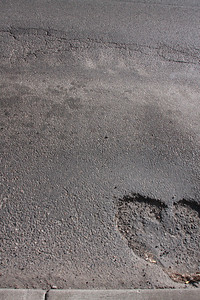
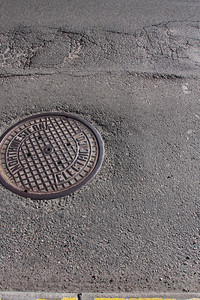
The new transit mall is in use and it is a beautiful stretch through the city.  Now 3rd and 4th have been returned to their previous use as non-transit streets.  The one major difference though is the quality of the street.  It is now crap.  There are dozens of ruts, ridges, pot holes, fills, cracked cement, black top, and other destroyed sections of the street that where in good shape 2 years ago.  All of this damage is bus specific damage.  My question is, what are the city’s plans to fix this?  Is it budgeted?  Have they even planned for it?  Will it be TriMet’s burden?  Is it ODOT’s burden?  In the end, it will of course come out of the taxpayer’s pockets, but that is moot as an assumed point.  I want to know when it will be fixed.

This is one of my ongoing comments about the approach to bus service (I know Erik Halstead has input on this in a number of ways) in the Portland area.  TriMet needs to team with ODOT & the city to make it a HIGH PRIORITY to build primary arterials that buses travel on at a higher quality than mere black top as most of 3rd and 4th are.  It doesn’t do anyone any good to have these streets whimsically destroyed like this because they’re just built crappy.  Often politicians get road funding but then just make sure they get votes for the projects but don’t build the infrastructure for the long term.  That type of nonsense has to stop.

It also brings up the thought, why not really build up the arterials (this is where the pro-bus and anti-rail people and I disagree) that have over 10k-12k riders.  Routes like Powell, Belmont, and Hawthorne should have higher capacity rail options such as light rail or streets (multi-unit).  Rail infrastructure obviously lasts longer than any type of utilized road infrastructure out there, yes at a higher cost, but the costs start to drop once you pay the capital and then inflation makes the price plummet.  Rail that costs a few hundred grand in 1960 is still used today in some cities.  Rail dropped in San Francisco in the 80s and 90s for half of what it would cost now is only at about 1/3 of its lifespan.  Between our monetary inflation system and the lifespan of rail, it easily becomes the cheapest option for high throughput long term right of way.  It needs viewed as such and utilized more.

So with this I mark the closure of the 3rd & 4th temporary bus mall in my own Transit Sleuth kind of way and await, impatiently, the future of transit in the Portland area.  Cheers! (Click on any of the images for the full size (up to 10MP – fair use if you want to use any of them in other media/material – no need to even credit me for these – I just want the street fixed!)

Probably Right Again

I estimated back during my week long commute on the WES, and even before what the rider levels would be.  I was spot on +- about 5 riders per trip.

My original spreadsheet is below (I created this table via Excel back on February 3rd).

Station Total Per Station Drive Up Guess Riders
Beaverton Transit Center 86 15 2392
Hall/Nimbus 76 10 456
Tigard 121 15 760
Tualatin 201 15 152
Wilsonville Station 447 25 1520
  0    
Total For Route 931 80 5280
       
Best Total 1547    
My Estimate Total 1800    
Reasonable Total 1238 My Bet  
Optimistic Total 3000    

Now I'm thinking of doing an estimate for the Green Line to see how close I can get.  Of course, the Green line will take a LOT more calculations as the stations are greater, the inputs are greater, and there are tons of bus lines to figure out.  On that note, maybe Mr. Rose, Al M, Erik H, or some other want to weigh in with their estimates?  If you have any thoughts on what the rider levels will be, please comment, I'd love to have a little unofficial guess work going on.  🙂

So what are the guesses?  I'll narrow it to average riders per day for the first year.  Will it be 6,000 per day, 15,000, or 45,000?  Let me know!

Joseph Rose Stabbing Into Transit Again

…with some facts and some incorrect facts (which is fairly good considering how confusingly complex the maze of transit is).  "TriMet ridership numbers sliding as opening of MAX line approaches" he writes.  I wrote this comment on the blog, but wanted to post it here also, this is my response,

Facts

  • A: You can’t have ridership if you don’t have something for people to ride yet. Use some common sense.
  • B: $557 million Green Line is NOT the price of the Green Line alone, it also is the cost of the bus mall renovation. The mall AND the Green Line cost that much, and keep in mind, about $150 million or so of that was solely for mitigation – i.e. moving pipes, making sure people can walk across the street, union costs/dues, minimal traffic impact, etc. Even though it was a total of $557 for both, it was ALL money that actually went into the US economy, unlike that $3.00 bucks a gallon people keep dumping into gas.
  • C: Ridership is down for many reasons. One that is a LITERALLY HUGE impact that no one ever seems to pay attention to is the fact it is summer. People stop taking transit in the most heavily utilized area – downtown – and start riding bikes, walking, etc. That couple point drop has a large contribution from this factor, so don’t forget it.

Personally I’d rather see that drop regularly during the summer. People biking instead of transit means that many less fat people, that many less oil dependent people, that many less people living in economically and indirectly environmentally unsustainable areas of the city in relation to their work. Hats off to em’.”

As usual there are a few missed points in this whole thing.  In addition, even though I hate this, keep in mind the brunt of this line and the downtown line is once again the budget of the Federal Government.  So Portland isn’t using local monies to pay for all this (except in that odd round about indirect kind of way).  That means more money for operations (since many seem to be seriously concerned about this).

Also I must rant against the article in and of itself.  It is standard zealous media news at its best.  In spite of actual facts, certain facts are picked out and other just left aside.  I don’t even see anywhere that references are made for the data that is available.  Fortunately I know where it is at so I go and dig it up.  In Rose’s defense though, it is merely a blog entry right?  Blog entries aren’t under any sort of agreement to provide references, I just do because I want people to know I don’t just make this stuff up.

Hopefully this provides some clarity among all the din of noise from the comments.  Most of which are from obviously uninformed individuals.  It sure would be nice to see some actual discussion sometimes.  I suppose I can only turn to my own blog for that.  Even Portland Transport often turns into a negative tirade about all sorts of things, which I’m sometimes guilty of myself (because there is endless politics on the site).

As Kathleen and Joseph point out, I completely missed the link to the actual blog entry.  So click here for a read of the original entry.