VLOG is included at the end of the post.
I used to live in Ballard, and the bike trip into Seattle was about 26-27 minutes to the Pioneer Square area, and maybe similar or a few minutes more to anywhere in the central business are including South Lake Union. I have however moved out to Redmond which makes for a vastly longer and more significant trip.
For a ride into the city on Spacey or Pop Rocket it takes about 90-135 minutes to get into the city core or on to King Street Station and Pioneer Square area. Not so much because of distance but because of the half dozen plus hill climbs coming into Seattle from Redmond. However if I circumvent most of the trip and load the bike on the 545 I can get into most points in a reasonable 45-65 minutes. On my Reload bike it’s a whole different story, as the hill climbs are largely nullified and the downhills, I routinely exceed 30 mph easily, which brings the trip in at a consistent 75 minutes to almost anywhere in the city center or Pioneer Square.
The following VLOG is about that ride, and for this specific ride I branch off and head to north Seattle, back to G & O Cyclery to pick up a 2nd pair of batteries for Reload.
Transit Nerd Points Along the Route
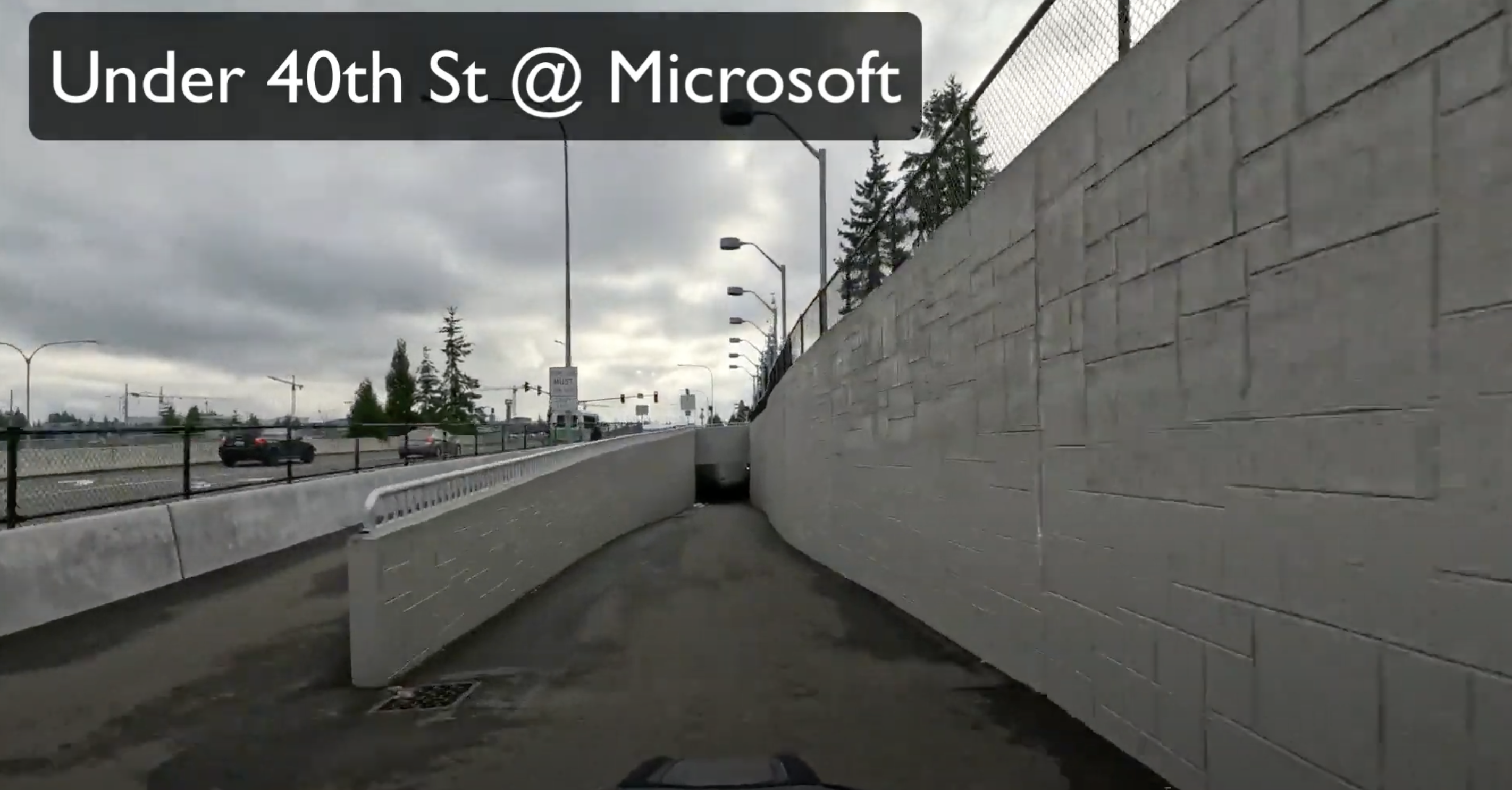
The intersection of 40th street in the midst of the Microsoft Campus has always been an utter calamity during commuting hours. Even today as people do start to return to the campus for work, the rush hour time frame can become a mess. As you can see in the picture above though, there’s now a tunnel for the 520 trail that goes under the intersection – entirely bypassing what was sometimes a 2 minute delay for a single intersection. For drivers, it’s still an utter mess, and the on ramps on both sides routinely are backed up down onto the 520 highway for a mile or more. The cross street (i.e. 40th) is also a bit of a mess, with cars backed up in odd ways off onto side streets and 148th nearby.
The simple fact, automobiles are the worst way to transport any volume of people through the area, which makes it obvious when you see the stats why most people arrive at this intersection via transit. The Overlake stop on the opposite side of this intersection to this 520 trail tunnel is often packed with arrivals just from the 545 alone, however many other buses arrive there (542, etc) for a significant number of persons in and out of the area. The 520 path also provides access to much of the Microsoft Campus which delivers a ton of folks.
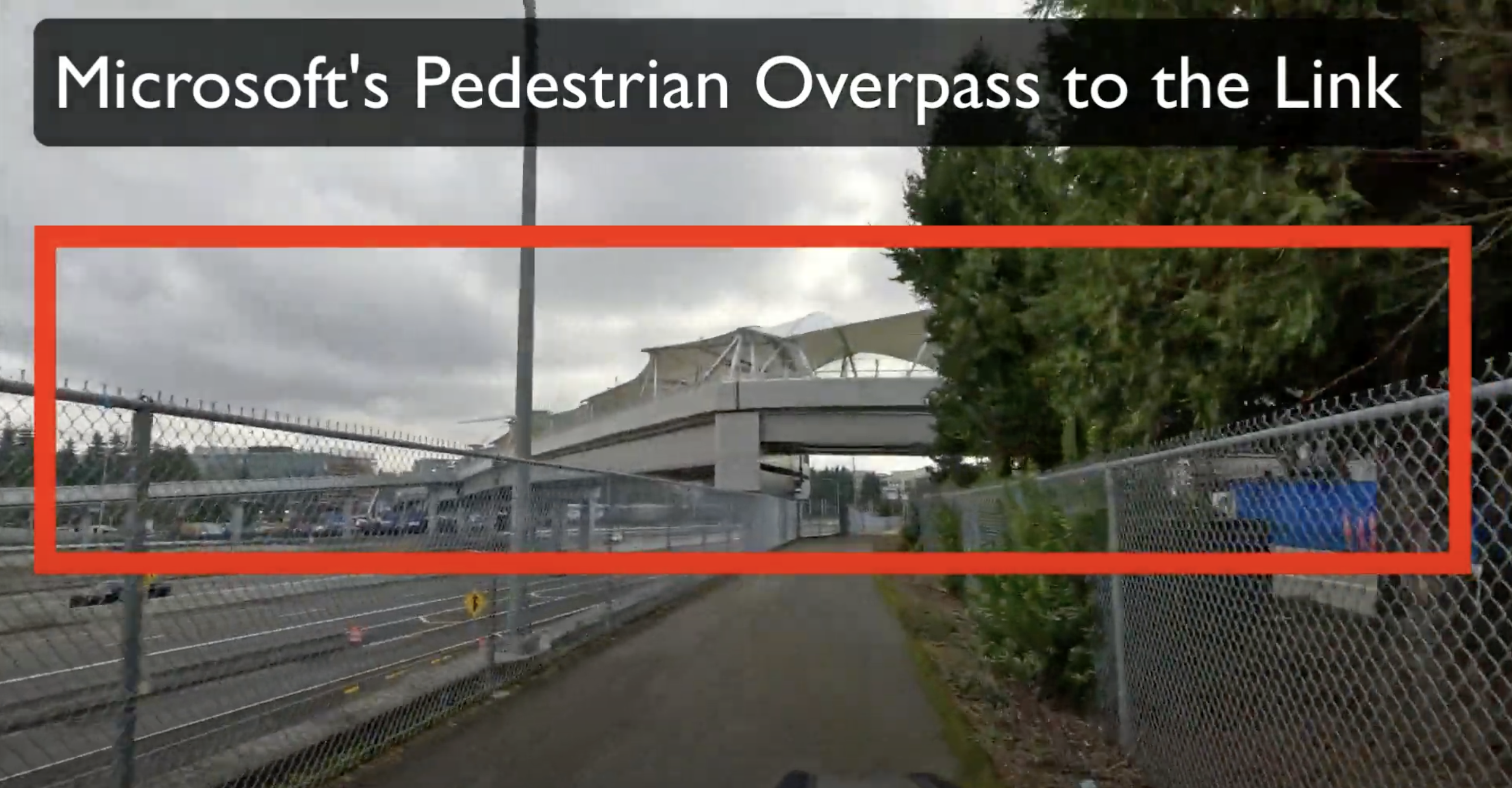
Eventually this stop will be a significant stop on the Link Route from Bellevue to Redmond. You can see the massive pedestrian overpass that Microsoft has built too, which connects the existing central campus hub (I forget the name of this, Softies what’s the name of this area?) to the new urbanized area on the eastern side of 520. This overpass for pedestrians has all those tent coverings, albeit permanent tent coverings, to cover the pedestrian path, which makes for a rather interesting site as you come along underneath it. The offshoot of this path, which you can see in the picture on the left hand side, is what will provide a way to and from the Overlake Transit & Link Station.
Overall, this intersection and a few others are the primary arrival points for people to Microsoft Campus, which their pre-pandemic metrics showed only 60% – at a suburban campus – arrived by automobile. The other 40% arrived by alternate modes such as transit, bike, or even just walking to campus. For a suburban campus like Microsoft’s this is significant and impressive. Albeit, for an urban campus it’s absolute garbage to have 60% arriving by car, but I’ll give Microsoft a win in this particular situation. As the return to office accelerates at Microsoft, that ratio seems to be holding, if not increasing for alternate modes.
24th to Lake Washington Blvd
At 2:26 I roll into the segment of the “520 Trail” that is largely bike lanes in the road – albeit I discuss the alternative of just using the largely unused sidewalks that are clearly separated from the roadway. In the map image below I tagged the ingress and egress points for the part of the trail with 1 and 2 respectively.
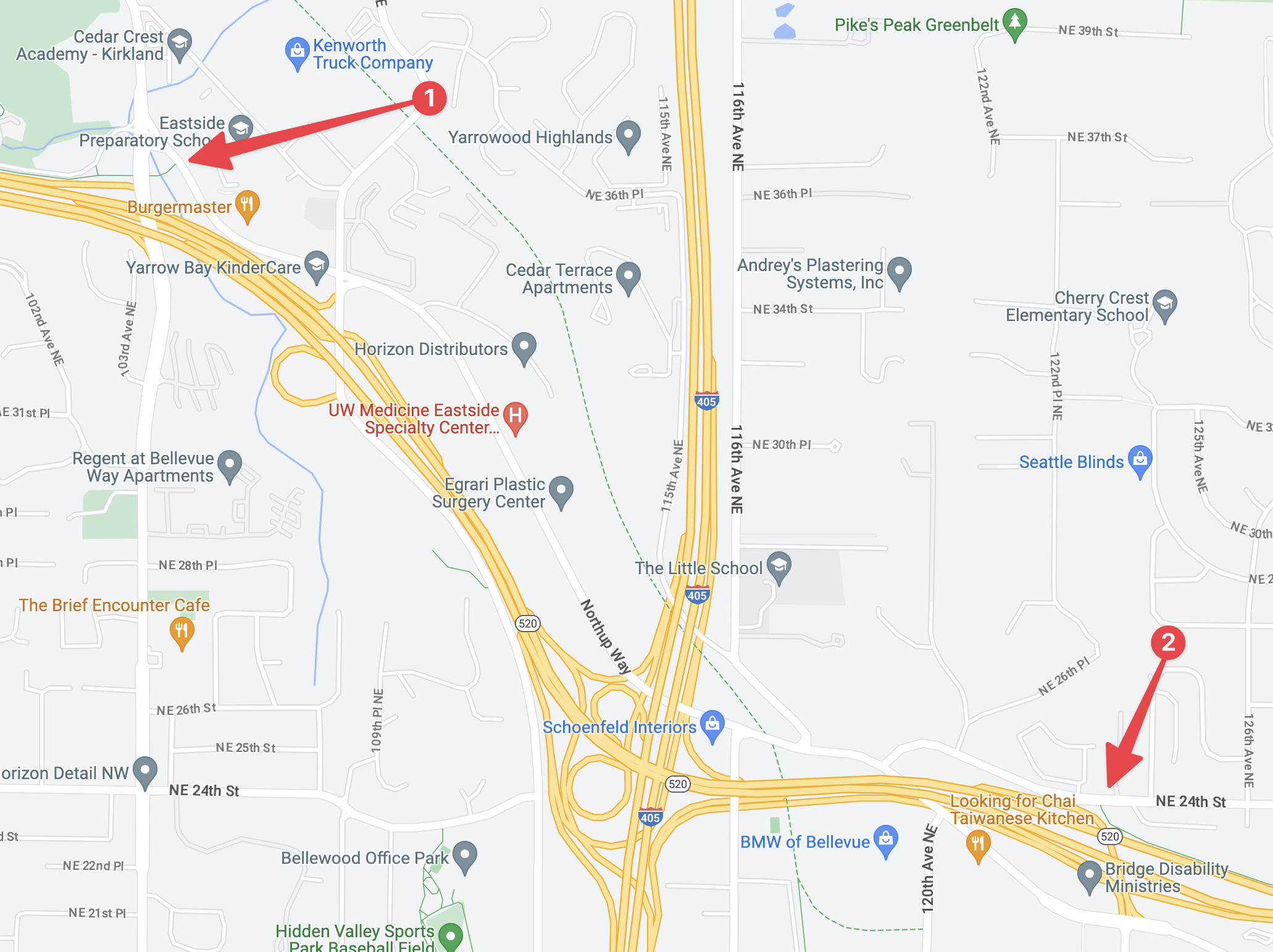
This part of the trail isn’t all that bad really, albeit being a car sewer amongst pleasant interlined streets is a bummer to be forced to deviate onto, one at least gets to entirely bypass any conflict with 520 or Interstate 405. The connection to the Cross Kirkland Corridor however leaves much to be desired, as you’ve got to back track all the way down 120th to loop back around onto the trail. Depending on which way you want to go this can be rather bothersome or work out to your favor, but in either case one has to make sure to note the points to turn onto Northrup Way and then onto 120th. I’ve found it to be somewhat confusing the many times I’ve been by and only recently – after dozens of trips – have I gotten it into my head where and which road to turn onto.
520 Bridge Trail
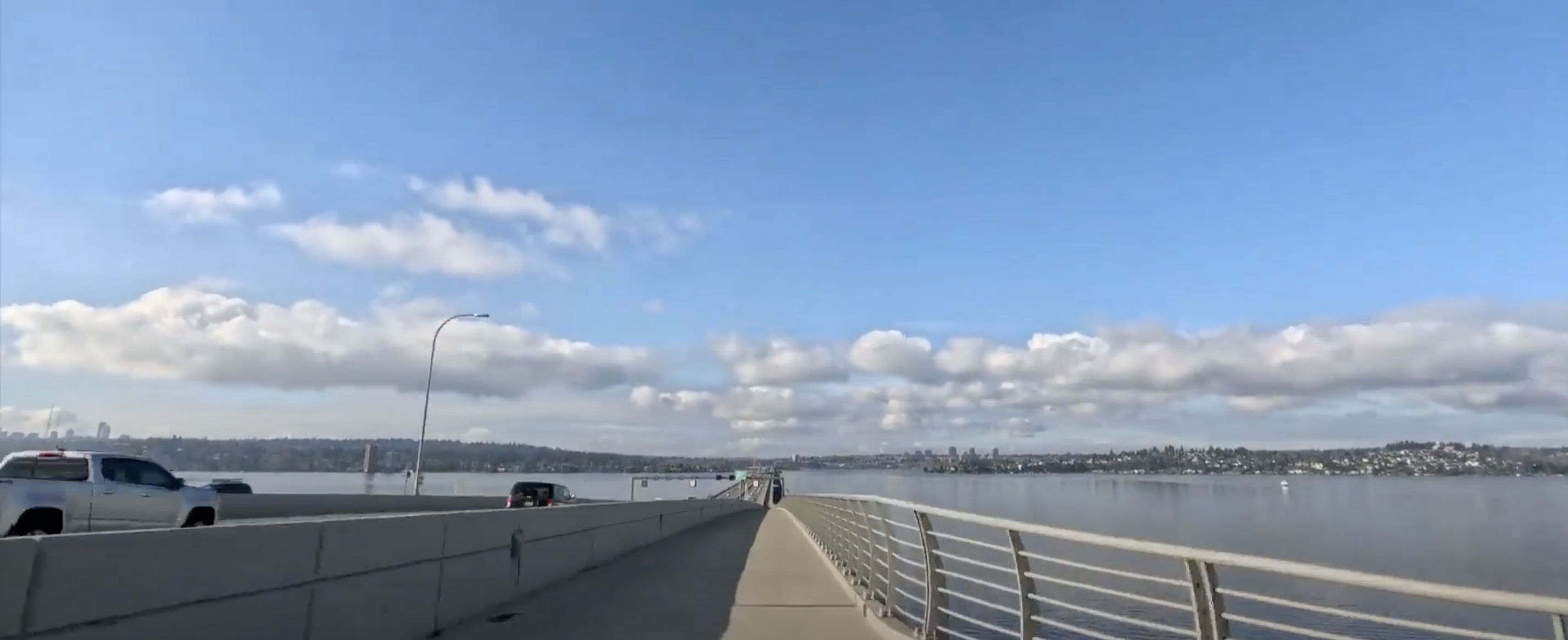
The 520 Bridge Trail is a superb piece of bike infrastructure, the only thing I’d say it needs to make it even better is a sound barrier like the Woodrow Wilson Bridge has in the Washington DC metro crossing the Potomac. It almost entirely cuts out the incessant, bothersome, and droning of the cars going by on the bridge itself. They’re loud, and as always, being near a major highway like this can be extremely annoying. The fact there are points along the bridge that are scenic overlooks cracks me up as it’s almost headache inducing to stop at them – in spite of them being nice. However, in the end, it’s a barrier divided piece of infrastructure which provides a very safe and seamless way to get from the east side into Seattle proper!
Green Lake Loop
Around 11 minutes into the video I get to have a first ride along the newest and final segment of the loop around Green Lake.
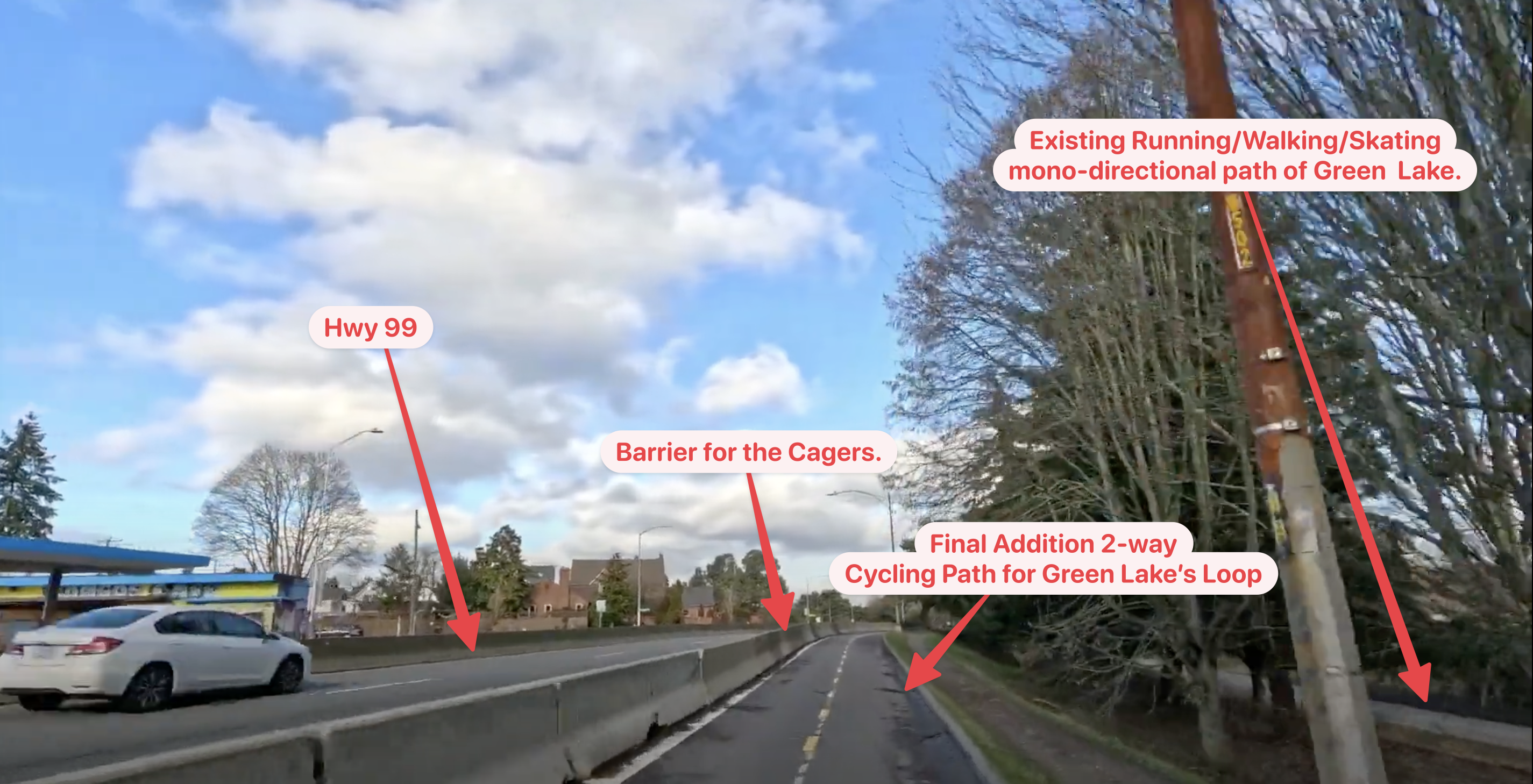
For the inbound trip, that about wraps it up. For more commentary and the ole’ “moving picture” give the VLOG a watch.
For more details on Reload, the bike I’m riding, check out my Riese & Muller Load 75 write up here and here.
 Transit Sleuth
👍🏻 having not been to Seatt