I’m Just Now Catching up to Al’s April 2014 Video of Me…

I’m sitting here digging through videos on YouTube and here’s this video Al took a while back. I’m not entirely sure who did the edits, but I have a few minor contention points. Here’s the video first:

Is the MAX dangerous based on un-correlated and non-causal crime?

Minute:Second 2:28 – 2:50 – I’m seriously not even going to respond to this insertion of media alarmism and FUD in the middle of this clip. That is a seriously disingenuous association, it is dishonest to even associate that with failure or success in any way. Pulling in outlier data, and pushing and implication that the MAX is a crime train or something of that nature is just extremely cheap and petty. So it’s not even getting an answer from me… just bring data next time and stop being disingenuous. I can argue this but it’s just ridiculous that this is even inserted in there, it’s at best a distraction to simpletons that will then immediately say something ignorant like, “see, it’s a failure there’s some stabbing…”

Is MAX Ridership Not 100k (or more) ?

Minute:Second 2:57 – There’s a flash of some stats from an unspecified time that are supposedly Trimet’s ridership numbers. I’d stated that Trimet ridership on the MAX was 100k or more per day, which was a conservative estimate on my behalf. The data that was shown however was not accurate. Check out the actual PDF of performance information from Trimet itself. Now scroll down to the ridership data for April of 2014 which is the post time of this video (and relatively close +1 a month or so when Al and I actually met and had this conversation). The data for April 2014 is shown below:
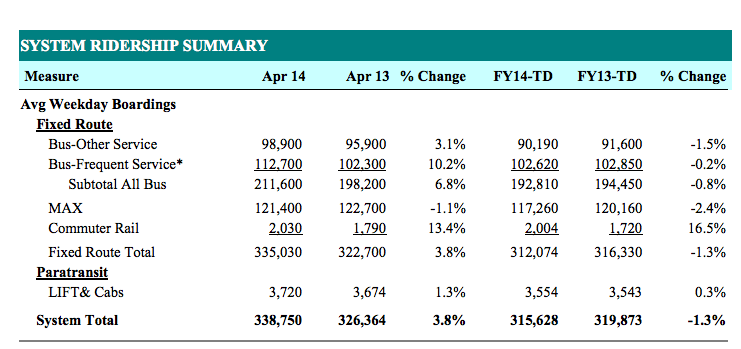
Note the MAX Ridership for April 14 is at 121,400. A mere 1.1% decrease over the same month in 2013.

Note the MAX Ridership for April 14 is at 121,400. A mere 1.1% decrease over the same month in 2013.

As you can see, I was being extremely generous in saying the MAX carries merely 100k passenger trips a day, when in reality it registered over 121k that month.

Answer: Yes, I was correct in stating that the ridership is at least that much. It’s the opposite of hyperbole, it’s a conservative estimate, which makes the implication I was making absolutely true.

Is bus ridership barely 3 times what MAX ridership is even with 50 or so bus lines as I said in the video?

The ridership for Trimet bus lines, all of them (not including the paratransit, which is only 21k trips) comes in for the month of April at 335,030 passenger trips. That’s some pretty good ridership.

Bus Ridership at Trimet

Bus Ridership at Trimet

but if we do some math, if Trimet MAX’s ridership is 121k, and we multiply that by x3, we get 363k, clearly more than the 335k trips that were registered.

Answer: Yes, again, my statement was a simple conservative statement that again proves the point that the MAX, by line count, carries dramatically more people than the entire bus system put together. I made no other correlations than that, so no I’m not saying one could exist without the other, or any such thing. I merely stated one point.

So are there only 50 bus lines in Trimet’s System?

Well I did a little manual count (maybe I’m off by +-1?) but I got 80 bus lines on Trimet’s page here. Feel free to count. But agian, a conservative guess at the number of bus lines (and yeah, I should know the number of bus lines by now, but I only knew a very rough low balled amount). This makes the point even more direct to the point I’m making, in that the bus system has 80 bus lines and ONLY carries 3x as much as the MAX.

Answer: Yes, there are at LEAST 50 bus lines, after counting them there are 80.

So is MAX a failure by this measure? Is it truly ridiculous?

The MAX, based on this number of lines, carrying 25% of the passenger trips but only making up 1/20th of the actual lines is by no measure a failure. Looking at that same data for April we can even find more evidence that the MAX lines are doing fine, with a cost per passenger trip at $2.02 while the bus is at $3.27.

Answer: MAX is in no discernable way a failure based on metrics of subsidies and rates of usage for buses. One could make strong arguments that it even does even better against other Trimet modes too (re: Streetcar, WES).

Is MAX Blue Line the only successful line?

Minute:Second 3:26 – Is the Blue Line the only successful line? Study the data more. None of the MAX lines are operationally expensive compared to any bus lines. Even the most efficient bus lines (like the 72, 9, 4, 14, etc) do only slightly better than the Yellow Line and sometimes better than the Green or Red Lines. Most of the time they’re all extremely efficient in cost per passenger trip.

Answer: No, they’re all successful by the metrics available, even the dramatically lower ridership Yellow Line.

Is the Skytrain the only unquestionably successful transit in North America?

Answer: Yes, go look it up, I’m not digging that up for you. But it turns an actually net operational profit, which means that it makes more money from fares during operations than it takes to actually run the trains. That money, is then in turn used to subsidize the less efficient bus service throughout the city that costs more to run per passenger trip.

…then during 4:20- some time Al wants to now say that none of this matter that transit is a human right or something, but when we compare things we have to have a metric. Nobody said anything about what transit modern purpose is, we’re comparing what is success or failure, and actual metrics.

Green Line stole ridership, is it between 22-28k per day?

Minute:Second 4:44 – Current Green Line ridership passenger trips is 24,300 at last count.

Answer 1: Yup, the ridership is at the levels I stated.

Answer 2: It did not steal ridership from the bus routes. Every route that the Green Line crosses that travels east and west (this include sthe #4, 9, 14, 15, and a number of other buses) all have seen ridership increases during the time since the Green Line opened. The #72, which runs parallel and crosses under the Green Line has also seen its ridership maintained or increased over that same period, month-to-month and by any other metric. The data is available, to get some of the specifics you will have to get a FOIA for Trimet to dig it up, but the data is there, just from the totals that are provided on the site (just look at the link above and check out the ridership for bus/MAX) and you’ll see that overall the ridership has generally seen an upward trend since the Green Line opened in 2009 versus a downward trend.


…this blog entry is dedicated to Al. Cheers man! It’s always fun.
Tech Helps Build Better Cycling

There’s been a lot of lament about the tech industry and what it does or doesn’t do for a city. I can tell people rest assured, the modern tech company is a huge benefit to cities. Here’s one of the biggest reasons why. They hire people that get active in their tech community, they get active in their local community, and the become active users of transit and cycling at a higher rate than almost any other occupation today. In addition to this the tech industry generally hires people at much higher than median wages, providing a much larger tax base that benefits the rest of society in both higher and lower income brackets.

Portland

Portland

All in all, have a strong tech industry employment base helps a city and its residents in a lot of ways. But what about gentrification you ask? Well remember just because there is correlation that doesn’t mean there is causation, and gentrification is not a cause of the tech industry growing. I’ll have more on this in the future. But real quick I wanted to outline a few companies here in Portland that are leaders in the area when it comes to being great community members. When I say this, I mean in transit use, cycling use, community involvement and city involvement. All of these companies have many people working for them that get active and help out in all sorts of ways.

Elemental Technologies

Trimet did a blog entry a while back titled “Meeting with transit riders at Portland-based startup Elemental Technologies” which has even more information. But here’s a few highlights for the cycling and transit advocates out there.

  • Out of the 91 person team, over 50% use transit and many others cycle into work.
  • The team asked about bus stop spacing, like many of us transit nerds and transit users, we’d like to see them spaced out a bit to cut down on travel time.
  • The Elemental team also asked if the stops will ever be removed downtown to get trip time between Lloyd Center and Goose Hollow down to a more reasonable 10-15 minutes instead of the current 20 minutes. Neil batted this one around and pointed to the fact it would cost a lot to do so. I’m guessing it would actually cost somewhere to the tune of a million or a couple of million to rewire the lights and fix this excessive trip time that currently exists.

New Relic

New Relic got a lot of coverage on their excellent in office, front door bike parking and their dedication to biking as a company. Coverage included “New Relic’s palatial in-office bike parking is Portland’s answer to the Google bus“, “Bikes Are Good for Business: Advocacy on Two Wheels“, and others. Here’s some choice quotes.

  • “Asked how many of New Relic’s 180 local employees drive to work, executive assistant and office manager Mary Cameron began ticking off names on her fingers with the help of two colleagues. “Jim drives,” she said. “I think Patrick drives.” They made it to six before getting stuck. “Less than 10,” Cameron concluded.“
  • It’s safe to say between transit and cycling, the drivers are in rarity.

Jama Software

Jama Software is another local company here in Portland that has a large percentage of cyclists commuting to and from the offices. This is a home grown (I almost went to work for them when they were just 4 employees!) Portland startup. They now employee well over a hundred people. You can read more about their bicycle amenities and advocacy on the BTA article “Optimizing Efficiency Through Bikes and Software” and the Cool Spaces real estate article “Cool Spaces: Jama Software bangs gong to celebrate new business“.

Note: This is one of many posts I’m going to make on this topic. In the future I’ll connect more of the advocacy and amenities that everybody (not just employees of said tech industry companies) gets to enjoy that comes from these and other Portland tech industry companies.

Portland, Gateway to Copenhagen, Amsterdam…

…Gronningen, Greifswald, Lund, Assen, Münster, Utrecht, Västerås, Ferrara, Malmö, Linköping, Odense, Basel, Osaka, Bremen, Bologna, Oulu, Munich, Florence, Rotterdam, Berne, Tübingen, Aarhus, Tokyo, Salzburg, Venice, Pardubice, York, Dresden, Basel, Ghent, Parma, Bern, Cambridge, Graz, Berlin, Strasbourg, Turku, Stockholm.

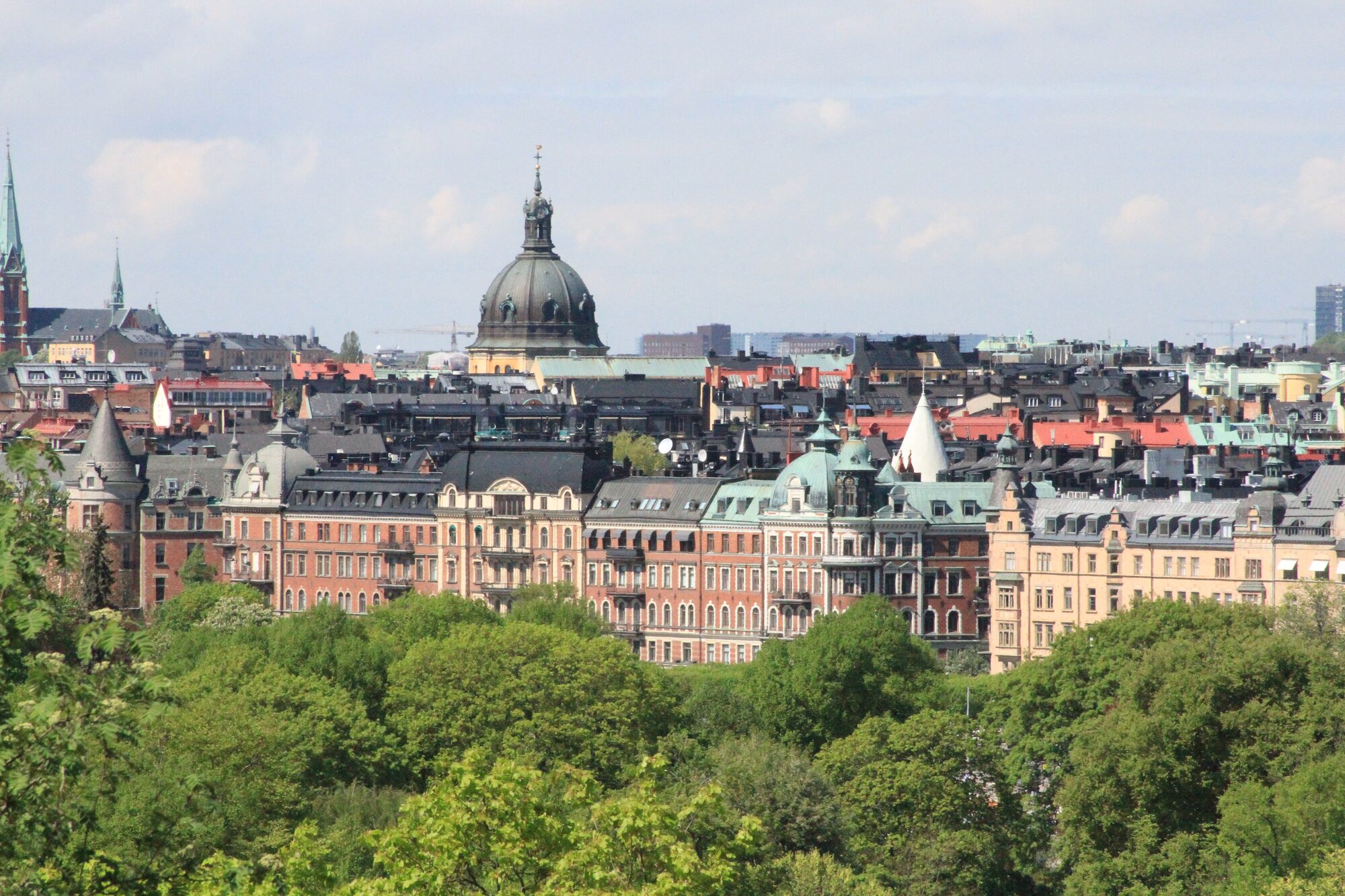
Stockholm

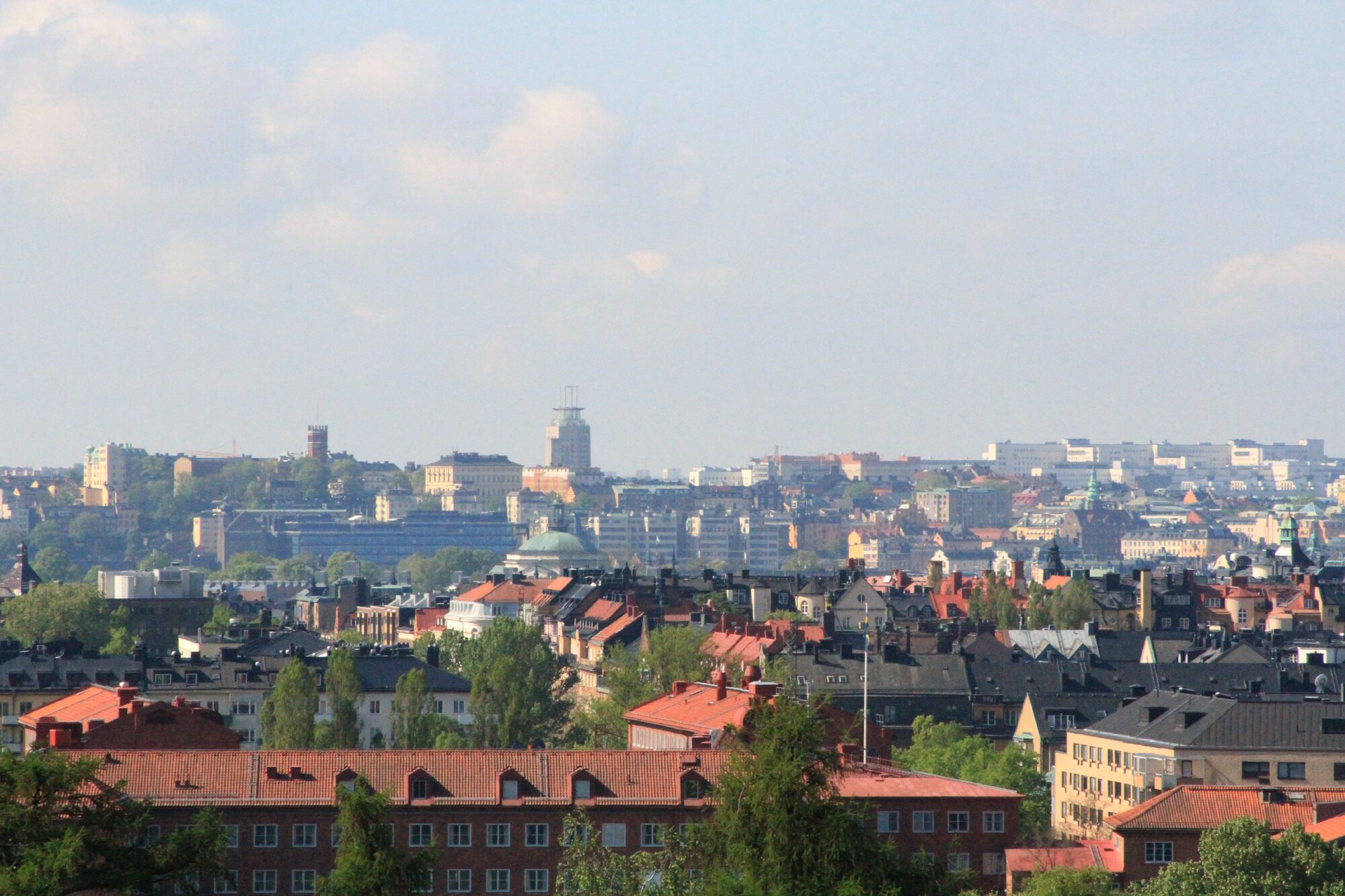
Stockholm

All cities that have 10%-55% biking mode share and it’s growing. They all have vibrant music scenes, from heavy metal to jazz to classical. They all have extensive art, museums and places of learning. They all have exceptional standards of living, and livability that’s off the charts.

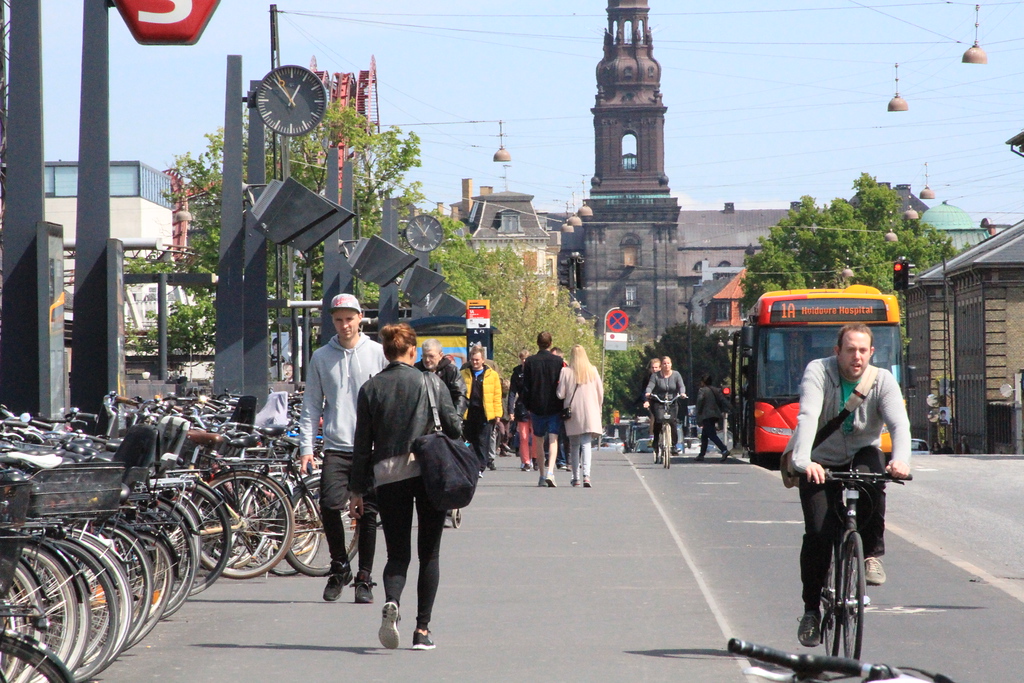
Getting around in Copenhagen. Not many cars stuck in traffic, but lots of people getting to where they need to and enjoying the heck out of life doing so.

Getting around in Copenhagen. Not many cars stuck in traffic, but lots of people getting to where they need to and enjoying the heck out of life doing so.

All of these places are destination cities for expats that regularly go through Portland first. People in the United States that are sick of the absurd auto-dependency often have a very familiar and growing pattern of travel. They leave whatever place they were born in the United States and head to Portland, Oregon. It is after all one of the most travelled to and moved to cities in the United States. It’s the only city in the United States that has managed a net gain of immigrating American resident versus San Francisco (which means more people immigrate from San Francisco to Portland than from Portland to San Francisco, every other city loses residents to San Francisco nationally).

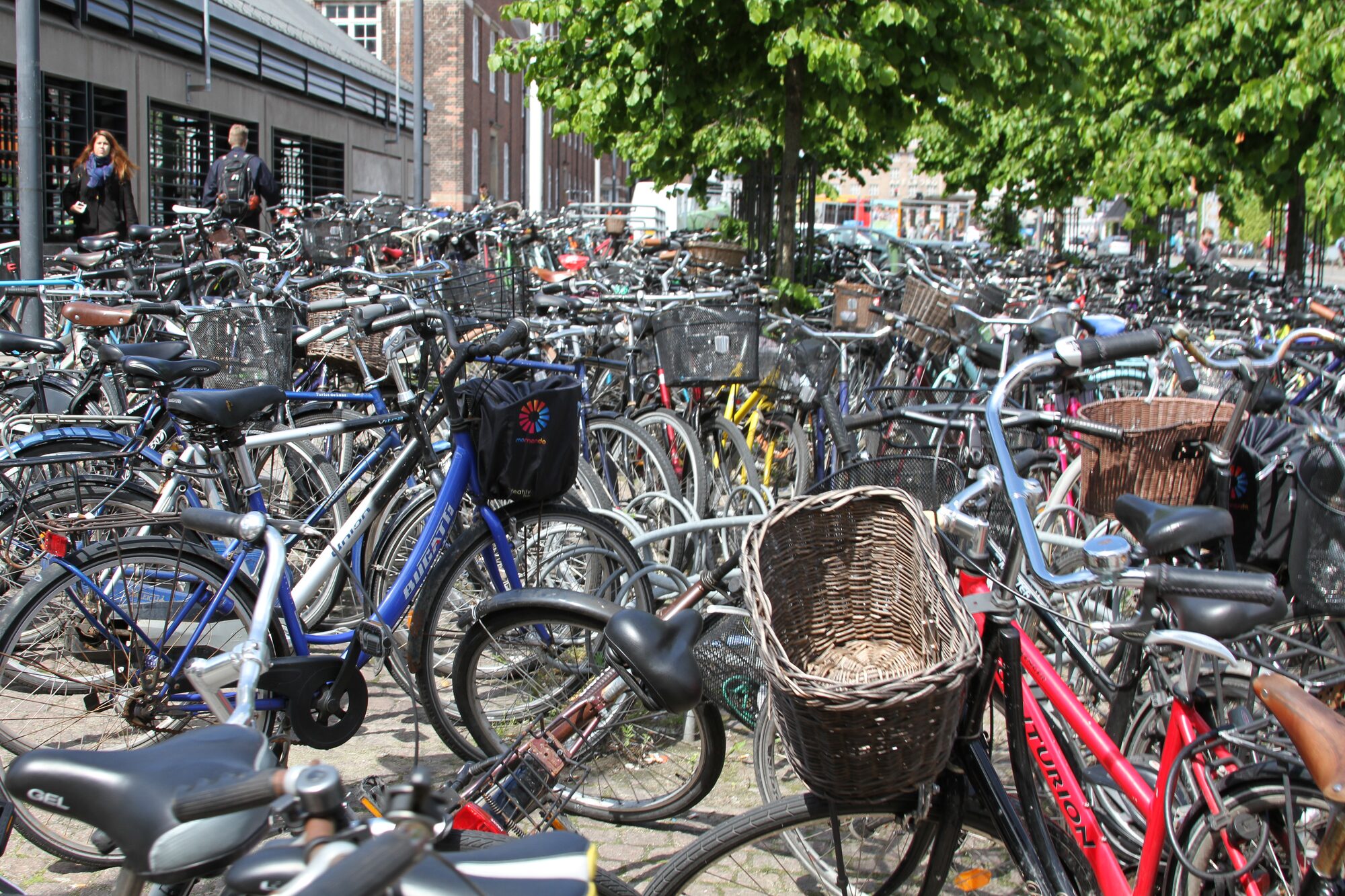
A recurring theme. Cities with high livability and exceptionally high happiness scores all are rooted in active populations. Making scenes like this small parking lot of bikes (several hundred are here) a common site.

A recurring theme. Cities with high livability and exceptionally high happiness scores all are rooted in active populations. Making scenes like this small parking lot of bikes (several hundred are here) a common site.

The flow, at this point in history, then stops for the most part. However there is a steady trickle of people turning into expats in the aforementioned cities. Because of biking. Because of art. Because of belonging. Because of lifestyle and access to amenities. Because of standard of life and actually living a full life. Because of not being stuck in a lifeless American suburb. That all leads me to the next point…

Stand up Portland, Competitive Yes?

That’s nice that we, as a city of neighborhoods and communities with a huge community involvement over the US in general, have created a better than normal standard of life than the rest of the US. But we pale in comparison to the cities mentioned above. Copenhagen is world class in every regard, so is Amsterdam, neither are exponentially bigger or have any reason – other than they’ve worked together to create what they have as a people, as a city – than Portland does. Any city in the US for that matter.

But we need to look at what spiral we’re in as a city. We need to keep pushing not just for biking. We need to build focus on art, music and more. We need to allow these things to expand with arbitrary invisible brick walls stopping people from enjoying them. Is there any reason a 15 year old shouldn’t have reasonable performance options for their music? Should we actually be stymied by absurd lack of art and music funding in schools? Why do we hold on to our auto-dependency like the crutch that it is toward better lives?

Portland has a lot of room to improve, it has a lot of things on the plate. I made a decision a few months back after visiting Scandinavia that I’d give Portland a few years – and I’d bust my ass trying to organize, advocate, activate, and otherwise build this city to something more. We need to work as a city to prevent it from merely being a gateway to places that truly are so far ahead of our dear city in so many ways. We can have leadership in design, excel in opportunities, enjoy and create music and art, and get around without killing each other too, but we’ve really got to step up.

Simply, I’d love to live in Copenhagen or Amsterdam, but I was born in the US and I’d like to give it my all to make Portland a worldwide leader, not just a US leader in livability and lifestyle options. That’s not enough for me, and shouldn’t be for any American.

Things that drag this city down... we're still paying for the sprawling mess of yesteryear's plan of highway development. Desecrated business, clumps of car lots and dependency on a completely unsustainable system

Things that drag this city down… we’re still paying for the sprawling mess of yesteryear’s plan of highway development. Desecrated business, clumps of car lots and dependency on a completely unsustainable system

…all that said, I’m off to do some advocating and activism organizing. Keep up the fight Portland, we’ve got a long way to go and a lot of things to get done to get there. I’d love to say one day, see the immigration in and out of the city of Portland and not see a single expat to one of those wonderful cities, knowing their happily staying here in Portland helping to build the city into something more. Being able to know that we share much with those cities, but stand as a peer with respect then merely as a follower of the grand cities.

With that, off to do that advocating now… cheers!

Town Centers, Lents, Division Street and Portland Chaos Machine, Nobody’s Happy (Which Isn’t True)

Today I dove into the middle of a conversation on twitter. Twitter, it seems to be the conversation machine of short blurbs and broken context. So this blog entry is actually dedicated to the conversation that started off, at least for me, with this tweet.

The Mount Hood Freeway Gave Us Modern Day Division

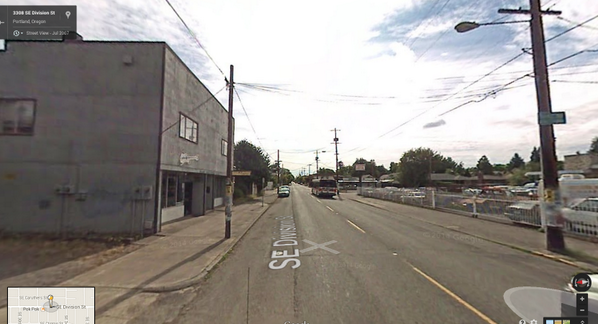
That tweet was actually a response to Tony’s @twjpdx23 tweet of “The Mt. Hood Freeway did the whammy on that street and what we’re seeing now is repair, IMO.” which was in reference to Division Street. Which is interesting as Division Street and the entire neighborhood was supposed to be replaced to put in an Interstate from south downtown Portland that then would run out to I-205. I-205 of course is there, the Interstate that was supposed to replace Division Street was stopped. Then thousands of people lived there, and would have their houses taken and been forced to move, and today thousands plus thousands more live on this street in this corridor in one of the most sought after neighborhoods in the metro region.

Division Street however has had declarations that it is gentrifying to the simple hipster moniker of “it’s so over”. It’s important to note how little has actually been lost that was residences on Division, almost all new apartment buildings and retail on the base of those buildings replaced something Tony pointed out with this tweet.

https://twitter.com/twjpdx23/status/527216080792469504

Division was a pseudo wasteland. Sure some people lived along the street but it contained a lot of junk yards with dead automobiles, lots with empty businesses that had been boarded up and several buildings that were used as really cheap storage for junk. These were buildings that did nothing for the surrounding community. There were also several auto shops that were shuttered, and if I recall a gas station or two that were also shuttered. Arguable, this was all shut down or lost business because of the Mount Hood Interstate threat, but whatever the case, Division was a cost center and not a contributor to the overall city as a whole. That however has already changed very quickly.

In many ways, Division Street has become another Portland street that has the standard popular Portland establishments at retail level amid a number of brand new 3-4 story apartment complexes that line the street. These apartment complexes are all without automobile parking. There have been a number of complaints about these apartments, from their outwardly plain and disgusting appearance to people being horrified that people might move in with cars and park them in the free on street parking. Which the later fear is coming true, they are indeed parking some of their cars in the free, publicly funded, publicly accessible on street parking.

The neighborhood of course feels entitled to their parking, which of course is publicly funded, publicly accessible street space that is allocated by the city for on street parking. No individual owns these parking spaces, they belong to the city and thus the people. Anybody can technically park there and they absolutely have the right to do so.

One of the other twists is that most of the houses that exist in the neighborhood were built when the neighborhood was originally built as a streetcar suburb. Which means the sidewalks, roadways, the now removed tracks, the initial public spaces like parks, sewer, and other items were paid for by that generation of residents and the streetcar companies and developers. Along with that, being they had easy access to a streetcar and little need for purchasing power to buy up a bunch of cars, nobody had garages. So this only adds to the current residents feeling entitled to on street parking. The city of course has exacerbated this feeling and ideal among the citizenry because they took over street maintenance, sidewalk maintenance and other amenities in light of the streetcar systems and developers being – in effect – destroyed generations ago.

Summary:

The Mount Hood Freeway project and others were stopped by the community with the help of anybody and everybody that would aid them. This was done during a period of mass protests against the destruction of neighborhoods in cities displacing thousands upon thousands of people, drawing lines and segregating people throughout cities and condemning the poorest of the population. Portland was one of the cities that stopped this perverse march forward that the United States was undertaking at the time.

By doing so, just the declaration of an Interstate going in on Division set in motion actions that would snuff out Division for decades to come. Division, after all those years of being devalued, is now being rebuilt. This is how it is turning out, and it is turning out this way from tons of input from citizens over there years. But of course, those not involved are now complaining the loudest, albeit we’re not even sure exactly what the result of these developments will bring us.

Conclusion: 

  1. The Mount Hood Freeway being gone is a damn good thing. I’ve not met a single person that says the project would have been a good thing, and I’ve met many hundreds and hundreds of people that I have discussed this with since I moved to Portland in 2001. Before that on visits I’d even heard about the mythic Mount Hood Freeway, always talked about with disdain. Safe to say, good riddance.
  2. The current development, my conclusion is that I’m going to hold my vote on whether it’s the catastrophe some are making it out to be. I know for a fact there is an increase of car-free individuals living in those car-free apartments. There are many people that have moved here from as far as Australia, North Carolina and as close as Hawthorne on over to Division. Many people love the retail along the street, and many love Pok-Pok, Whiskey Soda Lounge and the other extremely local establishments along the street. It’s still very much an amazing and awesome neighborhood.
  3. My opinion on how the apartments look and how they hang over the street however is that they’re disgusting. Someone did a really bad job of their design and it does look like shit. They’re just too close to the street, overshadow and cut out too much light at street level for such a small street as Division.

Taxes Maintaining the Status Quo

So now we have an entitled population that demands all of these services, has no insight to their actual cost and screams loudly that they must have these amenities. Fortunately for Division Street residents they have already made changes and started the process of getting what’s theirs! Because we all know, as Hart Noecker pointed out during the conversation,

https://twitter.com/HartNoecker/status/527258073899888640

Which in large part it’s pretty hard to disagree, if we look at the data, the tax money generally stays or moves in two ways.

  1. It eventually ends up back where it started, but usually devalued as it sat in float in Government hands for weeks, months or years in some cases. You can bet, whatever it is you pay to Government, by the time it actually gets used in the economy to have something happen, it’s a good 5-30% less valuable then when you handed it over (had it taken) in taxes.
  2. It floats up. This is the other very likely occurrence. An absurd amount of taxes goes to keep an unsustainable military afloat and a massive corporate welfare check that needs cut every month. Sometimes, in some weird perverse way this ends up going into the economy, unfortunately also usually when it has been devalued to some degree and buys less than what we’d have hoped to get for it.

This tweet also pointed out how money stays in Cora’s @bungalowranch region via Metro, which alludes to the previously stated observations of tax revenue flow.

So in the end, yeah, taxes generally act as a maintainer of classist society the way the United States has them setup – keeping people in their particular stratus in the whole hierarchy of things.

Summary:

Current tax structure sucks at providing upwards mobility to citizens in the United States. It doesn’t server the poor to lift them up effectively nor does it serve the middle class except to devalue and redirect funds in ways that usually don’t follow back around to actually lifting up the middle class.

Conclusion:

Taxes, specifically the way they’re setup in the US and in some part Oregon/Portland are kind of just crappy.

So thus, I digress, it’s an important point in the conversation but back to Division Street and on to Lents…

Division to Lents Neighborhood

Division Street has since stopped almost entirely any new apartment buildings being added that will have no parking. They’ve re-added parking minimums increasing the cost of construction for any new buildings. They’ve already started to limit various new projects and the comprehensive plan which would or will allow rezoning of areas is currently being discussed (as I mentioned in a previous entry). Overall we all get to see now how Division will continue to develop and if it will be an example to mimic or learn what not to do in the future.

But that leads me to the next comment that was made that I had to disagree with. Love the Division Street development or not, this one threw me a curve ball, as it seemed to conflate things in ways that happens somewhat frequently.

Now, being Twitter, I’m not declaring that I know 100% Cora’s full context here. Based on our conversation she’s an intelligent individual, so I don’t want to front load context here but…

Division has primarily been built up by private developers. There has been some public money funneled into repaving the street, sewer, street clean up, fixing bus stops and other amenities. Just like Lents got, to the tune of about $96 million dollars per Willamette Week’s article Razed & Confused. Now that $96 million was primarily public money, which is nowhere near what is being spent on Division. However the private money, if Lents was deemed worth investing in and the red tape wasn’t too thick, would gladly follow to the area. In many ways, it is very possible that it does, however…

Lents still has zoning issues and related concerns that Cora points out. But it all points back to what I tweeted and attempted however poorly to explain (again, I blame the inability forming cohesive thoughts on the weakness of twitter and the annoyance of conversing with 104 characters per statement). I had stated that the private money, which is the primary force developing the Division Street retail, residential and other establishments right now is not something that isn’t available to Lents. If there is an area worth investing then private money will become available, it’s how the American economic system of banking and capital investment works for the private sector.

It seems there is a notion that the city, which the city leaders are somewhat mistaken in this regard too, can somehow direct private funds to specific jobs to city build or town center build. These however are things that are built not by some far removed city core, but by the community of neighbors that live around that particular town center. Not by the metropolitan core which is embodied in Metro. So…

Summary:

The city of Portland, through Trimet, Metro and other entities can’t whimsically turn a designated area into the next Hawthorne District of help Lents magically recover after the Federal Government and Portland wrecked the city when they shoved I-205 directly on top of the town and annexed it (re: Lent History). Especially when the zoning has been left all out of whack, car focused and otherwise broken to actually rebuild a town and respective modern town center in the area. People that live in Lents however should comment on the 2030 Comprehensive Plan thoroughly to provide as much planning detail on the problems they see and on how to fix them as they possibly can at the http://www.portlandmaps.com/bps/cpmapp2/!

Conclusion:

The Division Street build out has likely displaced many people because of rising rents. However the development that has gone on there has in no way been removed from development money that went into Lents. Lents simply needs zoning fixes and has a fight before it to truly redevelop well in the face of current issues.

To learn more about Lents and dive into this battle and help the area become a great neighborhood (not that it isn’t) that is based on a great town center ideal that provide people greater livability, check out these resources:

Action Item: Now I’m hellbent in getting up to speed on the Lents area, I’ve still got a bit to read.