Portland’s Light Rail Advocates

There are a number of people types when it comes to light rail in Portland. I’ve set out to put together a view of those types. First off, I’ll describe the two types I find myself fitting into.

Backbone Advocates” – Ideal: Light Rail is a great arterial back bone for a transit system.

These advocates see light rail as a great core service provider for moderate to heavy use lines. They’re often likely to want light rail (LRT) over bus rapid transit (BRT) in almost every scenario. The key reason, is because growth can congregate around light rail far better than almost every other bus option. A backbone advocate is also dramatically less likely to use a bus over or in lieu of light rail.

Cycling Transit Advocates” – Ideal: Light Rail are useful, buses are a pain, I’d rather just bike.

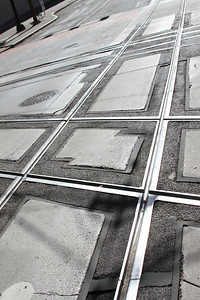
Ok, this category I fall into a lot. Buses are effectively useless and dangerous to cyclists. More so than the tracks in the street. Buses have been the vehicles that have killed almost a dozen of cyclists over the last decade. Many of them children, 5-12 years old. Beyond that, the bus carries two cycles at the most. None of the bus drivers barely know a thing about placing cycles on board. So effectively a bus carries 2 cycles, light rail – a one car train – can carry 4 on racks, and almost a total of 4-6 in between the entrances in the open area for a grand total of 8-10 per car. Most light rail runs with 2 cars, giving a total of 16-20 bikes per train. Buses can’t even remotely touch this. The last fact is simple – streetcars and light rail don’t merge onto you when you’re biking. That makes the rail based streetcar or light rail option the only real transit option for cyclists.

Derp Advocates” – Ideal: Light rail is nifty, I like the way it looks.

These advocates love light rail. They’re not sure they know why they like light rail, but they like it. They like how it feels and they feel X, Y or Z about it but usually can’t back up any of those reasons. These are the people that vote for light rail, and want it because it’s green or it looks pretty or some other non-functional, not really true reason to want light rail, but they love it anyway. These advocates are useful for their votes for light rail, but politically they’re as detrimental to light rail as any other thing someone may advocate for. Basically these advocates are the urbanized version of a dumb red neck that thinks the highways are part of the free-market.
Numbers Advocate” – Ideal: I can statistically prove why light rail is the superior option.

These advocates don’t care about passion or how one feels about something, they’re here to prove everybody else wrong and those that oppose light rail just can’t do simple math. They’re often harsh and introverted to the extreme. These advocates are huge political help when light rail comes up against the “it’s too expensive” or “it doesn’t carry enough people” or whatever other nonsense someone comes up with. These advocates are the ones who do analysis on every single thing they can find. Very useful for bringing up the argument of what light rail really does for a city, but not someone to advocate in front of the camera.

Car Hater Advocate” – Ideal: It aint a car, build it. End of story.

This advocate is simple. Sometimes a cyclist, sometimes a curmudgeon, or whatever they may be they are against anything car related. They often have a host of reasons, all very legitimate, but something society just can’t face no matter how true they are. This advocate doesn’t care how expensive a line gets, doesn’t care if it messes up existing traffic, and only cares about getting the line built. These advocates are politically damaging but often bring with them a number of other staunch advocates in the above categories.

Common (Wo)Man Advocates” – Ideal: I’ve analyzed what data I could find, looked at the benefits and negatives and this seems like a great option.

These advocates are the most important, politically and for ridership reasons. They are the people who will be the core ridership of the line and also will make a line politically feasible or not by discussing and carrying on conversation to build political momentum for a line. They may come to community meetings, they may not, but they’ll be talking about light rail at coffee shops, in the office, over the water cooler and anywhere else the topic comes up. They’ll talk about the pros and cons of the line and say they lean toward building light rail and riding light rail.

I Hate Traffic Light Rail Advocate” – Ideal: If they build other stuff for other people to ride on then I won’t have to deal with as much traffic when I drive.

This is the hypocrite, yet very important ally in the battle to get light rail transit systems built. These advocates, albeit horribly misguided in their notions of what does or doesn’t create traffic, are key in winning votes to get light rail built. Even with the facts around human behavior and induced demand, these advocates have some odd idea that transit will resolve the idiocy and failure of auto dependent roadways.

Summary

So this is kind of the bullet list of light rail advocates. Are there others? What’s your take? In a subsequent entry I’ll post the light rail haters list. It’ll follow the same basic premise. If you have any suggestions for those, let me know your feedback on that too, it’d be much appreciated!  😉

On a Positive Note, Take a Route & Have a Beer!

Recently the Willamette Week had a great beer crawl transit + bike + walking routes list put together. Your’s truly made the list! I helped kick off this with the Trimet Route #4! Great list!!

Seattle Loses 17% of Transit Service

Ok, so it hasn’t happened yet. But as one would expect, more cuts are on the table. The Feds haven’t fixed the transit situation with funding options & the local cities & states just keep sucking money out into other solutions. It’s kind of par for the course. Seattle is threatened with a 17% loss in service. Most bus lines would lose one out of every bus. The only lines that would likely remain untouched would be a few of the Rapid Ride lines and high capacity runs during rush hour. But everything else is up for cutting.

What can you do about it as a citizen of Washington and Seattle? Go and message your elected leaders.

The US is seriously losing it’s ground right now, it’s happening fast. This is seriously getting interesting in some scary kinds of ways. Weigh in with your opinion, it may be the difference between standing in the cold, sitting in MORE traffic in Seattle or worse.

The Whole Columbia River Crossing, The Other Pending Financial Catastrophe

Dammit. I have things to do, but of all the issues facing Portlanders, Vancouverites and in some very indirect ways the general populace of California, Oregon and Washington, feel the need to inform & provide my frustration with the current state of the I-5 Project. The last few rants and ramblings on Facebook have been without much information, just “go call your senator” and what not. I’d mistakenly assumed that people knew the situation surrounding the I-5 Bridge Replacement.

First things first let’s talk about what the I-5 Project is. This project is generally referred to as the CRC or Columbia River Crossing Project. It is intended to replace the I-5 Bridge, add light rail, and dramatically change out and increase the interchange access for local traffic on Jantzen Beach, access to Vancouver, and a number of other interchanges in Vancouver and a few in north Portland. The total price tag is *estimated* at about $4 billion dollars.

Now a few facts that will not change.

  • Trimet == Tri-County Metropolitan Transit Authority. The transit service, that generally serves the three counties of the Portland Metro area excluding Vancouver.
  • C-Tran == Clark County Transit. The transit service that serves the Vancouver area, which generally equates to express service that travels into Portland and drops off people that work in Portland and live in Washington.
  • This project, overall includes Trimet, C-Tran, PDOT, ODOT, WADOT and other agencies working together, sort of. There’s a LOT of politics and disunion already. (and yes, I’m stating that as a fact, the fighting has become public several times.)
  • The project will cost at minimum $4 billion dollars. Not less.
  • The project includes a toll for traffic coming from Vancouver, because Vancouver doesn’t have the kind of money to build a project like this. The majority of funding, in order, will come from the Federal Government, Portland and then everybody else.
  • The project does include light rail, which Vancouver will INDEED fund part of, regardless of the recent vote because Vancouver/C-Tran has already promised this through other means.
  • The project includes pedestrian access.
  • The current design has to change for various legal, safety and regulation requirements around the airfield and river traffic. (The plan itself generally costs hundreds of thousands and includes millions of dollars of work)
  • The throughput lanes remain the same for the entirety of the bridge replacement.
  • The only net new throughput would be the light rail line into downtown Vancouver that would extend to the community college.
  • The rail bottleneck would remain untouched. This costs over a billion in delays and congestion every year to the metro area of Portland, the city of Seattle, and delays downline to San Francisco, Oakland and even Los Angeles. Yes, it is THAT big of a bottle neck and this project does nothing to change this.
  • The road based freight delays on I-5 are negligible by comparison and much of that freight traffic already diverts to I-205.
  • The majority of traffic that turns into stop & go and delays on I-5 between Vancouver and Portland is 70% local travel. The information available also points out that the majority of this traffic ends up exiting the Interstate within a few exist north or south of the Bridge. In other words, the traffic isn’t even into or out of Portland itself, but only to the immediate areas around the Columbia River. (One using deducation, might say we need a local arterial for this traffic)

So now that I’ve pulled together these facts, let’s look at a few other things not related to the CRC, or also known as alternatives. Here’s one that is really well put together.

This is one of the solutions, or alternatives, that has been put forth. But alas, I’ll include the proponents material too. It’s available via the Columbia River Crossing site that has been put up here: http://www.columbiarivercrossing.org/ProjectInformation/ResearchAndResults/AlternativesConsidered.aspx

Yes, there is a website dedicated to the projects implementation. There’s also the Bike Portland blog that has a great write up on it (it’s not anti-car per say, just informative for the most part).  http://bikeportland.org/2011/04/27/video-explains-common-sense-alternative-to-crc-project-52147

Also, while we’re at it, give a listen to this individual. He points out the damage the Interstate has already caused and many of the related issues that we already have to deal with, without making the problems worse by building a massive bridge that barely resolves any of the traffic issues.

So anyway, go learn about it, and PLEASE take a minute or two and call your Senator about this. This project as it is will dramatically decrease what can be done in the future to actually deal with traffic, it will decrease the amount of funds for other things in the city budget too, such as schools, existing infrastructure, etc. This project is going to expand the debt burden for the next generation, i.e. your kids and teenagers you’re raising now will have a significant debt to deal with from this bridge. All of these debts and such and it will provide no new net capabilities.

I’m not against building something. We need to expand infrastructure capabilities and clean up our mess as a society in this area. BUT, this CRC solution as it is laid out adds more burden than it adds solutions. So get out and get vocal in your opposition.

Just call, leave a message, write, or whatever you feel like doing. It only takes a minute or three. They will not argue with you, they will not insult ya, they will take your opinion and then act upon however they see fit to represent us. It DOES influence things if you make your opinion and knowledge available.

In Denver, Finding Amtrak…

Today is Friday, the last day of the engineering meetup I came to Denver for, but the first day of city, coffee, transit explorations and finding my egress point from Denver, Amtrak. Currently Amtrak isn’t using Denver’s grand Union Station because it is being worked on and renovated for multiple rail lines, transit connections and other things as Denver’s upcoming intermodal hub. The station is without doubt absolutely beautiful. Here’s a photo of it with the Oxford Hotel sign in the forefront, my residence while staying in Denver this week.

Union Station, Denver

Union Station, Denver (Click for the large image)

I made a short video of my expedition to find the Amtrak Station.

Finding Amtrak in Denver from Adron Hall on Vimeo.

Stay tune, I’ll have more videos, photos and information on Denver real soon. It’s a beautiful city with a lot of upcoming potential. The downtown is booming, even when it’s freezing. Overall I’ve been impressed. You’ll be hearing more about Denver here on the Transit Sleuth real soon.