Link Line 2

The 2 Line across Lake Washington is finally real.

Not “rendering in a Sound Transit planning deck” real. Not “sometime after the next delay” real. Real as in: board a Link train, cross the I-90 floating bridge, get off on the other side, and go about the rest of your day without negotiating with traffic on 520, I-90, Bellevue Way, Mercer, or whatever other regional asphalt car sewer ritual the day was threatening.

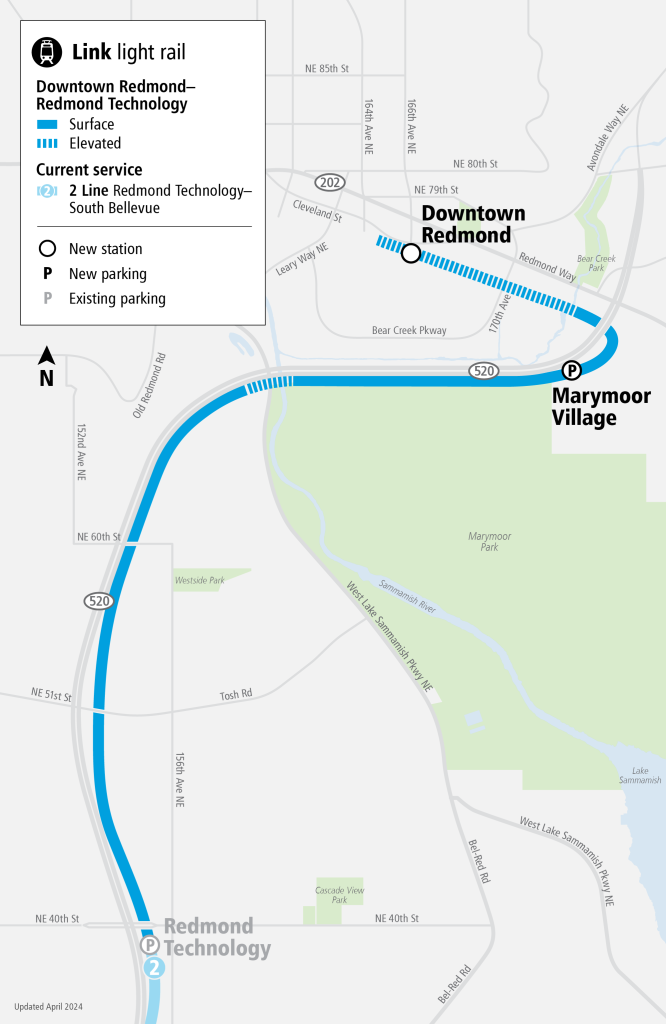
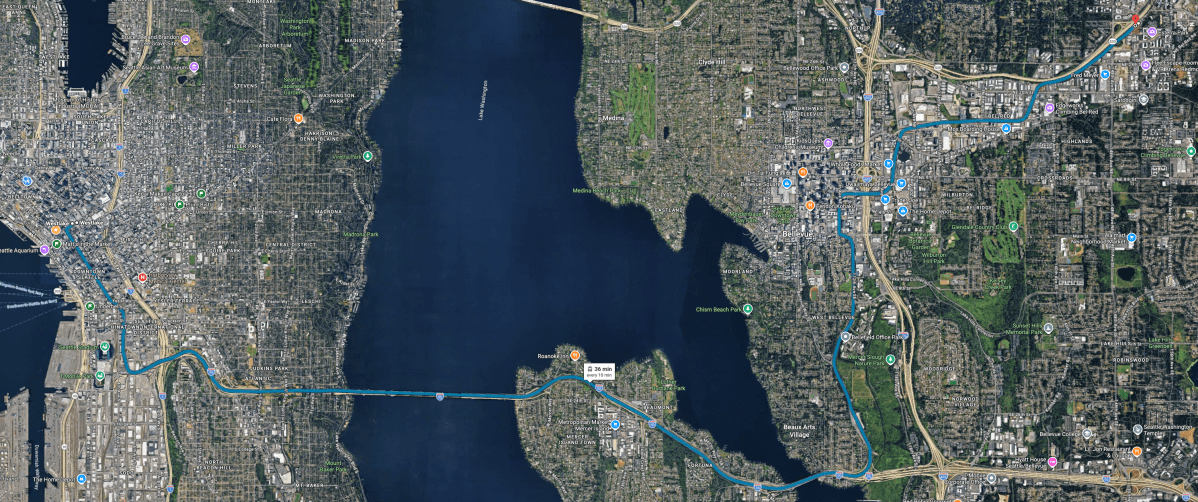
Sound Transit opened the Crosslake Connection on March 28, 2026, completing the 2 Line and connecting Redmond, Bellevue, Mercer Island, Judkins Park, downtown Seattle, and Lynnwood into one operating line. The agency notes that this brings the Link system to 63 miles and 50 stations.

That is a big system now. Not a theoretical one. Not a “starter line.” A real regional rail spine with two overlapping lines through the Seattle core.

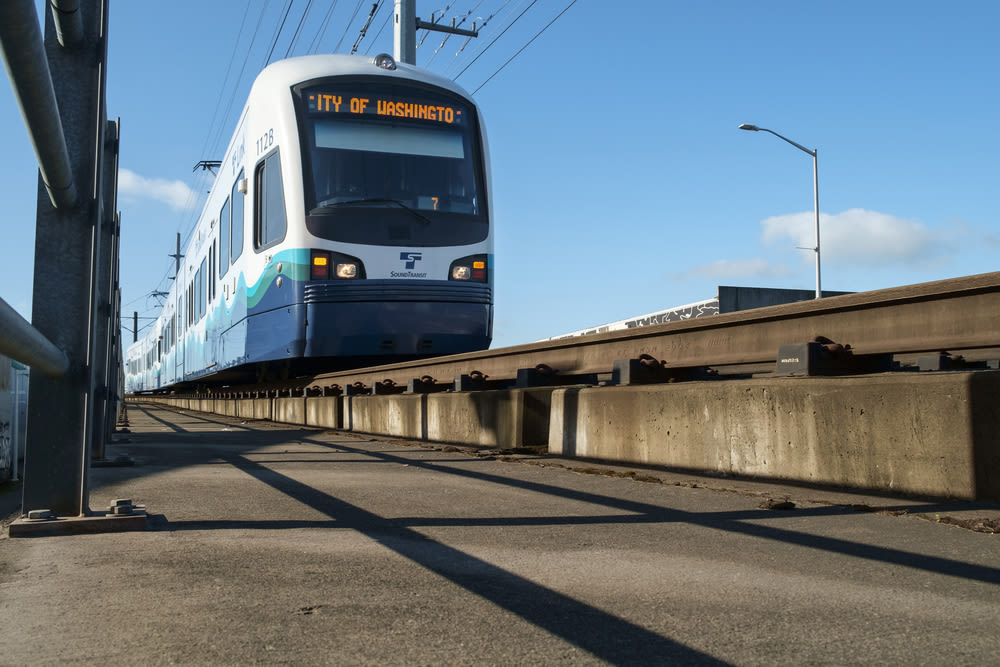
And technically, the cross-lake segment is the interesting bit. This is light rail running across a floating bridge, in passenger service, over Lake Washington. That is not normal. That is not a thing most rail systems have to solve. It is the kind of civil and systems engineering problem that sounds like a dare.

The Alignment Is the Feature

The 2 Line’s new connection is just a handful of miles, but it changes the entire topology of the system and the key areas that the Link system connects is substantial. Bellevue for example is a city center and a surrounding population of about 150k people and then beyond that is Redmond, a city that has a population around 90k.

Before the cross-lake opening, the Eastside segment was useful but isolated. It was a nice rail line doing Eastside things, but operationally it was not yet part of the regional pattern most riders think about when they think “Link.” Once the I-90 segment opened, the line stopped being a segment and became a network connection.

The trip from Bellevue or Redmond to Seattle is now a rail trip, not a bus-to-traffic probability exercise. Mercer Island is no longer just a park-and-ride transfer geography. Judkins Park becomes a real rail access point for the Central District and I-90 corridor. International District/Chinatown becomes the key hinge where the 1 Line and 2 Line overlap and then split.

Sound Transit says peak service at the new stations runs about every eight minutes, with 10-15 minute service the rest of the day. Between Lynnwood City Center and International District/Chinatown, the 1 and 2 Lines interline for roughly 4-5 minute headways. That is the important operational detail. The cross-lake opening is not just a new branch. It adds frequency through the shared trunk.

The Floating Bridge Part Is Still Wild

The engineering problem here is not “put tracks on bridge, run train, enjoy lake views.”

Floating bridges move. They flex. They rise and fall. They respond to wind, water, traffic loading, temperature, and the general reality that Lake Washington is not a static CAD file. Rail, meanwhile, is not fond of sudden geometry changes. Steel wheels on steel rail want alignment, predictable tolerances, smooth transitions, and electrical systems that do not behave like someone built them during a team offsite.

That is why this segment took real systems integration work. Sound Transit spent 2025 moving from unpowered tow testing to powered testing, pre-revenue operations, simulated service, and then passenger service. That progression matters because rail openings are not just construction completion. They are operational proof. The train has to work as a vehicle, as part of the signaling system, as part of the power system, as part of the operator training regime, and as part of the daily schedule. Even when it seems simple – and that’s the aim – it really is much more complex than that!

Crossing the bridge feels smoother than the engineering challenge would suggest, which is exactly what good infrastructure should do. The public experience should be boring in the operational sense. The extraordinary part should disappear under the regularity of service.

The Vehicles: Familiar Link Hardware, New Operating Pattern

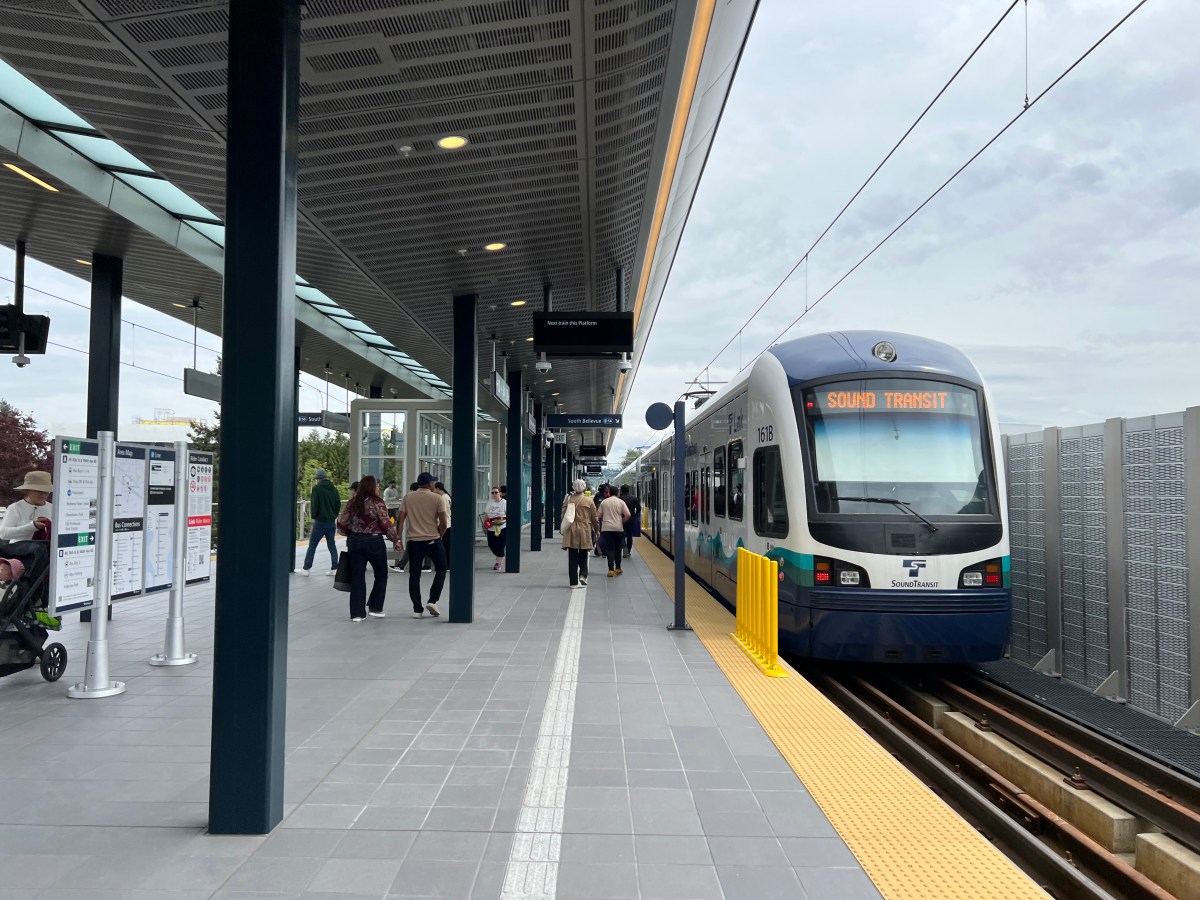
The vehicle fleet itself is familiar Link light rail equipment. Sound Transit’s Link fleet includes older Kinkisharyo Series 1 vehicles and newer Siemens Series 2 vehicles. When the first Series 2 cars entered passenger service, Sound Transit described them as Siemens-built vehicles joining the original Kinkisharyo fleet, with larger windows, more bike racks, wider center aisles, and updated passenger information systems. They are now part of the same general Link operating model: coupled light rail vehicles running as a trainset.

Each Link “car” is itself an articulated light rail vehicle with cabs at both ends, and trains are formed by coupling multiple vehicles together. Sound Transit documents from recent fleet and safety materials describe the Link fleet as a mix of Kinkisharyo Series 1 and Siemens Series 2 LRVs, designed to operate in multiple-car consists.

The train-length pattern is one of the more interesting operational differences right now.

The 1 Line has been associated with longer 4-car trains, especially through the busiest Seattle core and for major event loads. That makes sense. The 1 Line carries the airport spine, downtown Seattle, University of Washington, Northgate, Lynnwood, and now Federal Way. It has the mature demand profile and the big event surges.

The 2 Line across the lake is not running with that same constant 4-car feel. The operating pattern I have seen is more in the 2-car and 3-car range, which fits the current demand profile. This is a good example of Sound Transit matching capacity to actual load rather than simply maxing every platform slot because the system can theoretically support it.

That has tradeoffs.

Shorter trains mean lower operating capacity per trip, but they also mean the agency can keep frequency meaningful without hauling around excessive empty capacity all day. For a new cross-lake service still building travel habits, frequency is likely more important than maximum consist length at every hour. People need to trust that the train will be there often enough to stop checking the schedule like it is a ferry.

The 2 Line does not need to cosplay as peak-direction 1 Line event service all day. It needs to be reliable, frequent, legible, and comfortable enough that riders start changing default behavior.

Passenger Loads: Steady, Not Crushed (Thank Goodness!)

The passenger load is the part that feels most telling.

This is not an empty ceremonial train. People are using it. The ridership feels steady, real, and distributed across the line rather than concentrated only in one novelty segment. But it is also not packed in the way the 1 Line can get around stadium events, airport surges, or the UW-downtown crush.

That is not a failure. That is actually what you want to see early. It’s also something i’m really enjoying, considering I spent YEARS in Portland in crush capacity passenger counts on the MAX. That system is more expansive, but good God when it hits crush capacity and it is elbow to elbow only space – super annoying. That system had gotten to that points decades ago on the main trunk, and only after the pandemic wrecked ridership has it leveled back out some (albeit maybe leveled out too low). The Link trains on the other hand have leveled out at a pretty high ridership – but at 2, 3, and 4 car trains – hitting crush capacity is on the edges of some rush hours and game days, not every single day.

An overpacked new line is a capacity problem. An empty new line is a demand problem. A steady-but-not-crushed line is a habit-formation phase. Riders are testing it, commuting with it, using it for airport connections, cross-lake trips, downtown transfers, and the occasional “I just want to ride the new train across the bridge because obviously I do” (guilty as charged) trip.

The key metric will not be that opening-week enthusiasm, cuz it was packed then! It will be whether weekday usage settles into a durable pattern after the novelty fades and after bus restructures, employer commute patterns, university schedules, event traffic, and general regional behavior have had time to adapt.

Sound Transit has not yet published enough line-specific post-opening ridership detail to make grand claims about daily 2 Line volumes across the lake. So the honest read is observational: the trains are carrying people steadily, but the line has headroom. The system is not at crush capacity, and that gives the agency some operating flexibility while demand matures.

That is a good place to be for Seattle (and Bellevue, Redmond, and the other cities along the route!).

The Ride Quality and Passenger Experience

The ride itself is straightforward Link, which is mostly a positive.

Stations are legible. Transfers make sense if you already understand the Link pattern. The vehicles are familiar. The lake crossing is visually excellent without turning the trip into a tourist contraption. You are still on transit, not a theme ride, and that distinction matters.

The new stations at Mercer Island and Judkins Park are great practical additions. Mercer Island finally gets the rail station that has been argued about, designed, delayed, litigated in public discourse, and awaited for what feels like several geological eras. Judkins Park is the sleeper station in the set, because its value will grow as the surrounding bus, pedestrian, bike, and neighborhood access patterns mature.

The operational merge at International District/Chinatown is the piece to watch. Shared trunk frequency is useful, but reliability depends on maintaining schedule discipline where the two lines overlap. The more the system expands, the more Sound Transit has to behave like a mature rail operator rather than a project-delivery agency that happens to run trains.

What Works

The big win is obvious: the geography finally makes sense.

For decades, the region has had economic integration without transportation integration. Seattle, Bellevue, Redmond, the airport, the university district, and the northern and southern suburbs operate as one labor and cultural market, but the transportation network has forced too much of that movement through car traffic and highway buses.

The completed 2 Line changes that.

It does not solve every commute. It does not make Eastside land use magically dense. It does not eliminate the need for buses, bikes, sidewalks, park-and-rides, or better local connections. But it creates a rail option where one very obviously should have existed a long time ago.

The other win is the combined frequency through the core. More trains between Lynnwood and International District/Chinatown is not glamorous, but it is the practical improvement riders feel immediately. When a train is coming every few minutes, transit stops being an appointment and starts being infrastructure.

What I Would Watch

The first thing I would watch is reliability across the bridge and merge points. This is a technically unusual segment. It needs boring reliability over seasons, storms, heat, maintenance cycles, and peak service.

The second thing is train length. If 2-car and 3-car consists stay comfortable, great. If demand builds faster than expected, Sound Transit will need to add capacity without undermining reliability or starving the 1 Line fleet plan. The fleet has to serve the whole system, not just one photogenic crossing.

The third thing is bus integration. Rail lines do not reach their full value unless the local bus network feeds them well. The 2 Line can be excellent and still underperform if the last-mile and transfer patterns are clumsy.

The fourth thing is downtown transfer clarity. As the system adds lines and branches, passenger information has to get better. Occasional riders should not need a transit hobbyist friend to explain which train goes where or why things unfold during a routine trip in a certain way.

The Bottom Line

The Link crossing over Lake Washington is one of the more technically interesting transit openings in the United States, and it mostly behaves exactly how it should: like normal transit.

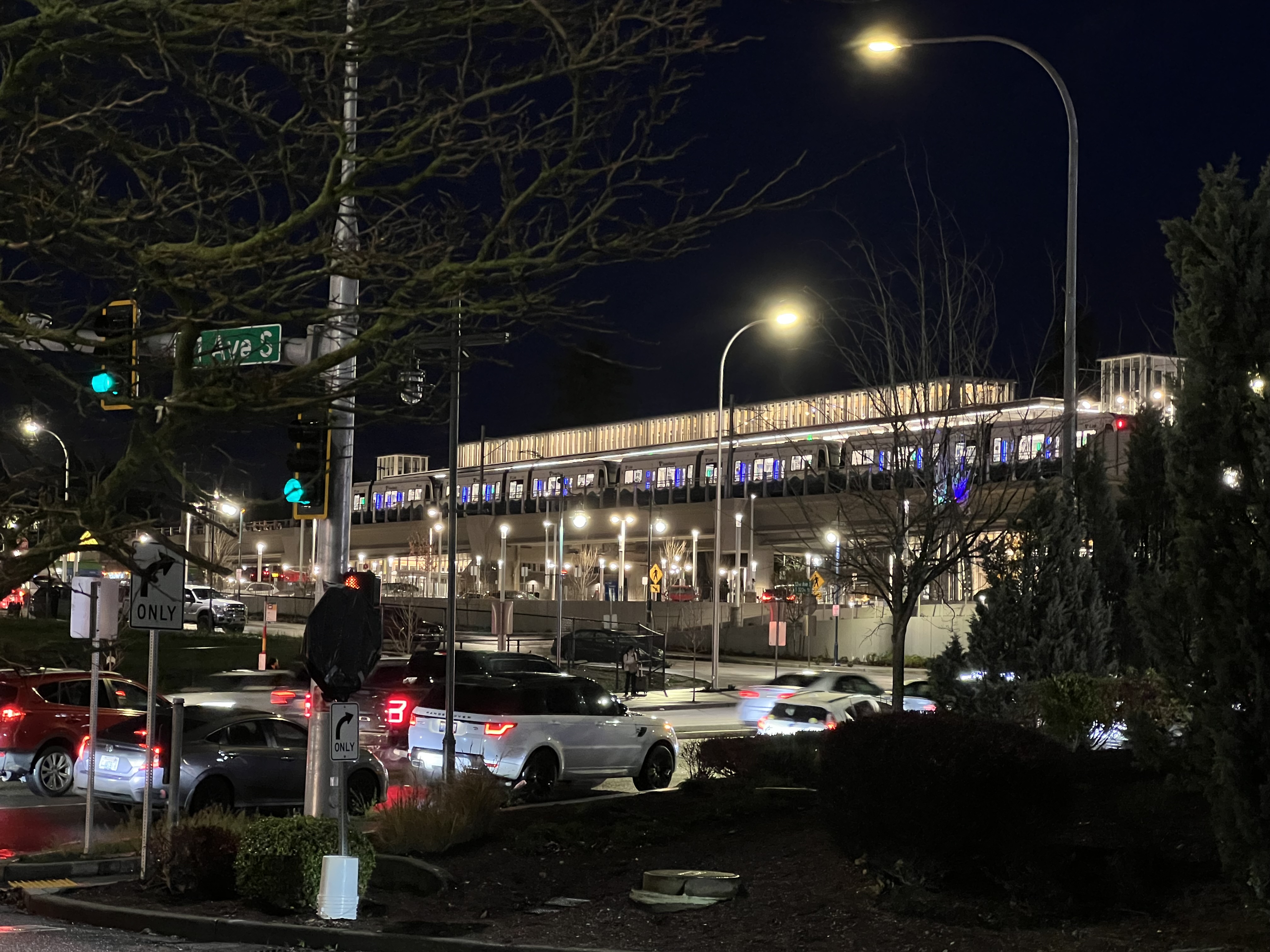
The infrastructure is unusual. The ride is ordinary. The trains show up. People board. The lake slides by. Bellevue, Mercer Island, Judkins Park, downtown Seattle, and Lynnwood become part of a single rail trip.

The 2-car and 3-car trains feel appropriate for current demand, especially while the line builds its regular ridership base. The 1 Line still carries the heavier 4-car identity through the busiest trunk and event-heavy portions of the system. The passenger counts, at least from observed loads so far, feel steady but not overloaded.

That gives the 2 Line room to mature.

And that is the real story. This is not just a new ride. It is the moment the regional rail map starts behaving like a regional rail map.

It’s about damn time too. Seattle has only been waiting for about 80 years to have rail service to the east side again. (IYKYK)
Lake Washington via Flanged Wheels

Finally.

Another day riding light rail across the lake.

It’s a striking and beautiful day. The sun is out, visibility is out to the horizon. Which in Seattle and the surrounding metro means we get to see mountains in 300+ degrees of our view. We look west, the Olympic Mountains are clear and majestic. We look east, the Cascade Mountains are clear and majestic. We look south, Mount Rainier “The Mountain is out”. We look north and there are mountains. There isn’t a direction that isn’t absolutely stunning, majestic, and beautiful.

The light rail is reasonably full of folks, seats available in both directions across the lake. The train is quiet, people are reading, looking out the window, or chatting quietly. It’s a nice ride. Something one, knowing the Seattle & east side areas, would expect.

I’ve finished half my route and am heading back downtown to head north of downtown to work at a place called 3rd Place Books. If you’re curious about the reference in the name, check out this post.

Once I arrive there, will work, then have a lunch meeting with a friend, then head back to the light rail to head back home.

Then later in the day I’ll head back to the east side to pick up kiddo and repeat the cross lake excursion.

Scooter Mania

One of the things we do to cover the last mile segments of the trip is to use our scooters; I’ve got an electric one since I’m usually lugging around all our stuff, and he has an analog foot scooter. So basically kind of a skateboard with handlebars. It’s a fun way to get around and with the last mile gaps covered, it makes the trips pretty quick.

The People & Cultures

Riding the light rail I find it really cool to hear the announcements in multiple languages. Generally what I’ve heard is English, Spanish, and Mandarin. Prominent languages of the people in this area. I love that we’ve got a pretty solid mix of people and cultures, which we all share in this magnificently beautiful place.

Anyway, it’s a gloriously nice ride this morning and I just thought I’d share a quick blurb of a post. Enjoy your day dear readers, cheers!

The Extension Stops: Three New Stations on the Federal Way Link Extension

On December 6, 2025 (YESTERDAY!) Sound Transit’s Link 1 Line extended south with three new stations, pushing the light rail system deeper into South King County. These aren’t just stops on a map—they’re infrastructure investments that will reshape how people move through the region, and they tell us a lot about what Sound Transit thinks South King County needs.

Let’s talk about each of these stations, because they’re all different, they all serve different purposes, and they all represent different bets on what transit-oriented development looks like in the suburbs.

Kent Des Moines Station: The College Connection

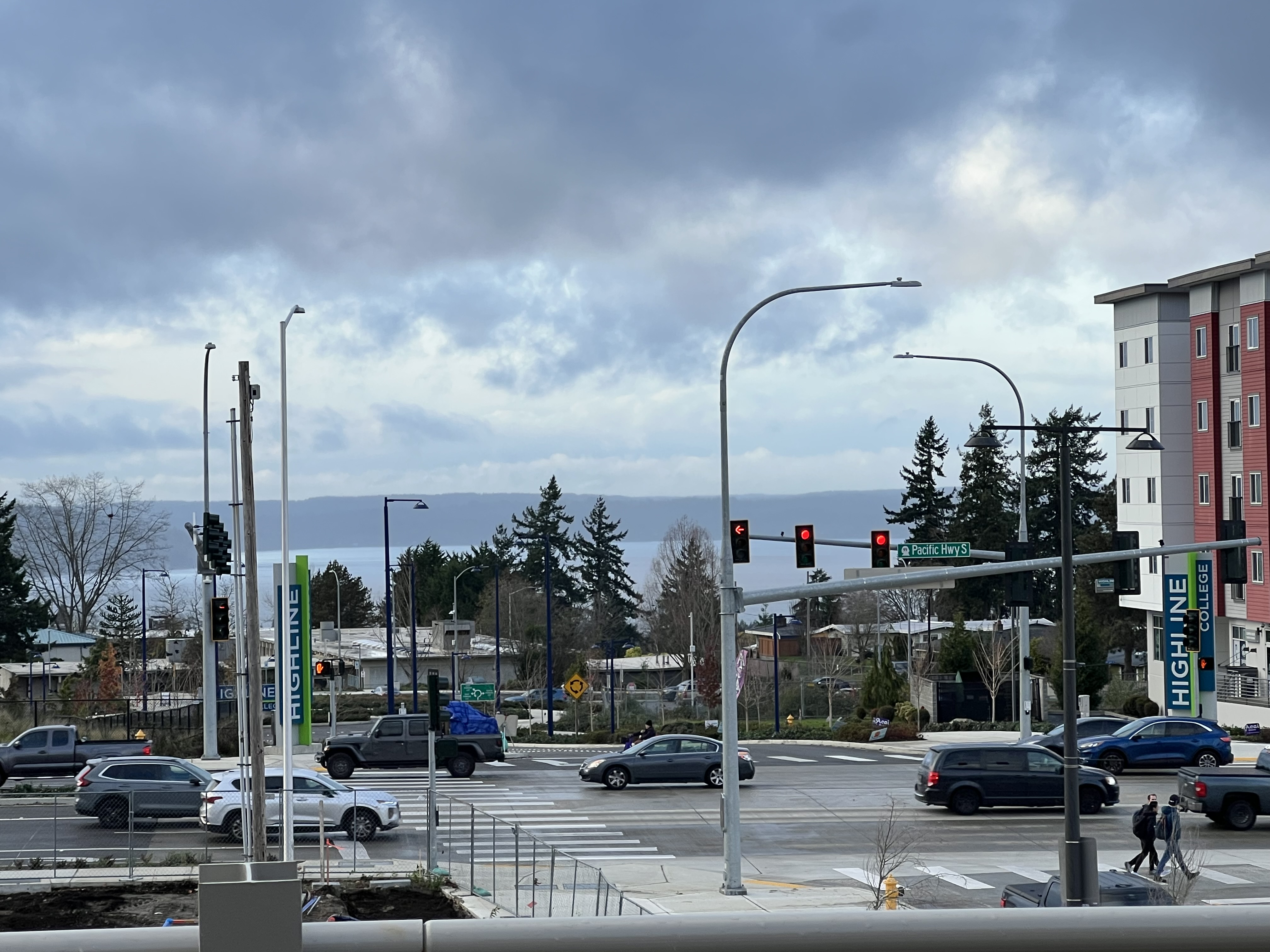
The first stop on the extension is Kent Des Moines Station, located east of I-5 at South 236th Street, right on the border between Kent and Des Moines. This is the station that serves Highline College, and that’s not accidental—colleges are transit goldmines. Students need to get to class, they don’t all have cars, and they’re willing to ride transit if it’s convenient.

The station is elevated, which means it’s above the street, and it includes a 500-space parking garage. That’s a lot of parking for a station that’s supposed to encourage transit-oriented development, but here’s the thing: South King County is car-dependent. You can’t just drop a light rail station in the middle of suburbia and expect people to walk to it. The parking garage is a necessary evil, a bridge between the car-centric present and the transit-oriented future.

What’s interesting about Kent Des Moines Station is what’s happening around it. Mercy Housing Northwest is building a 233-unit affordable housing project near the station, set to break ground this winter. This is the kind of transit-oriented development that actually matters—not just luxury condos for people who already have options, but housing for people who need transit because they can’t afford cars.

The station serves Highline College, which is good. But it’s also in an area that’s mostly residential, mostly suburban, and mostly not designed for walking. The station will work because of the college connection, but whether it becomes a true transit hub depends on whether the area around it develops into something more than parking lots and single-family homes.

Star Lake Station: The Interchange Hub

Star Lake Station, at South 272nd Street and 26th Avenue, is the big one. This is where Sound Transit is betting big on South King County’s transit future. The station acts as a key interchange for Link light rail, ST Express buses, and King County Metro services. It’s not just a light rail stop—it’s a transit hub.

The station includes a 1,100-space parking garage, replacing what was previously surface parking. That’s a lot of parking—more than double what Kent Des Moines has—and it tells you everything you need to know about how Sound Transit expects people to use this station. They’re driving to it, parking, and then taking transit. It’s a park-and-ride model, not a walkable urban center.

But here’s the thing: Star Lake Station is also a connection point. It connects to the existing freeway station, which means it’s serving people who are already using transit, just switching from buses to light rail. The station includes a new bike and pedestrian access path, which is nice, but let’s be honest—most people are driving to this station.

The 1,100 parking spaces are a statement. They’re Sound Transit saying, “We know you’re driving here, and that’s okay for now.” It’s a pragmatic approach to transit in the suburbs, where you can’t just expect people to walk to stations that are miles from their homes. But it’s also a missed opportunity. A station with 1,100 parking spaces is a station that’s designed around cars, not around people.

Star Lake Station will be busy. It’ll serve commuters heading north to Seattle and south to Tacoma. It’ll be a transfer point for people switching between buses and light rail. But it’ll also be a reminder that building transit in the suburbs means accommodating the reality of suburban life, even when that reality conflicts with transit-oriented ideals.

Federal Way Downtown Station: The Transit Center Anchor

Federal Way Downtown Station is the anchor of the extension, located at the Federal Way Transit Center—one of the busiest transit centers in the region. This isn’t just a new station; it’s an upgrade to an existing transit hub, and that makes it different from the other two stops.

The station adds 400 new parking spaces to the existing garages, which means there’s already parking infrastructure here. It includes public restrooms, which is notable because not all Sound Transit stations have them. And it’s part of a rebuilt street grid with pedestrian and bicycle improvements, which suggests that Federal Way is actually trying to create a walkable downtown around the station.

This is the station that has the most potential for real transit-oriented development. It’s in a downtown area, it’s already a transit hub, and the city is investing in making the area more walkable. The station area offers opportunities for affordable housing and sustainable development, and unlike the other two stations, this one might actually see that development happen.

Federal Way Downtown Station is what happens when you put light rail in a place that’s already thinking about transit. It’s not just a station dropped in the middle of suburbia; it’s a station that’s part of a larger plan to create a more urban, more walkable downtown. Whether that plan succeeds depends on a lot of factors—zoning, development, political will—but at least the foundation is there.

The station serves one of the busiest transit centers in the region, which means it’ll have high ridership from day one. People are already using buses here, and now they’ll have the option to take light rail. It’s an upgrade, not a new service, and that makes it more likely to succeed.

Federal Way Station

What These Stations Tell Us

These three stations represent three different approaches to transit in the suburbs:

Kent Des Moines is the college connection—a station that serves a specific destination (Highline College) and hopes to attract development around it. It’s a bet on transit-oriented development, but it’s starting from a suburban baseline.

Star Lake is the park-and-ride hub—a station designed around cars, with massive parking capacity and connections to other transit services. It’s pragmatic, but it’s also a reminder that building transit in the suburbs means accommodating car culture.

Federal Way Downtown is the urban anchor—a station in an existing transit hub that’s part of a larger plan to create a walkable downtown. It has the most potential for real transit-oriented development, but it also requires the most coordination between Sound Transit and the city.

All three stations are elevated, which means they’re above the street, not at grade. This is expensive, but it also means the trains don’t have to deal with traffic, which keeps service fast and reliable. It’s the right choice for a high-capacity transit line, even if it makes the stations feel less integrated with the street level.

All three stations include parking garages, which tells you that Sound Transit knows people will drive to these stations. That’s the reality of suburban transit—you can’t just build stations and expect people to walk to them from miles away. But it’s also a compromise, a recognition that transit-oriented development takes time, and in the meantime, you need to serve the people who are already here.

The Future

These stations open in December 2025, and they’ll immediately change how people move through South King County. But whether they become true transit hubs or just park-and-rides depends on what happens around them. Transit-oriented development isn’t automatic—it requires zoning changes, developer interest, and political will.

Kent Des Moines has affordable housing planned, which is a good sign. Star Lake has massive parking, which suggests it’ll be a commuter hub. Federal Way Downtown has the most potential for real urban development, but it also requires the most coordination.

These three stations are the latest extension of the Link 1 Line spine, pushing deeper into South King County and connecting more people to the regional transit system. They’re not perfect—they’re compromises between transit ideals and suburban reality—but they’re progress. And in a region that’s slowly rebuilding the transit infrastructure it tore up decades ago, progress matters, even when it’s imperfect.

The extension stops are here. Now we’ll see what grows around them.

Further Reading

If you want more context on Sound Transit’s expansion efforts, I’ve written about the agency’s growth on Transit Sleuth:

These posts offer a broader perspective on Sound Transit’s ongoing expansion efforts, from the Eastside Link extension to the system-wide growth that’s reshaping how people move through the Puget Sound region. The Federal Way extension is just one piece of a much larger puzzle, and understanding the full picture helps put these three new stations in context.

A Re-introduction to Transit Sleuth via Link Light Rail

Today marks about the ~20th or so day I’ve ridden the light rail from Redmond to South Bellevue, and then transferred to the Sound Transit Express 550 from there to downtown.

My commute priority has always been about functional use versus speed or other criteria. When I write functional use, what I mean is can I use the commute for something besides just wasting away rotting like one might do in a cage (i.e. a car). Even when I have used a car in the past, the focus still remained exactly that.

Simply put, I despise the idea I follow the modern American tradition of plopping myself into a car, that I’ve worked a job to buy, to sit in traffic – often stop and go or just stopped – to go to a job that I work to do shit like buy a car. I prefer my job funds go to strategic and tactical things like living life. Travel, exploration, games, beer, good food, racing cars, bikes, more bikes, and other entertaining and enriching things vs. buying a car, maintaining a car, paying rent, and all that rat race bullshit.

So now that I’ve written this, I hope to be back soon on a regular basis writing on this blog. If for any other reason, because I enjoy it. But also to document my commuting adventures and related things. Hopefully I’ll conjure up the energy to also start putting videos together again, ya know like this one, this, or this.

Back to the Link Light Rail

With the opening of the Redmond Station, the commute – even in spite of it being 2 parts still – has dramatically improved. Largely because I can take a significant part of the trip via light rail. That means listening to music, getting some code written, videos watched, maybe edited, AI’s vibe coding, views observed, maybe a snack, some AI models processed, or simply enjoying my coffee while en route to the office.

Sometimes, shockingly, I’ll even meet someone and we’ll have a good solid kick ass conversation while en route! But why am I riding the light rail these days?

How Did I Get Here?

Ok, somewhat dreadfully, based on the Seattle area leadership’s inability to deliver on much of anything promised, the Ballard Link Light Rail didn’t look like it was ever going to happen in my life time (i.e. the next ~20-40 years at least). The house I lived in also wasn’t cutting it, so family deemed a new house was in order and we began to search a few years back.

It was hard going. Forget money even, which is it’s own problem with housing these days, houses just weren’t available. Not with the basic – for us – that put a house into qualifying. The characteristics of the house we wanted, in order of importance;

  • being on a trail(s) or dedicated bike infrastructure
  • being near park(s) and woodland space
  • being away from any primary interstate or highway arterial (preferable to stay away from carcinogens)
  • being near transit options to get into and out of Seattle downtown
  • being near transit options to get to King St Station and SEATAC and/or other airport with area departure options.
  • being away from any primary roadway arterial
  • being most quiet
  • being walkable (i.e. do sidewalks exist, do business exist?)
  • being low crime (honestly, only sort of important in certain ways)
  • minimum number of rooms for remote/home work in addition to kiddo space
  • no HOA cuz forget that shortsighted self-fascistic nonsense
  • MAGAt density is no more than 1 out of 10 (super easy in this area, since low crime areas have very low MAGAt density) **
  • minimum ~1600 square feet
  • enough land to use for a victory garden (i.e. something like ~200 sq ft minimum, more is better)

Redmond? What? Not intuitive!

Naturally we assumed we could only really get something that would have maybe ~3-5 of these items, and then maybe part of another 5-10. We searched and searched and searched and finally, after offers put in, offers turned down, we finally expanded our search outside of Seattle to some east side locations and landed an offer in Redmond. Somewhat shockingly it has a multitude of these things in full and all of them to a partial degree.

The only things Redmond, outside of its downtown core fails on is a few things;

  • Walkability to do anything useful outside of Redmond’s downtown core is questionable and often requires other modal options to complete. However, that said, almost everywhere in Redmond has sidewalks, clear paths, and ways to get places, it just might take 15-45 minutes depending on where one lives.
  • Transit options are spectacular if you are in the downtown core. However leaving the downtown core it becomes immediately questionable whether you will have good transit options.
  • The light rail, as this post is about, massively changes the dynamic into and out of Redmond, Bellevue, and in about a year – theoretically – into Seattle for the east side. Even without the bridge into Seattle being open, it’s still changed the dynamic of the east side in a very positive way.
  • Even though we’re away from primary arterials and highways, interstates, and the like. The roadway system is setup in an auto-focused way that leads people to some expediently stupid behaviors. Negligence and obliviousness – as you might expect – reign supreme with east side drivers. The majority do endeavor to be polite and all but people generally just suck at driving. So YMMV in your automotive driver interactions.

With that being the baseline we have ended up over here in Redmond. So far it’s actually pretty sweet, more so than I thought when we first made the decision and landed the house. Simply put, we live a very European style life over here in Redmond and recently I’ve started commuting to a downtown Seattle office.

Back to The Topic At Hand: Link Light Rail Line 2

My commute now ends up being an interesting and enjoyable string of modal options.

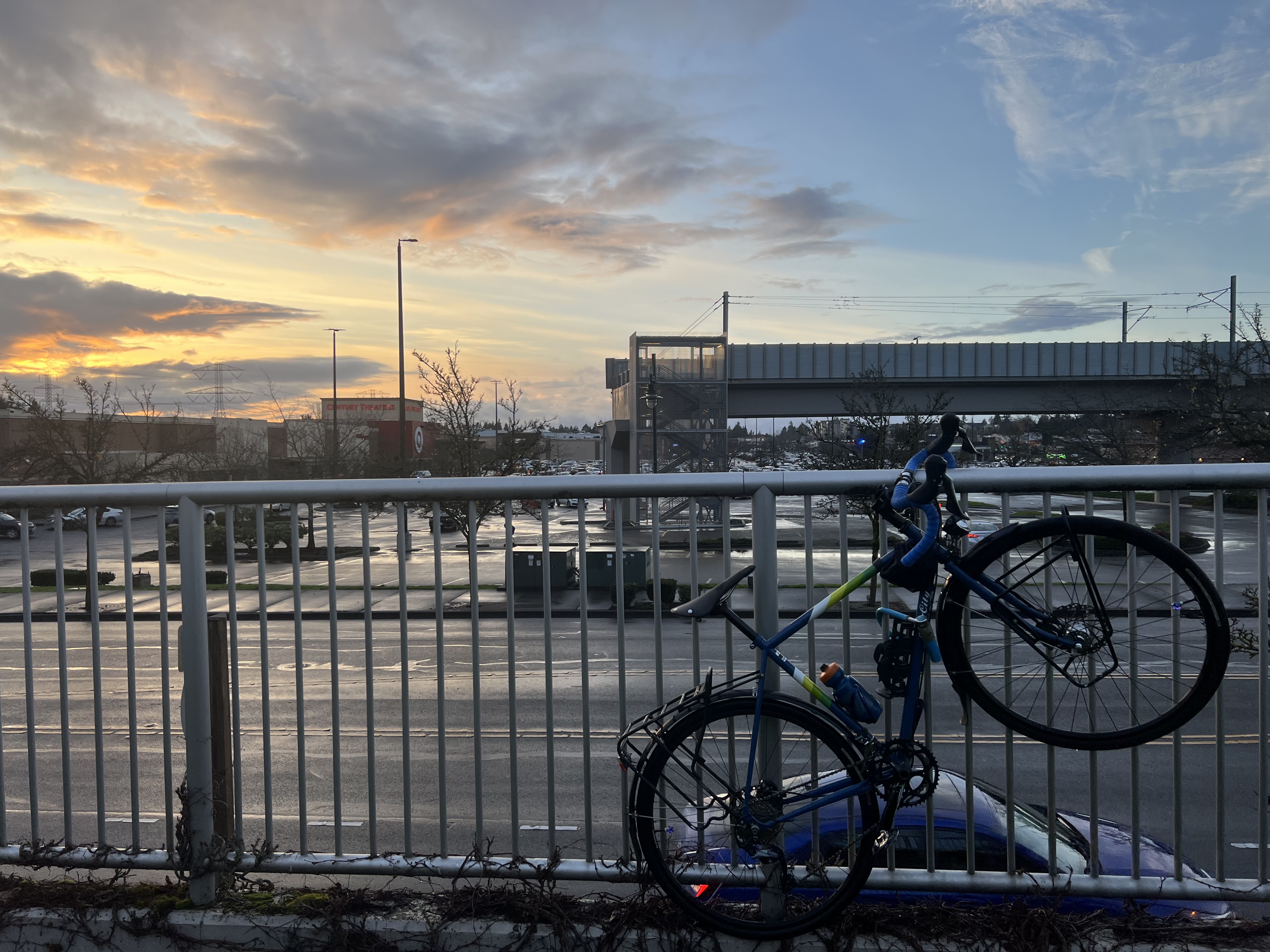
1st – To get to the Link station, I come down from the Redmond hills via bike. There I roll into the now open station, swipe my Orca Card, bump the elevator button and up I go to board the Link.

2nd – Upon boarding the Link I rack the bike. Extremely easy to do since this is the originating station and I generally board a train that has few people on it at its start. Then off we zip toward the – current – other end of the line in South Bellevue. During this segment of the trip I take a seat and out comes the laptop. As mentioned earlier in the post the code, videos, editing, or other activities ensue. After the short trip as we leave the stop just before South Bellevue I slip the laptop back into my pack, and unrack the bike for departure. Upon an elevator ride down, I roll over to wait for the arrival of the Seattle bound Sound Transit Express 550.

3rd – The bus fills the current gap while they wrap up construction work on the I-90. The 550 serves the purpose well, and it isn’t overly packed. This puts me in a position to whip the laptop back out and spend a little more time getting shit done, reading, or whatever I may. Upon arrival in downtown I alight the bus, unrack my bike, and then begin the last short segment to the office.

4th – I then enjoy this last segment riding Spacey to the office. It’s always a smooth, seamless, trip around and along various roads and bike infra in downtown. I tend to change up the route just a bit every time I take the trip.

That’s it. That’s my commute these days, and hot damn it’s an enjoyable one! This time of year especially as the weather gets nice and I’m a quick roll – amidst the hilarious insanity of the car oriented commute – to breweries, the epic Seattle waterfront, and other places to chill before the trip home.

More adventures, thoughts, and interludes of written words in the coming days and weeks. Hope your commute rocks, or if you don’t, that you’ve got an enjoyable day to day. Cheers!

** MAGA specifically. Not a fan of confused fascists. I realize this does not include general Republicans or conservatives, especially of the Reagan, Eisenhower, or even Lincoln variety. Since obviously, none of those Presidents were fascists, maybe shitty, but not wannabe fascists.

Link Light Rail opens in Redmond

I wrote about some pedantic details in the last post here. Check that for some nuggets and the current situation logistically. But read on for some observations from opening day!

I wrote a thread on Mastadon, Threads, and Blue Sky too. Click through to check em’ out.

Thread Summary
Redmond light rail opening today: Celebrating the debut of service to Redmond Technology Station.
First southbound ride: The fresh thrill of speeding out of Bellevue, over I-405 and sprawling lots, into Redmond.
Elevated magic: The segment between Wilburton and Bellevue stations, soaring above streets in a blink—reducing a 5-10-minute slog to 45 seconds of pure “whee.”
Empty parking lots everywhere: Wild expanses of asphalt ripe for redevelopment—if the economy holds up.
Broken elevator / IYKYK: Only one failing escalator on the 2 Line over at Wilburton. That’s a seemingly good ratio for Sound Transit and escalators.
Bike corral buzz: Cascadia Bikes’ racks overflowing—major props to everyone who pedaled in.


Rolling into Redmond Technology Station for the First Time
There’s nothing quite like that first southbound trip into Redmond Technology Station. After waiting months for what I personally will now find the most useful segment of light rail in the area. It seems the wait has taken eons.

The Elevated Spectacle
Peek out the window as you depart Bellevue Station: a dizzying montage of concrete and greenery. The rail track climbs, slicing through the skyline with surgical precision. Down below, cars inch along, helplessly stuck in gridlock. Up here, you’re at street level with the brids—or at least with the tops of pine trees. It’s the kind of view that makes you feel like the future might arrive in the USA yet, albeit one powered by a modest electric motor humming serenely beneath the floor.

Asphalt Oceans & Urban Dreams
West of the station lies an ocean of empty parking lots—so vast you’d think Microsoft itself had spawned them all. It’s eerie, almost dystopian… until you remember the upside: raw redevelopment potential. Imagine mixed-use towers, live/work lofts, parks, eateries—an entire urban neighborhood rising from the asphalt. That is, assuming our economy doesn’t implode in the next couple of years, as that might lead to it not happening for decades upon decades. Fingers crossed, America, fingers crossed.

Two Wheels, One Corral
Shout-out to Cascadia Bikes for setting up a deluxe bike corral—overflowing with riders who made the wise call to pedal in. Seriously, if you rolled up on two wheels, you’re a genius. Fresh air commute, zero parking worries, and you still get to high-five your fellow cyclists. Hats off—or helmets on—to you.

Mode-Shaming: Because Someone Has To

  • Biked: You’re smart.
  • Walked/Bus’d: Good call.
  • Drove: You’re a jack-ass clogging up the pedestrian friendly area of town. Why even? Don’t do that shit.

Next time, ditch the car and catch the train. Your neighbors (and everyone’s blood pressure) will thank you.

More Technical Details

The new bike routes to the stations are spectacular, check out more about them here.