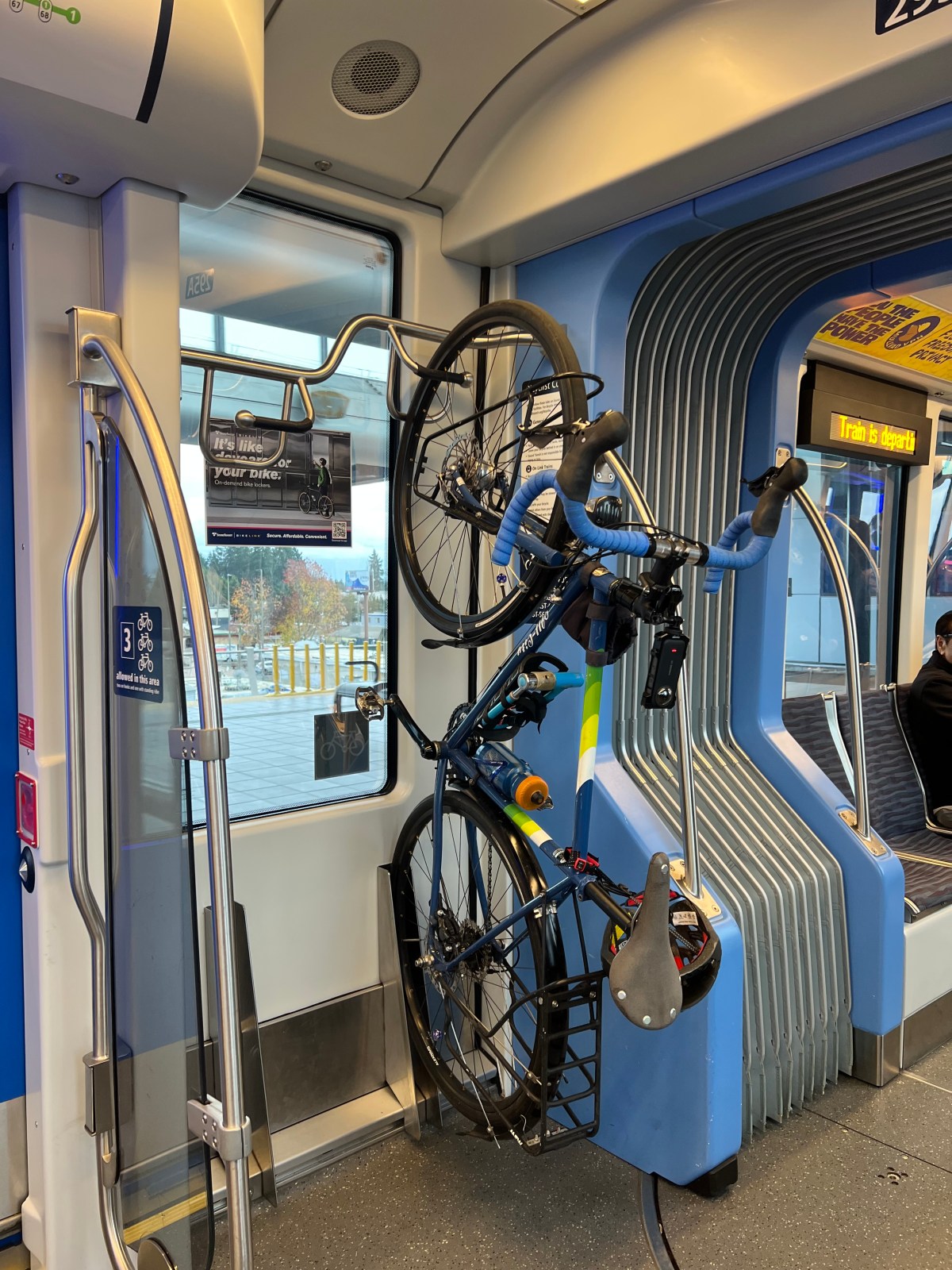
The Intent and Purpose of Link 1 Line
Sound Transit’s Link 1 Line is the backbone of Seattle’s light rail system—a 40-plus mile north-south corridor that connects Lynnwood in the north to Federal Way in the south (with eventual extensions planned to Everett and Tacoma). The line serves as a high-capacity transit artery, connecting major employment hubs, residential areas, and key destinations like downtown Seattle, the University of Washington, and Sea-Tac Airport.
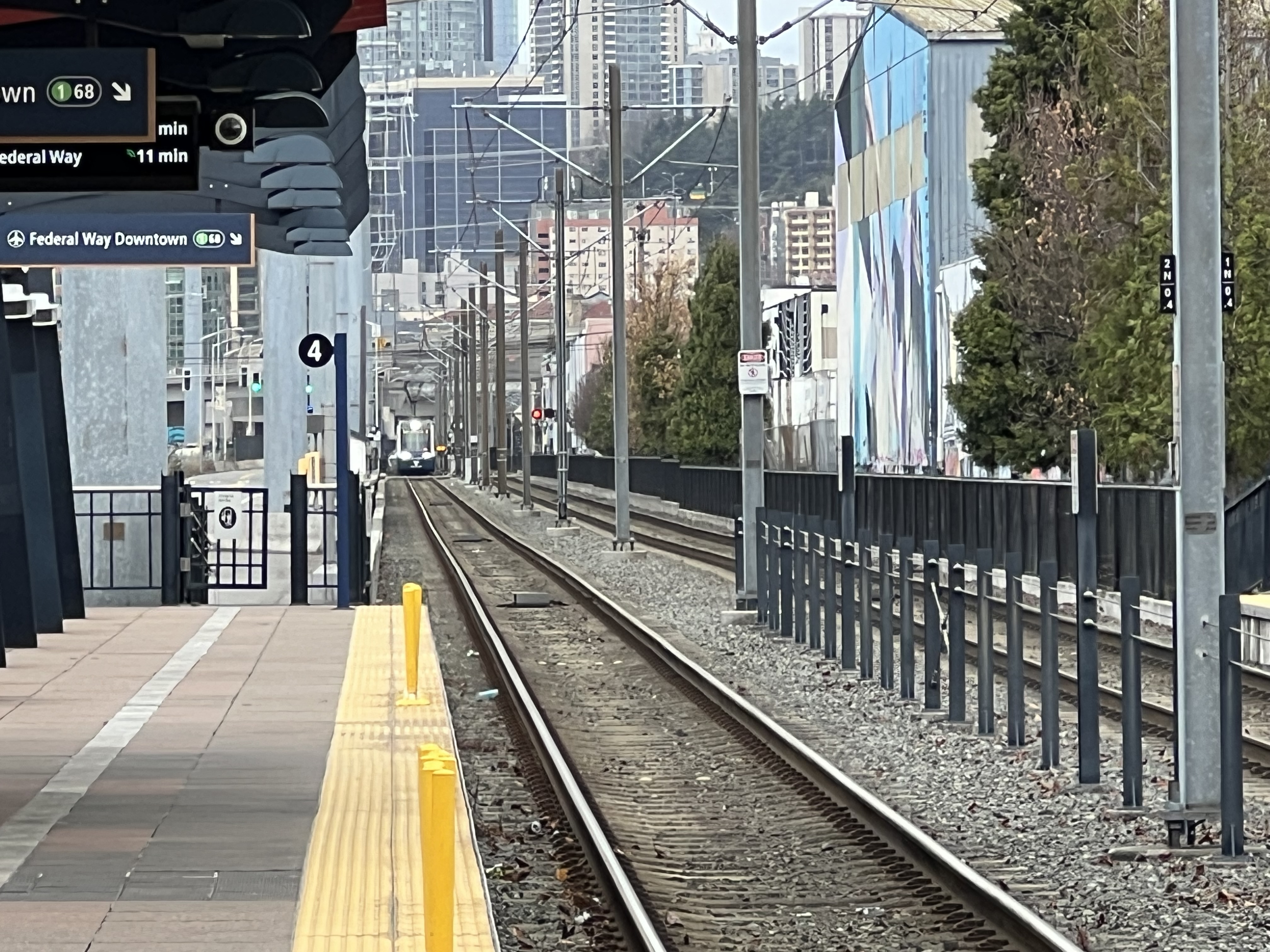
The intent is straightforward: provide a reliable, high-capacity transit option that operates independently of road traffic, offering consistent travel times and encouraging people to leave their cars behind. It’s electric, it’s fast, and it’s designed to move tens of thousands of people daily along the region’s most congested corridor.
But here’s the thing: Link 1 Line isn’t just a transit line—it’s a strategic choice. It’s built as a spine, a single continuous line that runs north-south, rather than as a network of intersecting light rail lines like Portland’s MAX system. This decision, and the agency that made it, tells us a lot about how Seattle approaches regional transit.
Sound Transit: An Odd Creature of Washington State Politics
Sound Transit, officially the Central Puget Sound Regional Transit Authority, was created in 1993 by the Washington State Legislature. But here’s where it gets interesting: Sound Transit isn’t your typical transit agency. It’s a special-purpose district with taxing authority, created specifically because the region needed a way to fund and build transit infrastructure that crossed multiple county and city boundaries.
The political structure is, frankly, weird. Sound Transit’s board consists of 18 members—elected officials from King, Pierce, and Snohomish counties, plus representatives from the cities within the transit district, and the Washington State Secretary of Transportation. This means the agency is governed by politicians who have other jobs, other constituencies, and other priorities. It’s not a directly elected transit board like some cities have; it’s a collection of mayors, county executives, and council members who happen to also make transit decisions.
This structure was created because the region needed a way to coordinate transit across jurisdictional boundaries. Individual cities couldn’t build regional transit on their own. King County Metro could run buses, but building light rail that connected Everett to Tacoma required something bigger—something that could collect taxes across multiple counties and make decisions that served the region, not just individual cities.
The Tax Revenue Collection Model: Voter-Approved Everything
Sound Transit’s funding model is unique, and it’s both a strength and a weakness. The agency relies on voter-approved taxes within its service district, which includes parts of King, Pierce, and Snohomish counties. These taxes include:
- Sales Tax: 1.4% sales tax on purchases within the district
- Motor Vehicle Excise Tax (MVET): 0.8% tax on vehicle registrations
- Rental Car Tax: 0.8% tax on rental cars
- Property Tax: Up to 25 cents per $1,000 of assessed value (with annual increases capped at 1%)
This funding structure means Sound Transit has a dedicated revenue stream, but it also means every major expansion requires going back to voters. The agency can’t just decide to build something—it has to convince voters to approve the taxes to pay for it. This has led to a pattern of phased expansion: Sound Transit goes to voters with a package, gets approval, builds what it promised, then goes back years later for the next phase.
The 1996 “Sound Move” ballot measure created the agency and funded the initial light rail line. The 2008 “ST2” measure extended the system. The 2016 “ST3” measure approved the massive expansion that’s currently being built. Each time, voters had to approve new taxes, and each time, the agency had to deliver on its promises before asking for more.
This creates a conservative, incremental approach to transit expansion. Sound Transit can’t be too ambitious because it has to win elections. It can’t move too fast because it has to prove it can deliver. And it can’t easily change course because major decisions are locked into voter-approved packages.
Why a Spine Instead of a Network?
The decision to build Link 1 Line as a spine—a single north-south line—rather than a network of intersecting lines like Portland’s MAX system, was driven by several factors, some practical and some political.
Geographic Reality: Seattle’s topography is challenging. Water, hills, and valleys create natural barriers. Building a single spine along the I-5 corridor makes sense because that’s where the people are, where the jobs are, and where the existing transportation infrastructure already exists. A grid system would require crossing Lake Washington, tunneling through hills, and dealing with terrain that makes multiple intersecting lines expensive and complex.
Resource Concentration: Sound Transit’s funding model—dependent on voter approval and limited tax revenue—meant the agency had to maximize impact with limited resources. Building one high-capacity spine that serves the highest-demand corridor makes more sense than spreading resources across multiple lines. One line with high ridership is better than multiple lines with lower ridership, at least from a cost-per-rider perspective.
Phased Expansion Strategy: The spine serves as a foundation. Once you have a strong central line, you can branch off from it. Future lines can connect to the spine, creating a network over time. But you start with the backbone, the thing that connects the major destinations, and build from there.
Political Compromise: The spine connects Everett, Seattle, and Tacoma—the three major cities in the region. This wasn’t accidental. To get voters in all three areas to approve taxes, Sound Transit had to promise service to all three. A single spine that serves all three cities was the political solution: everyone gets something, everyone pays, and the line serves the highest-demand corridor.
Operational Simplicity: A single line is easier to operate, easier to maintain, and easier to expand incrementally. You don’t need complex interchanges, you don’t need to coordinate multiple lines, and you can add capacity by running more trains on the same track. It’s simpler, and simplicity has value when you’re building something this complex.
The Portland Comparison
Portland’s MAX system is different. It’s a network of intersecting lines that form a grid-like pattern across the metro area. The Blue Line, Red Line, Green Line, Yellow Line, and Orange Line all intersect and connect, giving riders multiple ways to get from point A to point B.
Portland’s system works because Portland is flatter, has fewer geographic barriers, and was planned as a network from the start. The city’s urban growth boundary and land-use planning created a more compact, transit-friendly development pattern. And TriMet, Portland’s transit agency, had different funding mechanisms and political structures that allowed for a more network-oriented approach.
Seattle’s spine approach makes sense for Seattle’s geography, politics, and funding model. But it also means the system is less flexible. If you want to go east-west, you’re out of luck until Sound Transit builds those lines (which it’s doing, slowly, with the 2 Line to Bellevue and Redmond). If you’re not near the spine, you’re not getting light rail service.
The Trade-offs
Building a spine instead of a network has consequences. The spine serves the highest-demand corridor well, but it leaves other areas underserved. It’s efficient for north-south travel, but it doesn’t create the kind of network coverage that makes transit truly convenient for everyone.
Sound Transit is addressing this, gradually. The 2 Line will branch east to Bellevue and Redmond. Future lines are planned. But the spine-first approach means it takes decades to build a comprehensive network, and in the meantime, large parts of the region are left without high-capacity transit.
The funding model compounds this. Because Sound Transit has to go to voters for every major expansion, progress is slow. The agency can’t just decide to build a new line—it has to wait for the next ballot measure, convince voters to approve it, then spend years building what was approved. This creates a cycle of incremental expansion that, while politically sustainable, doesn’t move as fast as the region’s growth demands.
The Future
Link 1 Line is growing. Extensions to Everett and Tacoma are planned. The 2 Line is opening. More lines are in the works. But the spine-first strategy means Seattle’s light rail system will always be fundamentally different from Portland’s network approach.
Is that good or bad? It depends on what you value. The spine serves the highest-demand corridor efficiently. It’s a solid foundation for future expansion. And it reflects the political and geographic realities of the Puget Sound region.
But it also means that, for now, Seattle’s light rail system is less comprehensive than it could be. It serves some people very well and others not at all. It’s a backbone, but it’s not yet a network.
Sound Transit’s odd structure—its voter-approved taxes, its board of politicians, its incremental expansion model—created this spine. And that spine is both a testament to what’s possible when a region commits to transit and a reminder of the compromises that come with building transit in a complex political environment.
The Link 1 Line is impressive. It’s also incomplete. And that’s the story of Sound Transit: ambitious enough to build something remarkable, constrained enough that it takes decades to finish (or in many cases even start) the job.



 Transit Sleuth