Welcome to Part 2 of this series where I continue unpacking how the U.S. systematically dismantled social connection in the name of “progress.” Last time, I wrote about how third places are disappearing. This time, I’m dragging the main culprit into the light: the car.
Yeah. That big metal box in your driveway? It’s not just polluting the air and draining your wallet—it’s actively devouring public space and community life.
How Cars Obliterated Third Places
Let’s be clear: the problem isn’t cars exist. The problem is how everything else was restructured around them, leaving zero room for anything human-scale. Starting in the mid-20th century, we redesigned American life for traffic flow, not people.
Here’s what that did:
Neighborhoods got zoned into silos—residential over here, retail over there, work way over there.
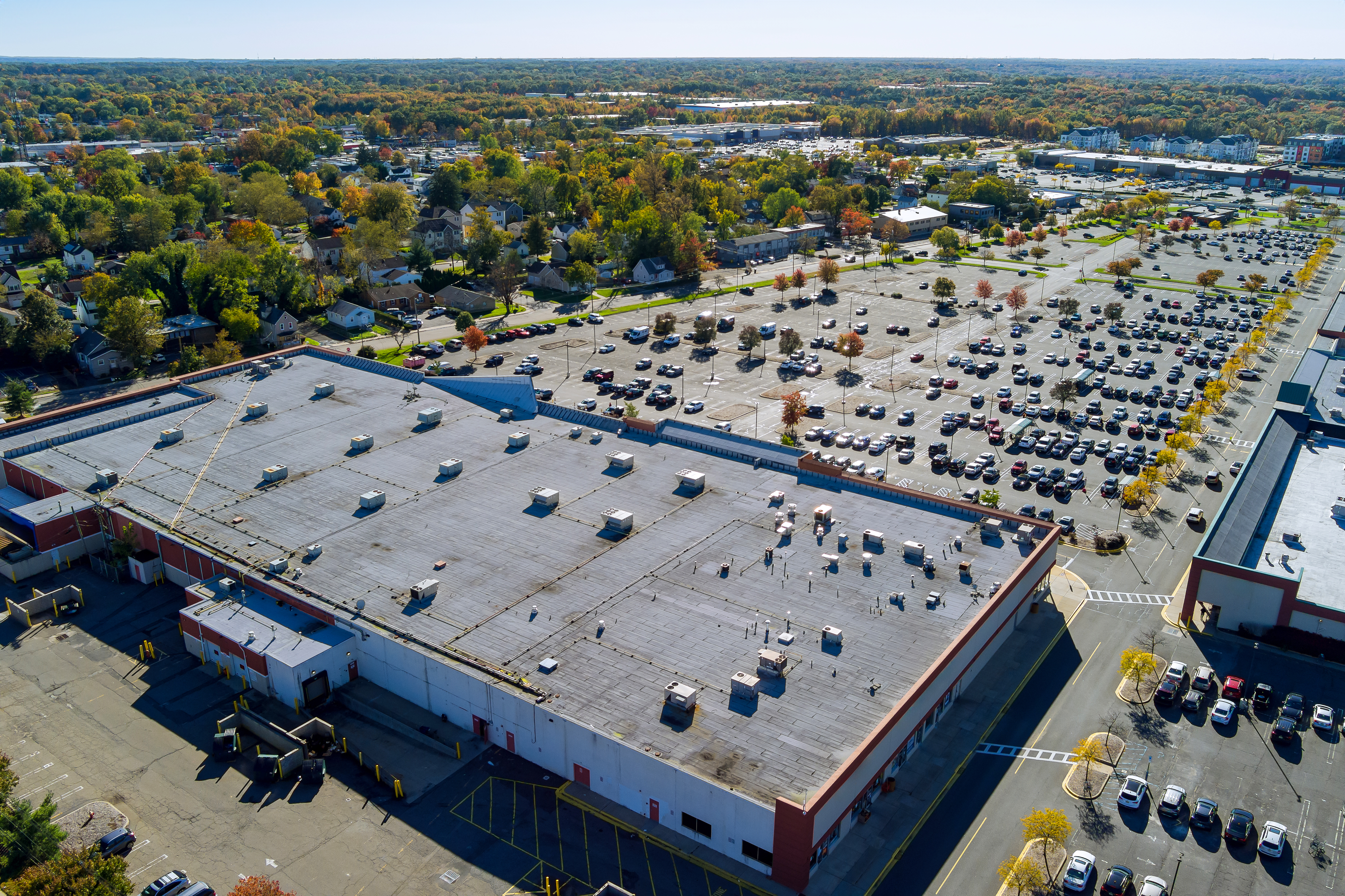
Public plazas, local markets, and informal hangout zones got paved over for parking lots.
Sidewalks were shrunk, ignored, or removed entirely. Because who walks anymore, right?
New “town centers” became drive-to destinations with no soul and no real public use space.
This made third places—those informal community spaces—impractical, unprofitable, and in many places, literally illegal to build.
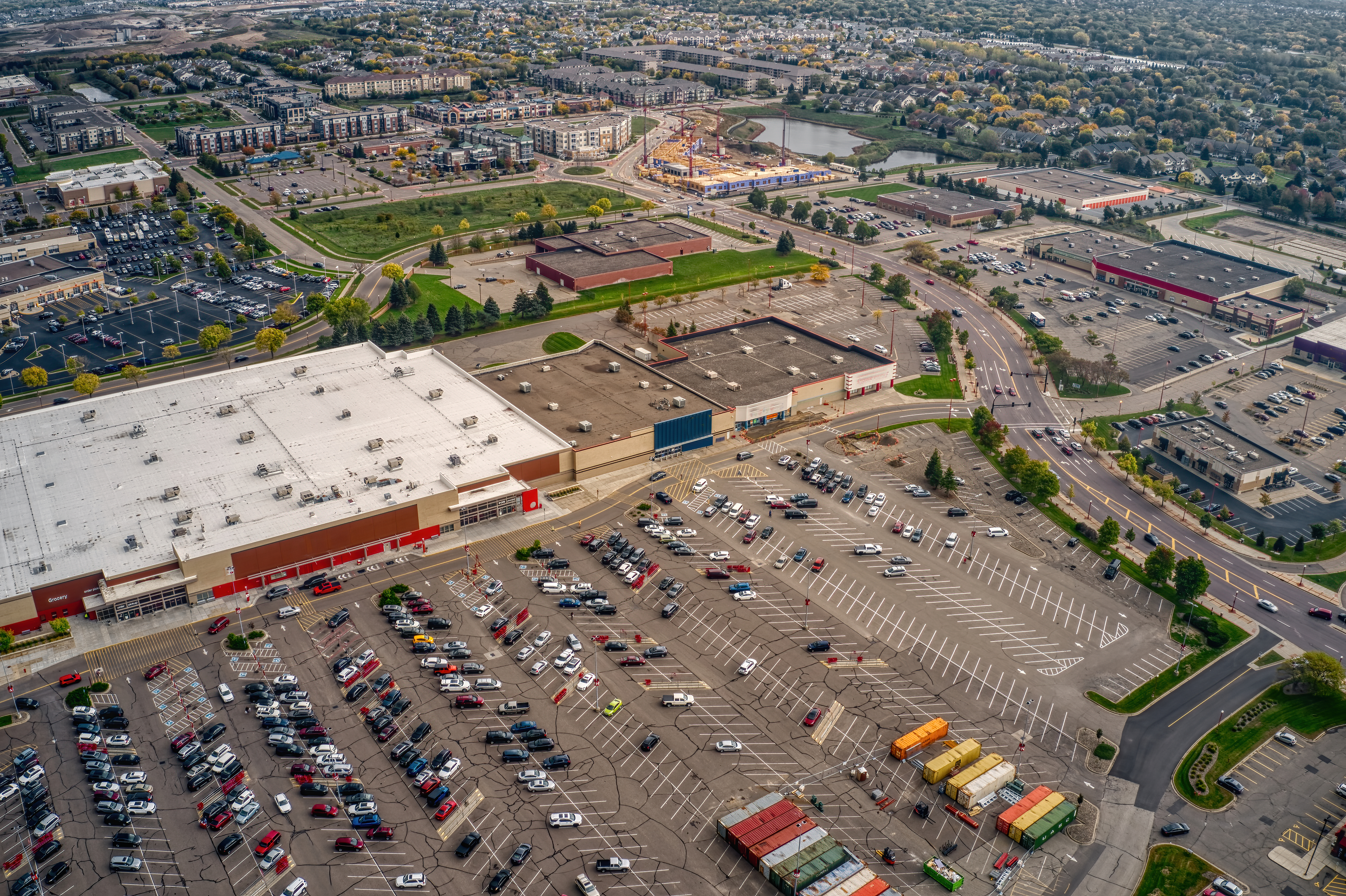
Big parking with cars near the shopping mall center in New Jersey USA
Parklets: A Glimmer of Hope (That Mostly Got Crushed)
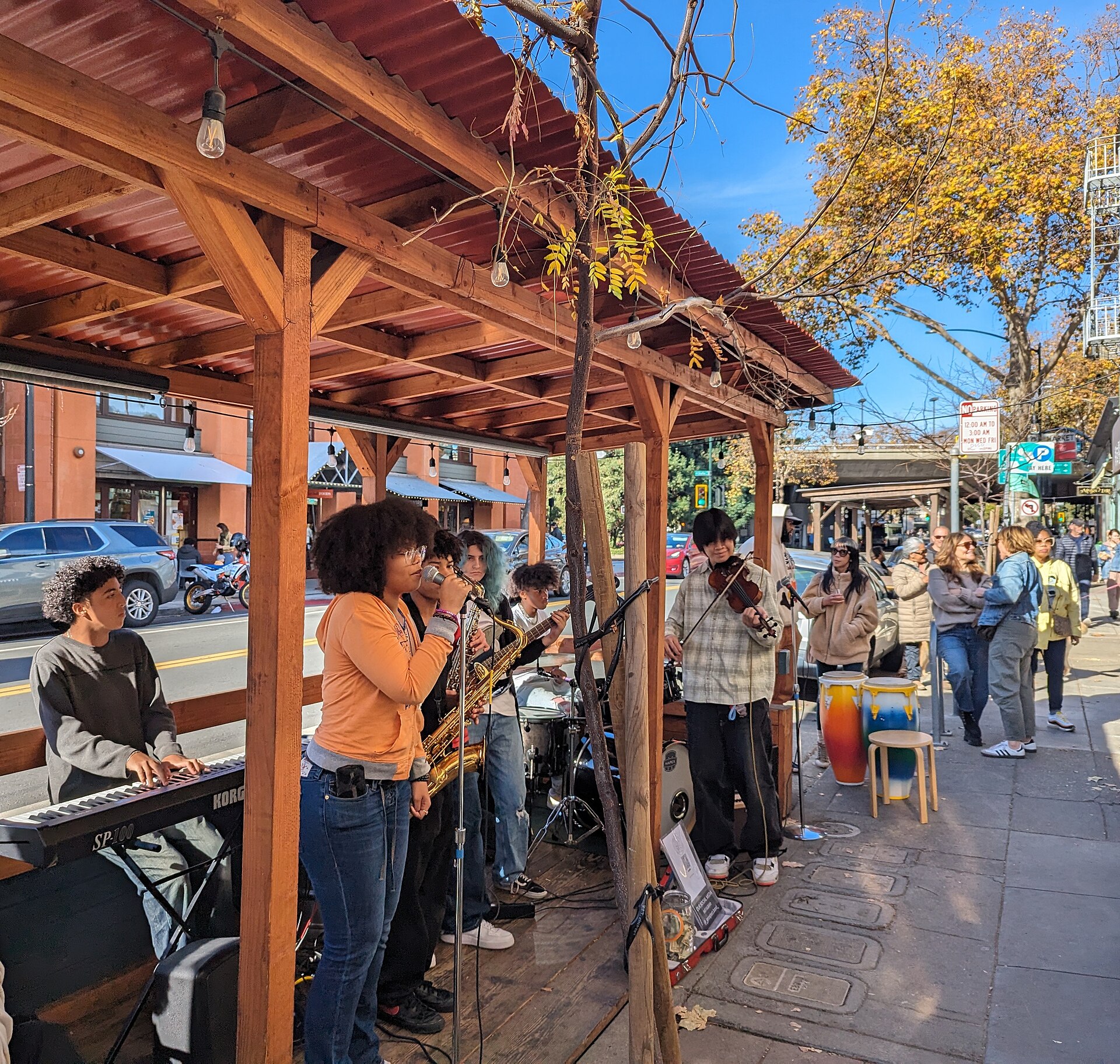
In the early 2010s—and then again during the pandemic—we saw something weird: parklets started popping up. Cities let restaurants and businesses convert curbside parking into mini patios and gathering spaces. They were scrappy, hopeful, often built with plywood and planters.
And for a moment? They worked.
People lingered. They talked to strangers. They treated streets like places to be, not just pass through.
Then the tide turned:
Restaurant leases ended, and the parklets vanished.
Cities caved to complaints from drivers about “lost” parking.
Insurance policies and red tape choked the small businesses trying to keep them alive.
And just like that, most parklets faded back into asphalt.
> “A third place is a space that isn’t home (the first place) or work (the second place). It’s where people go to just exist together.”
> — Ray Oldenburg (Paraphrased and adapted for modern reality)
Let’s get something straight up front. Third places are disappearing (or already disappeared) in America. And no, we’re not talking about some twee idea of a cafe with succulents and overpriced drip coffee. We’re talking about foundational infrastructure—the places that once held the social fabric together.
We’ve designed them out of our neighborhoods, priced them out of our cities, and paved over them in the name of “development.” What’s replaced them? Nothing of substance. Just parking lots, chain retail, and algorithmic dopamine feeds that masquerade as community.
What Is a Third Place (And Why It Matters)
A third place is simple in concept: a social setting where people gather that isn’t home or work. Think:
Libraries (Please stop closing them, just figure out how to make em’ work, because they will!)
Coffee shops (actual community hubs, not Starbucks outlets)
Bookstores with comfy chairs
Park benches with regulars
Local bars, barber shops, bike co-ops
Public plazas, community centers, corner bodegas where people linger
These places foster unplanned conversation, spontaneous collaboration, and yes—real, human connection. They offer a counterbalance to the transactional nature of modern life.
And in the U.S.? We’ve systematically eliminated them.
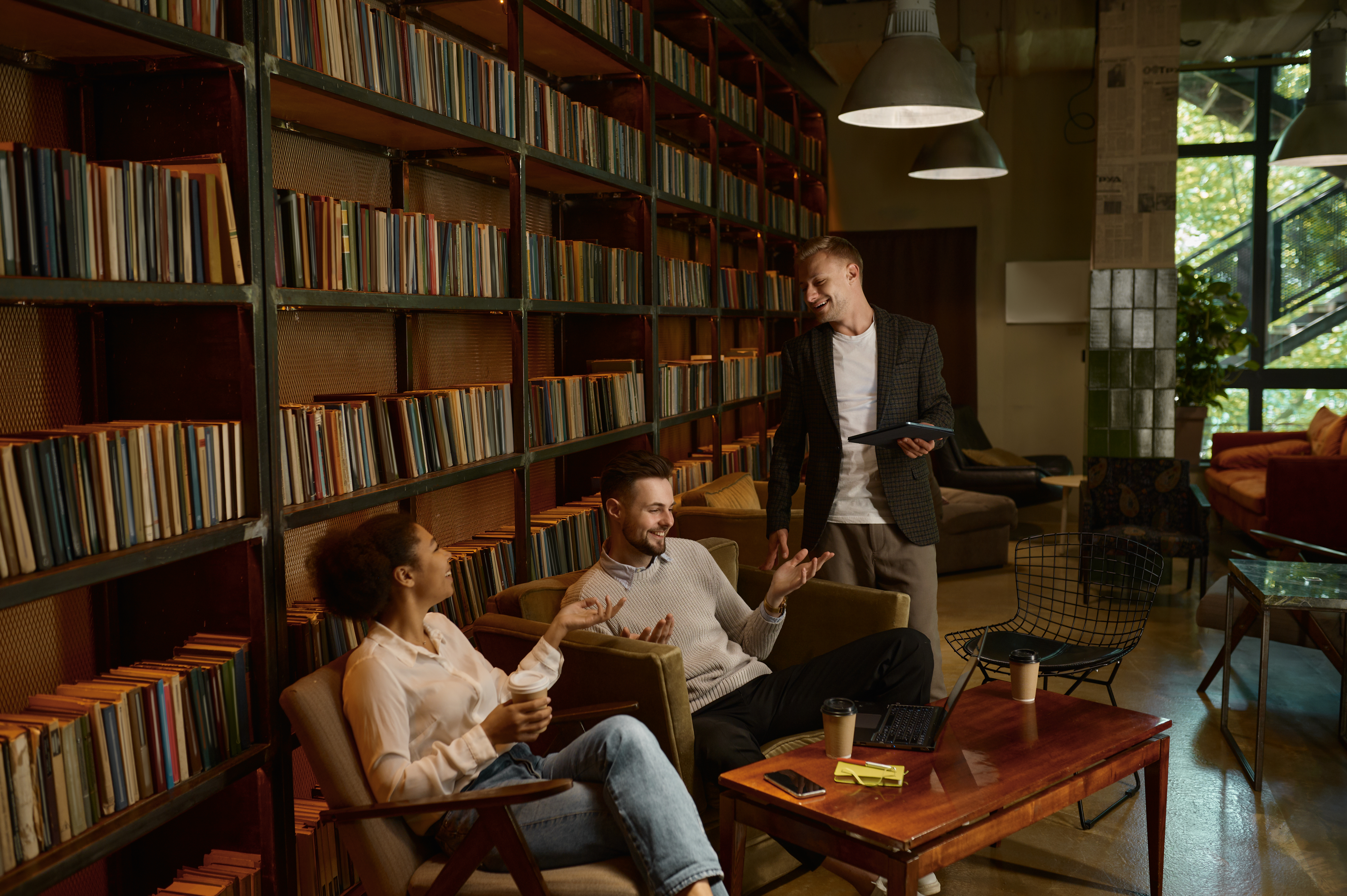
Business freelance team chatting during coffee break in office. Creative multiethnic colleagues engaged in teamwork at coworking open space
From Common Ground to Commercialized Nowhere
If you’re in a suburb, odds are your nearest third place is at least a 10-minute drive away—and no, a drive-thru Starbucks doesn’t count.
Urban planning over the last 50 years has systematically pushed out the informal, low-cost, and unbranded spaces in favor of traffic flow, parking capacity, and revenue-per-square-foot. The result?
Communities where there is no place to gather without spending money
Spaces that feel sterile, overly regulated, or outright exclusionary
Entire generations growing up with no idea what a third place even is
An aerial view of the Twin Cities Outer Suburb of Apple Valley, Minnesota
The Great Digital Substitution (That Isn’t)
Somewhere along the way, we convinced ourselves that social media was a good enough replacement. That Discord servers could be the new pub. That Reddit threads replaced roundtables. That Instagram comment sections were valid forms of shared experience.
No.
Those are digital holding pens designed to manipulate your attention, not give you context, warmth, or presence. You can’t replace a knowing glance or a random conversation with a stream of hot takes and emojis.
They mimic connection. But they don’t create it.
Case Study: Third Place Commons – Holding the Line
Located in Lake Forest Park, Washington, Third Place Commons is one of the few community anchors that still embodies what a third place should be.
It’s open to everyone.
It hosts events like chess nights, concerts, and civic forums.
It’s tied into a bookstore (shoutout to Third Place Books).
It isn’t flashy, and that’s the point.
When You Erase the Third Place…
…you erase empathy. You erase frictionless socializing. You erase the chance to bump into people outside of work and curated social events. You erase the “Hey, good to see you again” rhythm that holds communities together.
You replace it with:
Loneliness
Economic stagnation
Fragmented civic life
Performative connection
And then we act shocked when people are burnt out, disconnected, and angry.
Next Up: The Car That Ate Your Community
In Part 2, I’ll get into how the automobile didn’t just kill walkability—it nuked third places out of existence. We’ll talk about the rise and quiet death of parklets, the shrinking of civic spaces, and how cities like Portland tried (and often failed) to fight the tide with bike co-ops and transit stations.
If this series hits a nerve, good. It’s supposed to.
You can’t rebuild what you don’t even realize is missing.
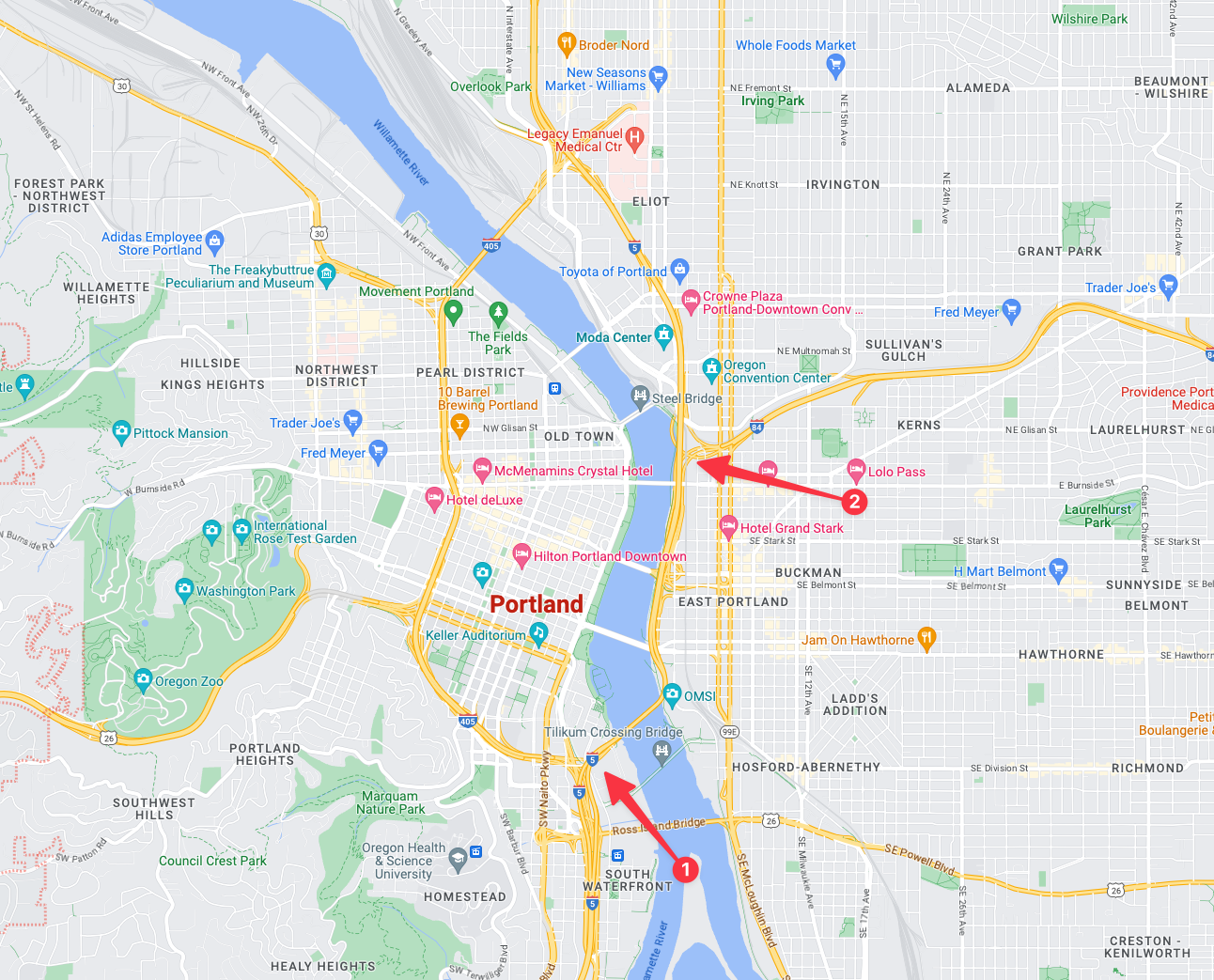
Wouldn’t it be great if Portland removed the redundant part of I-5 right here. It would be an extreme minimal impact to anybody driving in the area but it would be a MASSIVE boon to the city itself, being able to remove a vast and expensive section of the interstate that is devaluing what ought to be a multi-billion dollar segment of river front property! What’s your thoughts?
I’d love to see I-5 just ripped out between point 1 and 2 on the map. It’d be easy to do and the capacity issues with the two merges at that point would be removed too, it’d just become seamless turns and instead the state and feds responsible for I-5 could stop wasting Portland’s time and money and instead focus on the other connection point of I-84 and I-5 that has, would, and continues to this day to exist in north Portland.
After that last few days I visited some family and friends it was time to head back north to Seattle. On this trip back to the train station I take a slight different route and show that route. All good, all valid, all generally the same trip times.
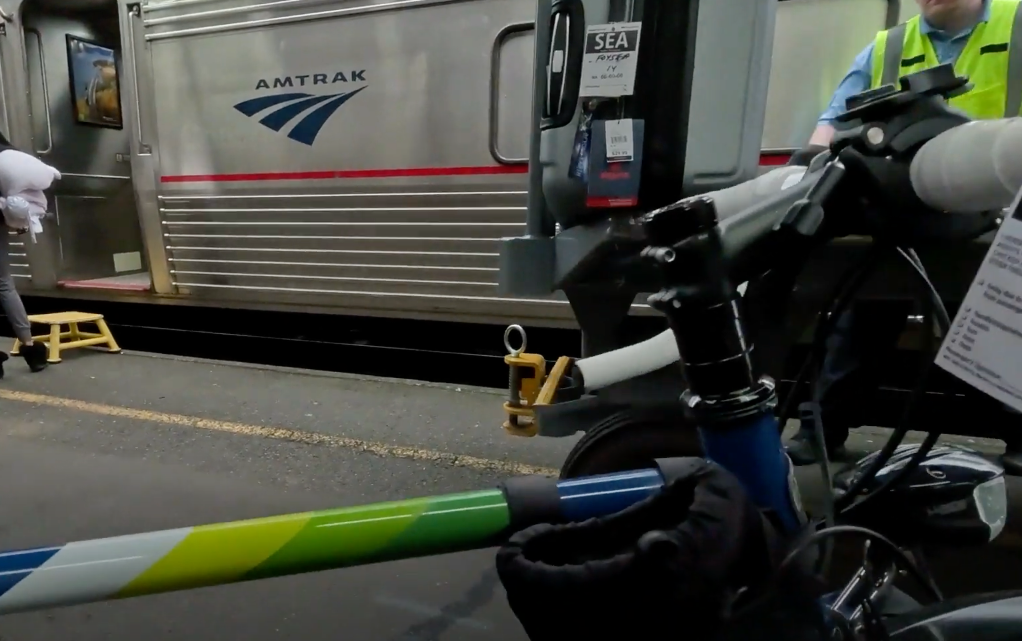
I get into the station and get the bike tagged, and this time per the baggage attendant’s suggestion I check my Burley. More on that momentarily.
I then went and relaxed in the first class sleeping car lounge to wait for the boarding call. In short order the call was made and out the door to board. As always, with roll on bicycle service I headed to the baggage car, lo and behold I knew all the handlers today! I was greeted warmly, handed off the bike and we chatted for a minute or three. After wrapping up a good conversation with some interesting details – as always with the crews – I headed for my roomette.
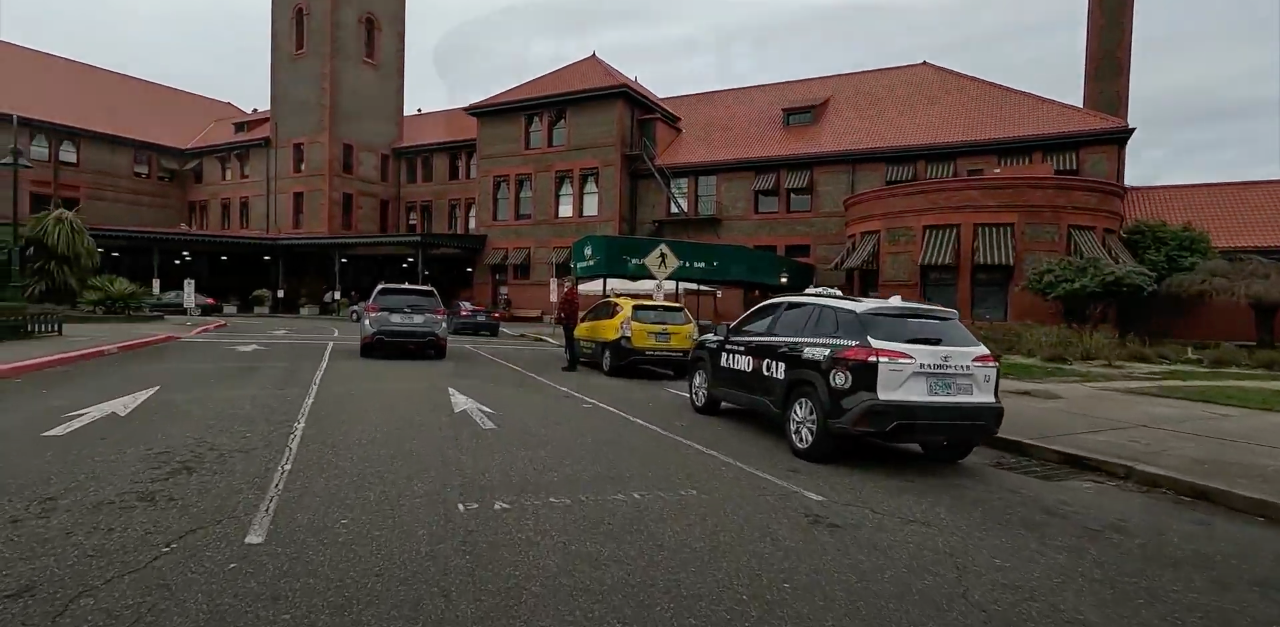
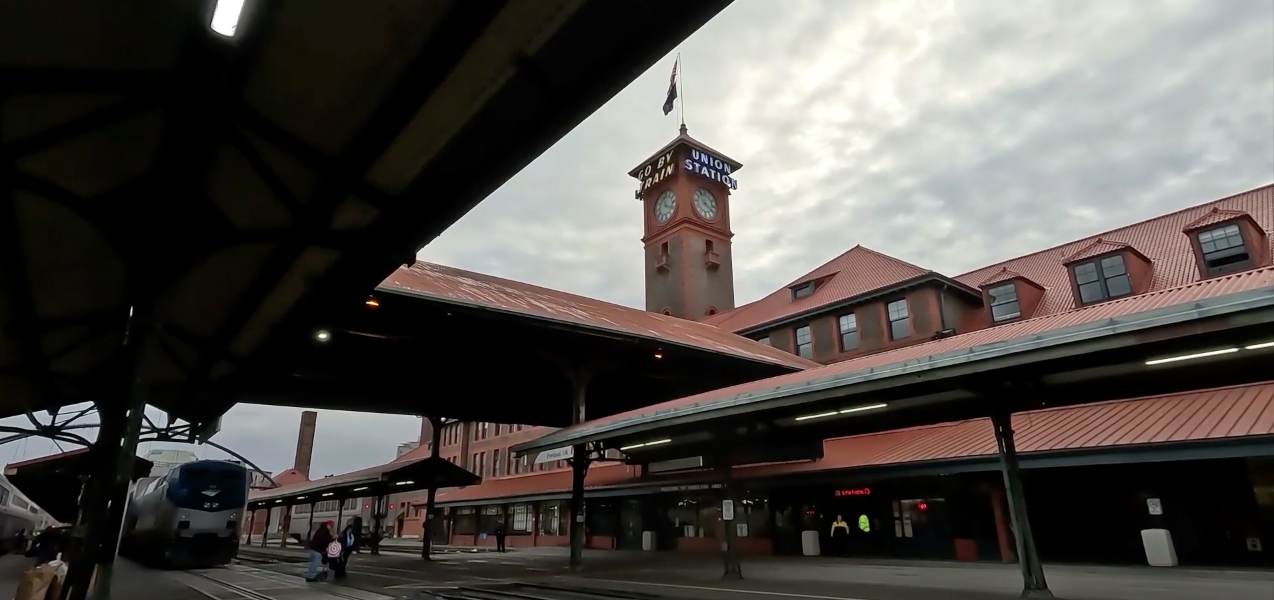
When arriving at the sleeping car some other passengers and I waited outside for the car attendant to make up some beds and straighten up real quick. This is a common practice at Portland since so many people detrain and so many board for Seattle. You’d be surprised how many opt for roomettes and such just like I do for the Portland to Seattle trip. While out I snagged a video pic of the station…
and ended up giving a knowledge drop on the station to some fellow passengers that found the plight of Portland’s station rather interesting.
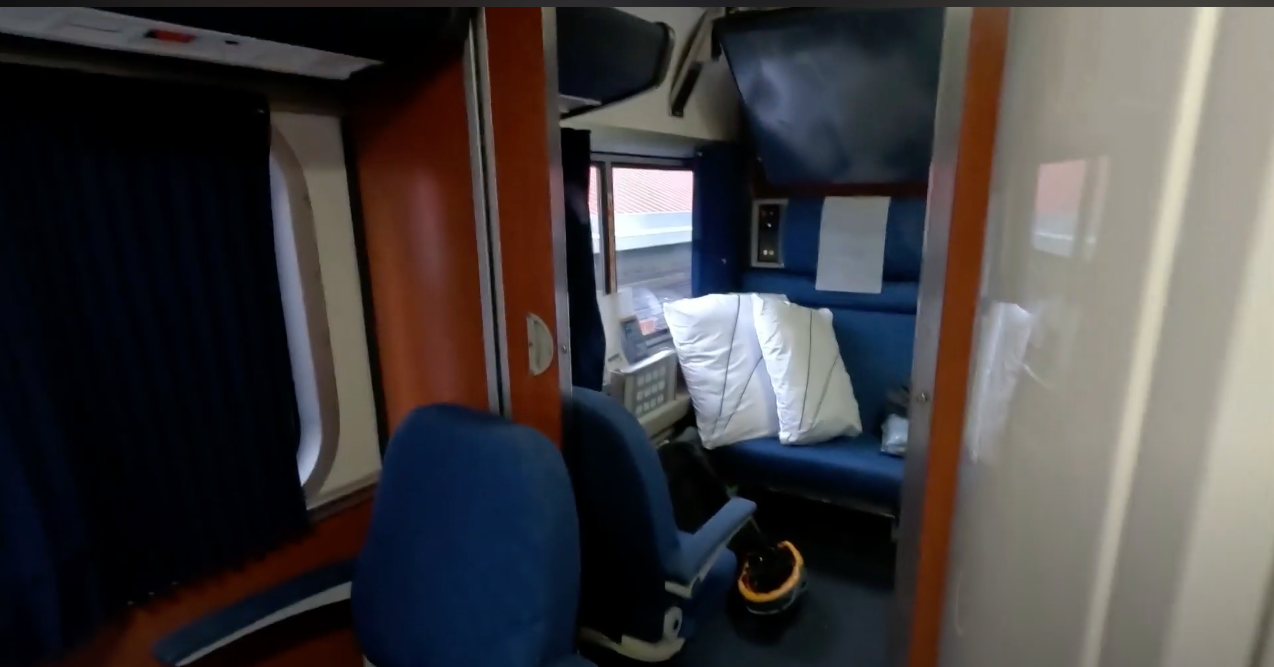
From there I enter my room, and oh yeah, I didn’t get a roomette I got a bedroom! Even MORE space, so that being the case I decide to provide a short tour of the bedroom accommodations.
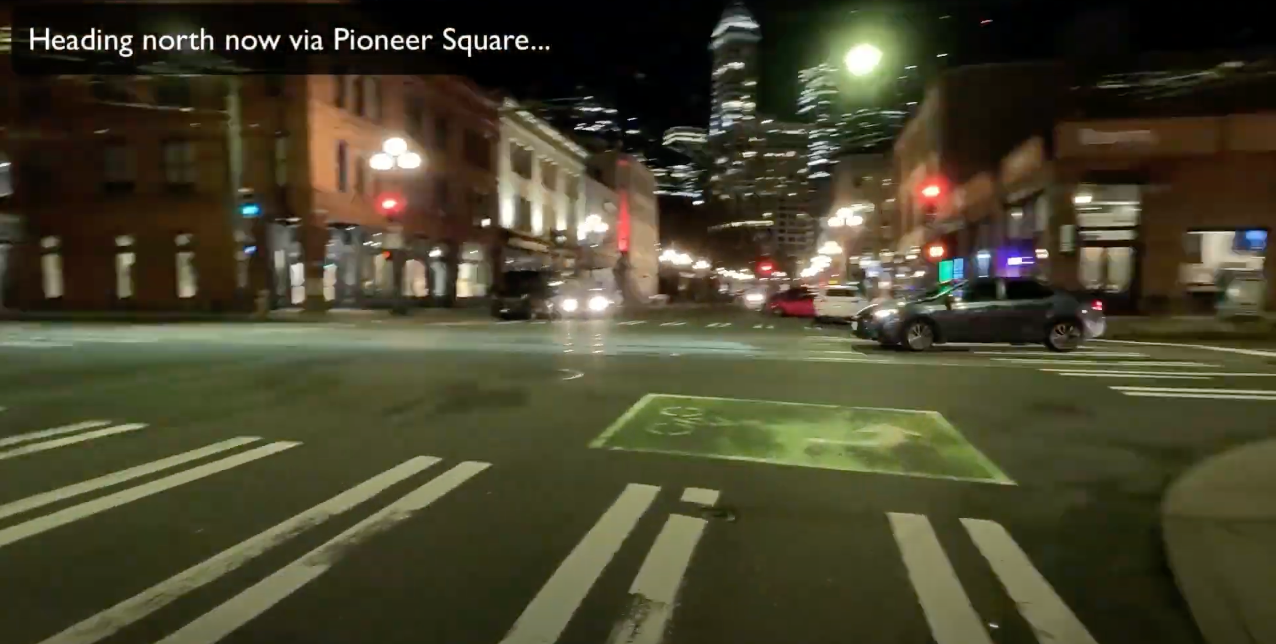
For the final short segment of the video, enjoy a ride through the dark streets of Seattle as I head back to Redmond, with a quick – as I do often – one take session of some thrash metal for ya. 🤘🏻
0:21 – Back to Union Station in Portland, but with another arrival trip, just like the previous one discussed in this episode • Bike + Train Life… (time marked so you go right to it).
2:20 – No bike box for this trip, just rolling on. But I do check my Burley trailer.
5:02 – A tour of Amtrak’s Superliner Bedroom accommodation.
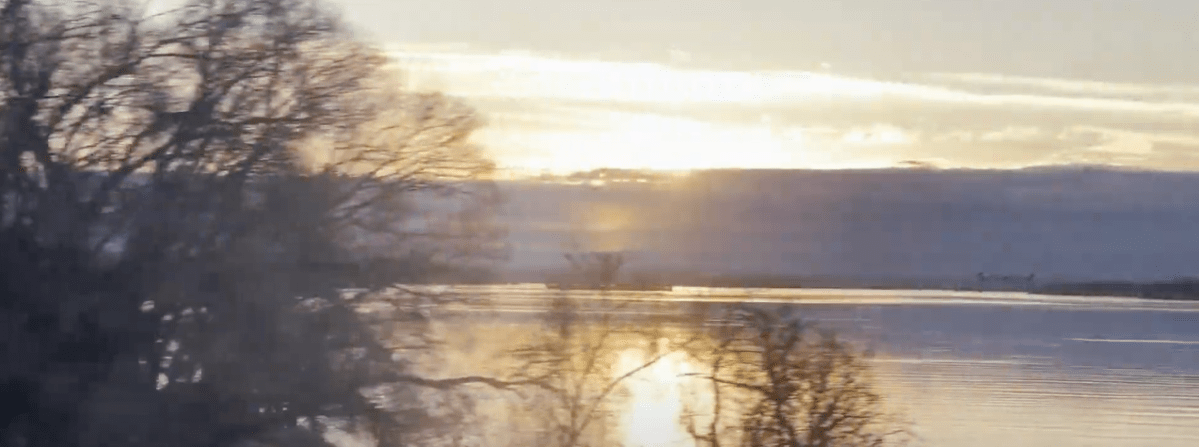
As I departed Pasco on the Amtrak Empire Builder, the sun rising in the east came in through my roomette window, and let me tell you it was stunning! Check the VLOG for footage of that site, but always know, VLOGs and photos and all that are fun but they compare in no way to being there in person! The tranquility of a roomette, as we roll along on steel rail, with the rising sun is absolutely stunning every single time I get to experience it!
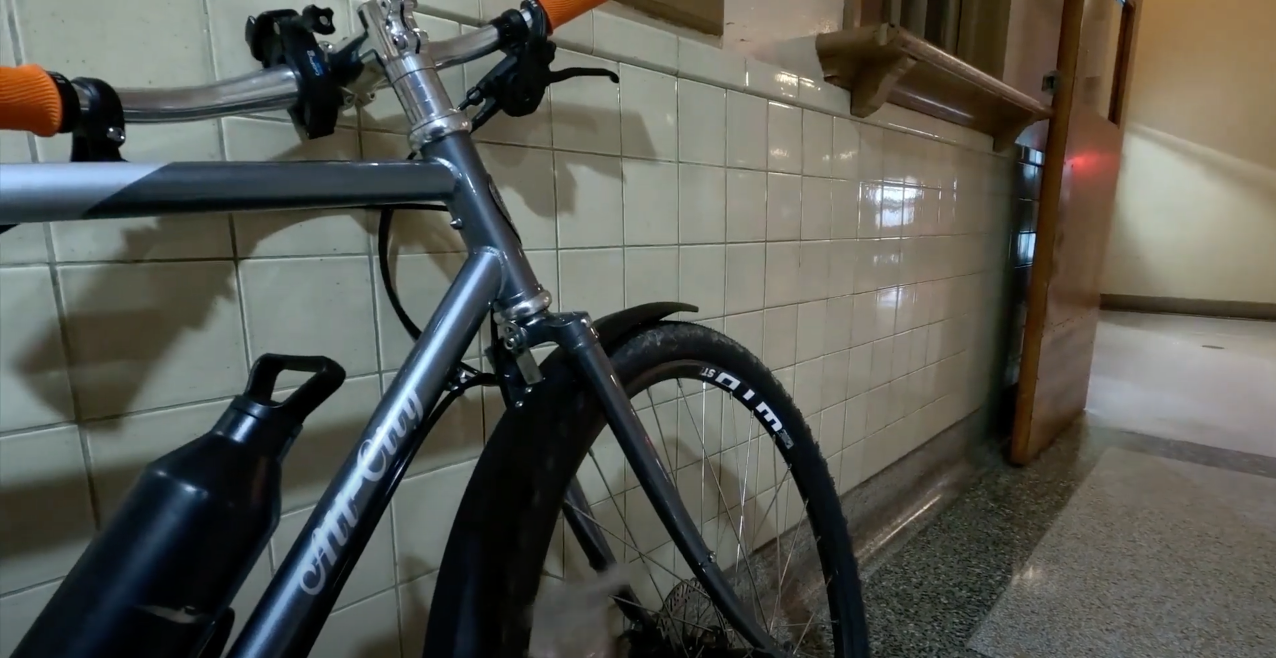
When we arrived into Portland I detrained and went to baggage pickup. Within just a minute or two the bike arrived in the ole’ bike box. I slid it out and with the two tools I brought, I had the bike up and going in just another 90 seconds or so. Slung my backpack back on and out the doors of the station I went.
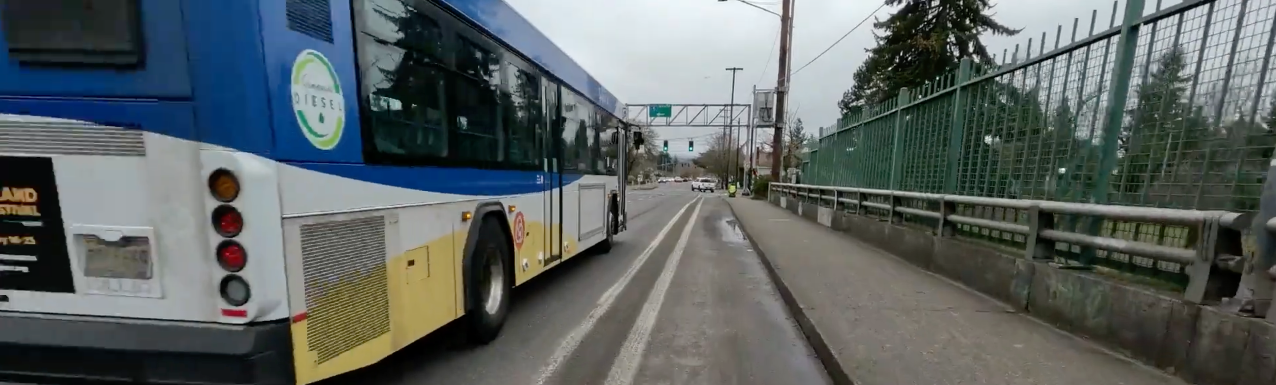
With a ride, almost parallel to my original departure from Portland the day before yesterday I alternated to the Williams St corridors for the majority of the trip back. In doing so I got to race the Trimet #44 bus! What fun, what excitement, what a slow and relaxing race! The real question though, who will win!
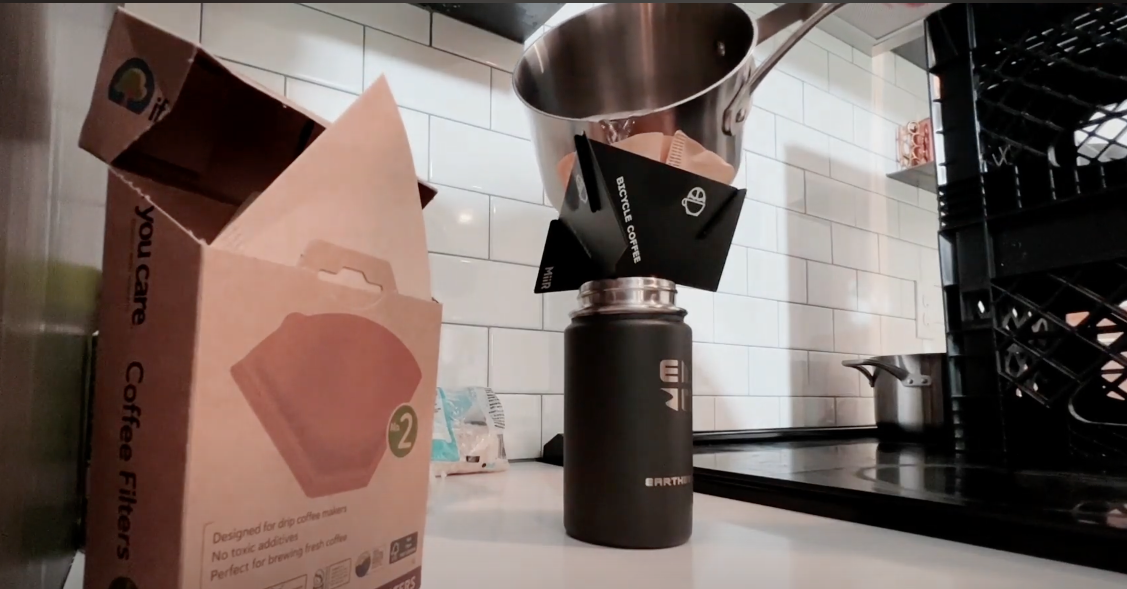
After the race I arrive back to Office PDX and make a cup of coffee with the MiiR pour over and it is excellent! I also use some techniques that you might not always use, but it’s worth a watch just so you can give it a try if you ever need to give it a try! It kicks off at 9:42 in the video.
0:21 – Leaving Richland via Pasco on the Empire Builder. Catching a stunning sun rise!
2:38 – Reclaiming PDX Orange from baggage, getting her back in riding condition. Tips + tricks on boxing your bike and unboxing it.
3:30 – Departing the station and a tip for egress from Union Station via the Broadway Bridge.
4:19 – Watching the Empire Builder cross the Steel Bridge, buy why, learn about it here!
4:48 – Bus🚌 Leap Frog🐸 with the #44! Some thoughts on the buses, their speed, and the fact that I basically pace the bus for the whole… well, listen to the segment and you’ll see. Along with the oddities and other things along the way.
6:50 – Riding through Peninsula Park. With odd unexpected elements! 😬
9:00 – The final stretch, do I defeat the #44 or do I get beaten by the bus!!! It’s soooo close!
9:42 – Caffeine Induction System from Miir, the Pourigami, via Bicycle Coffee from Oakland (link below). In this segment I show you a wicked cool pour over travel setup, using minimal kitchen tools.


 Transit Sleuth