(Some) of Seattle’s Origin Story: From Chief Sealth’s Grace to the Interurban’s Legacy

The Uncomfortable Truth(s) About Seattle’s Founding. However, these things you ought to know living in Seattle and if you’re curious about why things are the way they are here in Seattle.

Let’s talk about how Seattle got its start, because the story is both remarkable and deeply uncomfortable. In 1851, a group of white settlers—led by Arthur Denny, Carson Boren, and David “Doc” Maynard—landed at Alki Point. They were, to put it bluntly, exactly what you’d expect from mid-19th century European settlers: a bit bumbling, entitled, racist, and operating under the delusion that they had some divine right to land that had been occupied for thousands of years by the Duwamish people (and others in the surrounding area, cuz it didn’t just stop with the Duwamish).

Some of these settlers were essentially Christian thieves, showing up with their Bibles and their sense of superiority, ready to claim whatever they could get their hands on. David Denny, Arthur’s brother, was notably the more religious zealot among them, often finding himself in conflict with the other settlers over his strict religious convictions. They named their settlement “New York-Alki” (Alki meaning “by and by” in Chinook Jargon), which tells you everything you need to know about their ambitions and their complete disregard for the existing inhabitants.

But here’s where the story takes a turn that these settlers probably didn’t deserve: Chief Sealth (anglicized as “Seattle”) of the Duwamish and Suquamish tribes didn’t just tolerate these interlopers—he actively helped them survive. Despite the settlers’ racism, despite their entitlement, despite their complete lack of respect for the land and its people, Chief Sealth extended grace and protection.
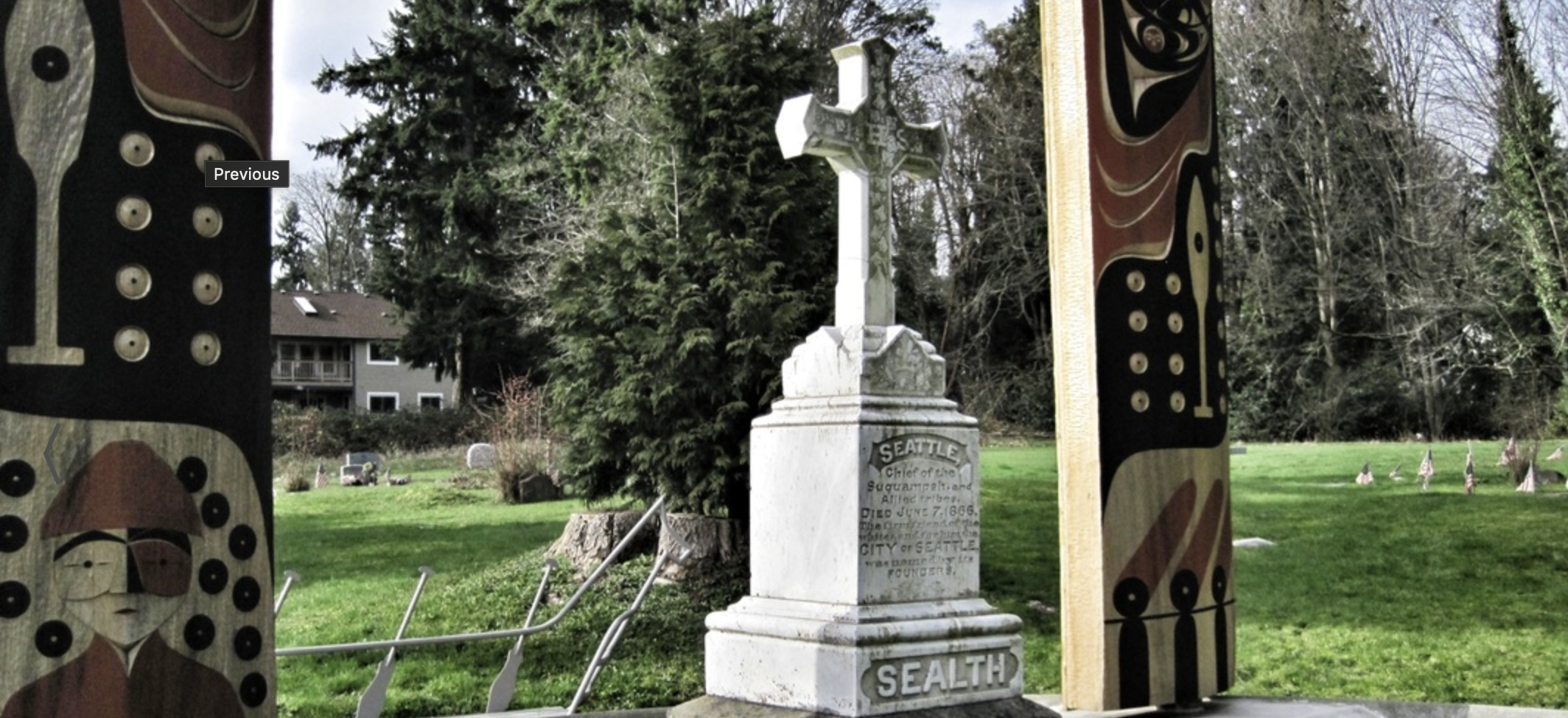
The settlers were struggling. They were unprepared, they were vulnerable, and they were in a land they didn’t understand. Chief Sealth could have let them fail. He could have driven them out. Instead, he chose a path of diplomacy and assistance, recognizing that conflict would only bring more suffering to his people. He negotiated treaties, provided food and knowledge, and essentially saved these settlers from their own incompetence.

It’s a story that should make us all uncomfortable. The man whose name would eventually grace the city was treated with less respect than he deserved, and the settlers who benefited from his generosity would go on to systematically displace and marginalize the very people who had saved them. The Duwamish people, despite Chief Sealth’s efforts, were pushed out of their ancestral lands, and to this day, the Duwamish Tribe remains federally unrecognized — a final insult in a long history of broken promises.

The Interurban: Seattle’s Early Growth Engine

Fast forward a few decades, and Seattle was starting to become something more than a frontier town. By the turn of the 20th century, the city was growing, but it was constrained by geography. The Puget Sound region is a weird place—mountains, water, and valleys creating natural barriers between communities. Everett to the north, Seattle in the middle, Tacoma to the south. These weren’t just separate cities; they were separated by geography that made connection difficult.

Enter the Interurban Railway. Starting in 1902, the Puget Sound Electric Railway began connecting these disparate communities. The line ran from Everett through Seattle and down to Tacoma—a 75-mile route that fundamentally changed how people lived and worked in the region.

This wasn’t just a train line; it was a growth mechanism. The Interurban made it possible for people to live in one city and work in another. It enabled the development of suburbs and satellite communities. It created economic corridors and allowed the region to function as a cohesive metropolitan area rather than isolated towns.

The Interurban ran through what would become some of the most important commercial and residential corridors in the region. Stations sprouted up along the route, and communities grew around them. The line carried commuters, freight, and mail. It was the backbone of regional development, and it ran on electricity cutting-edge technology for its time.

But here’s the thing about infrastructure: it requires maintenance, investment, and political will. By the 1930s, the automobile was becoming dominant, and the Interurban faced competition from highways and buses. The Great Depression hit, ridership declined, and the private companies running the service struggled. By 1939, the last Interurban train ran, and the tracks were torn up.

From Rails to Trails

The Interurban was gone, but the corridor it created remained. Over the decades, parts of the right-of-way were developed, but significant portions remained undeveloped. In the 1980s and 1990s, a movement began to convert these old rail corridors into trails—the Interurban Trail system.

Today, you can walk or bike along sections of the Interurban Trail, following roughly the same path that trains once traveled. It’s a nice amenity, but it’s also a reminder of what we lost. A trail is great for recreation, but it doesn’t move people at scale. It doesn’t enable the kind of regional connectivity that the Interurban once provided.

The Slow Return: Link 1 Line

Now, decades after the Interurban was torn up, we’re slowly rebuilding what we destroyed. Albeit not on the original route, but connecting the same core cities. Sound Transit’s Link 1 Line is gradually extending north and south, following many of the same corridors that the Interurban once served. It’s a slow process—agonizingly slow for those of us who understand what’s possible—but it’s happening.

The Link 1 Line connects Everett to Seattle to Tacoma, just like the Interurban did over a century ago. It’s electric, just like the Interurban was. It’s serving the same function: enabling regional connectivity and acting as a growth mechanism for the area.

But here’s the difference: we’re spending billions of dollars and decades of time to rebuild something we already had. We’re learning lessons that were already learned a hundred years ago. We’re rediscovering that transit enables growth, that regional connectivity matters, and that electric rail can transform how a metropolitan area functions.

It’s progress, but it’s also a reminder of how short-sighted we can be. We tore up a regional rail system that was working, replaced it with highways and sprawl, and now we’re slowly piecing it back together at enormous cost.

The Legacy

Seattle’s story is one of contradictions. A city named after a chief who saved settlers who didn’t deserve his grace. A region that built world-class transit infrastructure, tore it up, and is now slowly rebuilding it. A place that understands the value of regional connectivity but took nearly a century to act on that understanding.

The Interurban was more than a train line — it was a growth mechanism that shaped the Puget Sound region. Its removal shaped the region too, just in ways we’re still dealing with: sprawl, traffic, and disconnected communities. The Link 1 Line is the slow, expensive correction to that mistake.

As we watch the Link 1 Line extend mile by mile, station by station, the city and people are not just building transit — we’re rediscovering what Chief Sealth and the Interurban already knew: that connection matters, that regional cooperation enables growth, and that sometimes the best path forward is to learn from the past, even when that past includes uncomfortable truths about who we are and how we got here.

Now, the story of the Chief and this line might not seem connected right now, but I wanted to detail these two topics as I’ll be referencing back to them in the coming days with a number of posts. Be sure to subscribe and you’ll get to read about the interconnected nature of it all!
Mountlake Terrace, Pizza, and Art

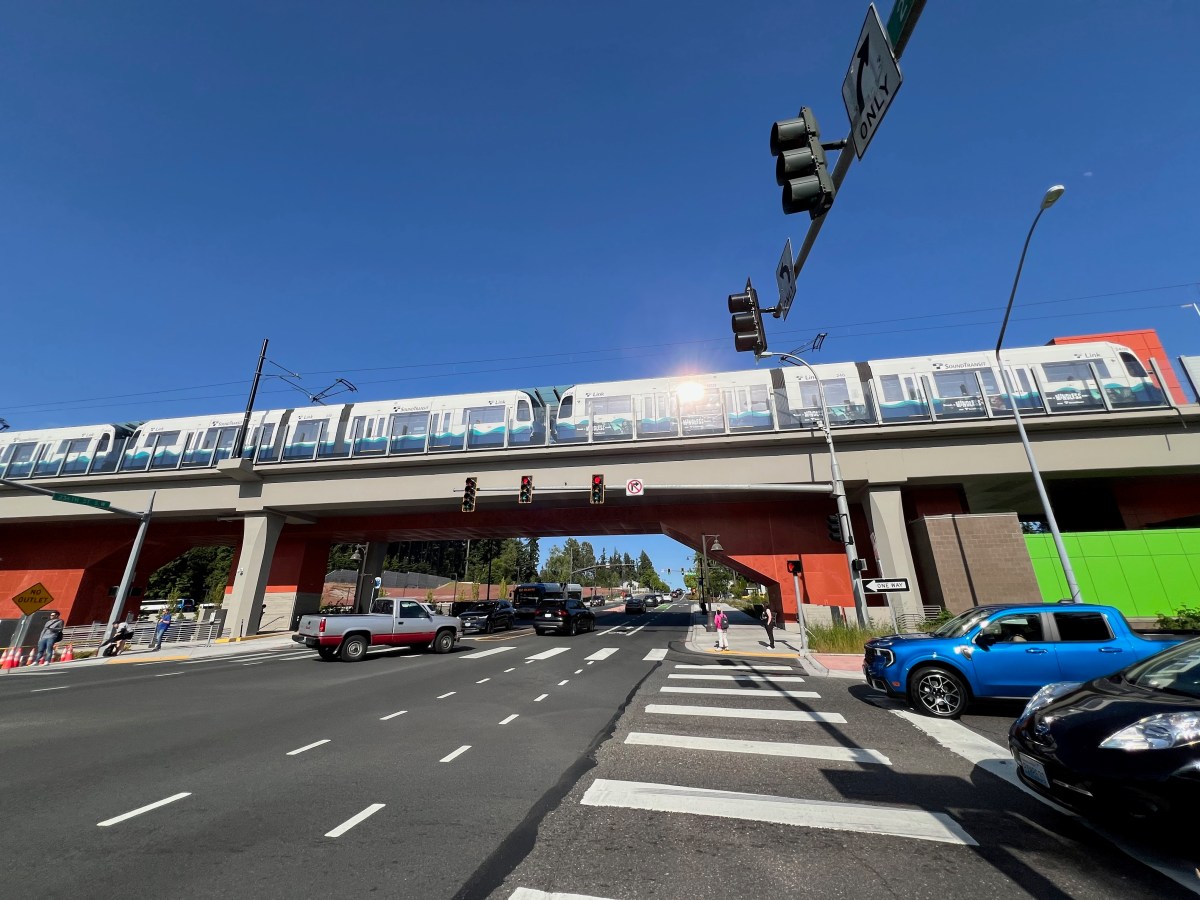
I reached Mountlake Terrace yesterday. It was after a short ride down the Interuban Trail from Lynnwood Transit Center. Upon arriving, and more on the route in a moment cuz it’s worth its own write up, I made a right turn away from the Link station. My intent to roll downhill to the Zeeks Pizza and grab dinner.

As I rolled downhill the utter chaos of dystopian incompetence in parking was on full display. Full suburban entitlement was evident. Car after car, among the majority parked correctly, was pulled into the PBL (Protected Bike Lane). Some were parked halfway in the road, blocking the road and bike lane, all while beside an actual parking spot. A New Yorker would be enraged at the absurdity of parking beside a empty spot filled by a ghost, maybe?! But all that nonsensical disrespectful motorist shit aside, it was a quick roll down from the station and up on to the sidewalk to park.

There was a solid staple rack right out front of the Zeeks, so I saddled right up to that. I then perused the other establishments on the street here. There’s a coffee shop that looks like it’d be legit, but closes at 3:00pm and it’s 5:30 now. There is also a beer brew joint of some sort. All of it looked like legit quality joints! Not entirely what I’d expect this far out into the suburbs, but after the ride (again more on that in a moment), this Mountlake area is one of the more quality areas in the overall metro area! It’s really nice out here!

Anyway, I strolled my happy ass into the pizza joint. One of the staff (or proprietor, I don’t know) she offered I sit anywhere. I went ahead and took a seat on a two top. She came over, and provided menus and offered some beer options upon my curiosity. We discussed beer for a minute, Pfriem specifically because holy hell are they amazing, and then delved into our children and their recent chaos! No idea how we got there but it was a great multi-minute conversation. As the waitress came up and popped around the corner, the trio of us relayed by beer option and then the waitress and I discussed the varietal of pizza options I had before me.

Zeeks

I will admit, she struck me a bit off kilter because she had enthralling dermal facial and septum piercings of a uniqueness – a very artistic uniqueness – I’d not seen. With necklace, jewelry, and other accoutrement, she had an air about her that was very bespoke. Humans in Seattle are not cookie-cutter. Standing out as unique is rare and a significant compliment for me to ponder, let alone verbally offer someone.

I ordered my pizza and chatted with the team there a bit more. I had a pilsner – ok two because the Italian Pilsner was tops. Then I wrapped up. When I paid, I verbally complimented the waitress on her artisanal bespoke style. She genuinely appreciated my word soup compliment. We discussed the idea of one’s self being presented as a human art. In all seriousness, it’s a topic unto itself, but for those that know y’all know. Hat tipped to you all!

I then left. I had a good phone chat with my kiddo. After that, I mounted my steed to claim and uphill to the Mountlake Terrace Link Station. However I did deviate again and cut right. With a slight bit more hill climb, I rolled past. I gave a good look to the claimed “center” of Mountlake Terrace. I also eyed Hemlock State Brewing. Another trip will include that brewery!

With that I made a u-turn mid-suburb and got another hill drop down to the station. Rode the elevator up and the next Link rolled in within minutes. Boarded, and off I went wrapping up this very blog entry. Until next time, enjoy your transit trips, bike rides, and adventures! Slava Ukraini, may fascism fall on its face, and may your quality of life improve endlessly!

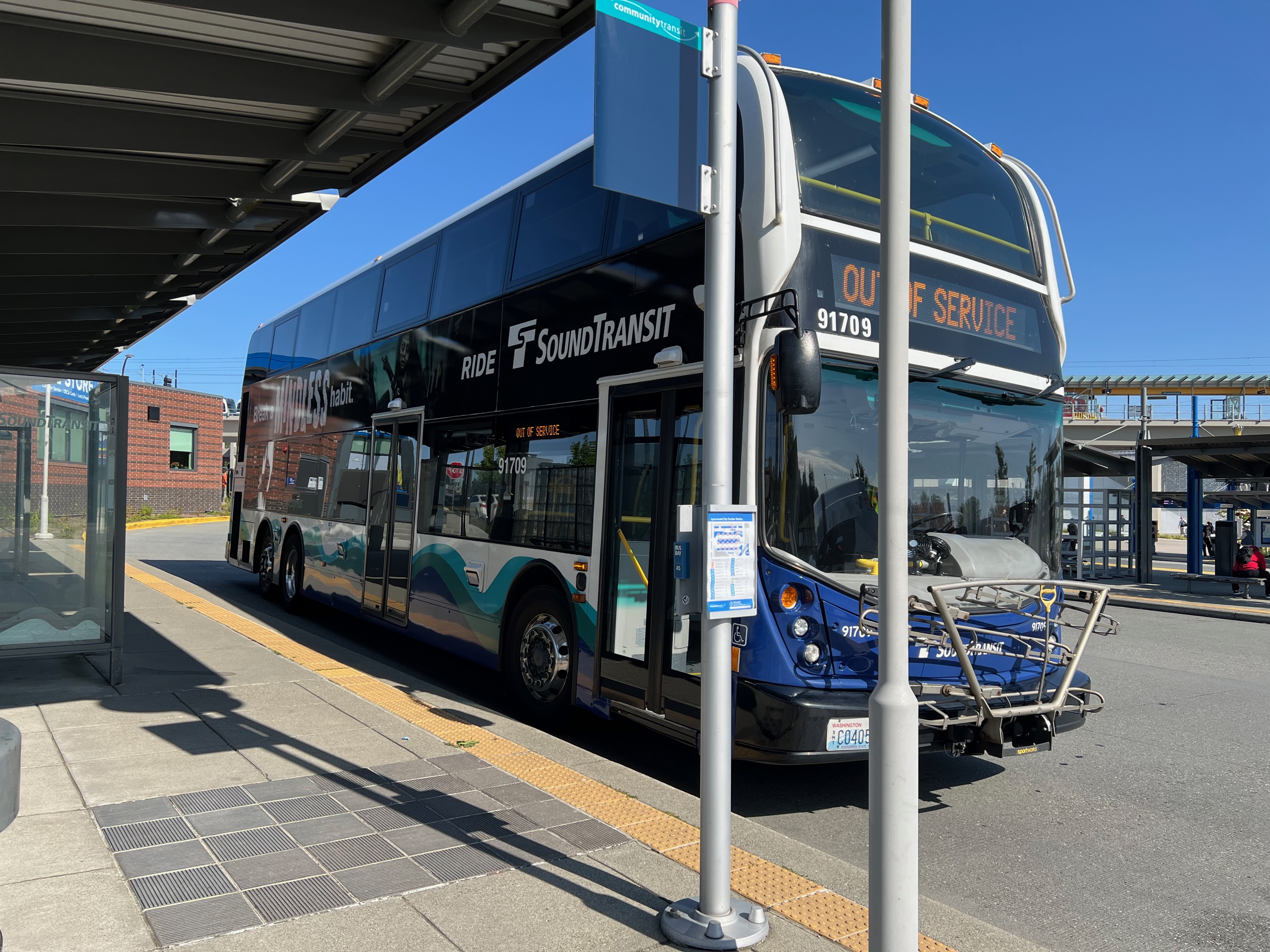
Sound Transit Double Tall

Seattle Explorations & A Guide to Double Talls

First a bit about double tall busses. Then a bit about my trip out to Lynnwood to finally, after years of wanting to ride a double tall, doing so!

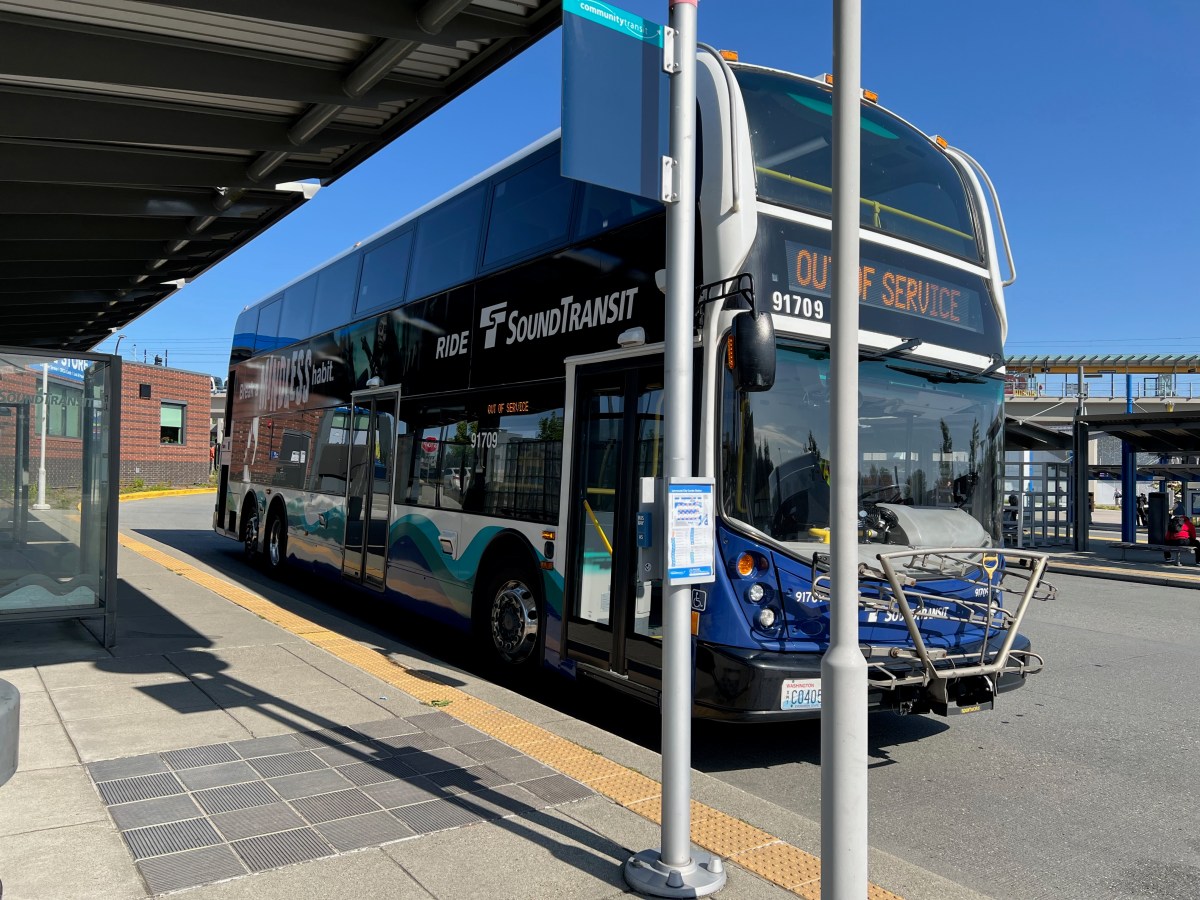
Double tall buses, also known as double-decker buses, have become an iconic part of Seattle’s public transportation landscape. These impressive vehicles offer increased passenger capacity while maintaining a smaller footprint on the road, making them an efficient solution for high-capacity routes.

The Alexander Dennis Connection

The majority of double-decker buses in the Seattle area are manufactured by Alexander Dennis Limited (ADL), a British bus manufacturer with a strong presence in North America. The company’s Enviro500 model has become the standard for double-decker operations in the region.

Sound Transit’s Fleet

Sound Transit operates a fleet of Alexander Dennis Enviro500 buses, specifically the MMC (Multi-Modal Coach) variant. These buses feature:

  • Length: 45 feet
  • Height: 14 feet
  • Capacity: 81 passengers (57 seated, 24 standing)
  • Engine: Cummins ISL9
  • Transmission: Allison B500R
  • Air conditioning and heating systems
  • Low-floor design for improved accessibility
  • USB charging ports and WiFi

The Enviro500 MMC is known for its modern design, fuel efficiency, and passenger comfort. Sound Transit primarily uses these buses on their ST Express routes, particularly on high-demand corridors like the 510/511/512 routes between Seattle and Everett.

Other Operators

While Sound Transit is the primary operator of double-decker buses in the region, other transit agencies have also incorporated them into their fleets:

  • Community Transit: Operates Enviro500 buses on their Swift Bus Rapid Transit lines
  • King County Metro: Has tested double-decker buses on certain routes

Technical Specifications

The Alexander Dennis Enviro500 MMC features several advanced technologies:

  • LED lighting throughout
  • Electronic destination signs
  • GPS tracking and real-time passenger information
  • Advanced driver assistance systems
  • Euro 6 compliant engines
  • Composite body construction for reduced weight

Impact on Seattle Transit

The introduction of double-decker buses has significantly improved capacity on key routes, particularly during peak hours. Their ability to carry more passengers while taking up the same road space as a standard bus has made them an efficient solution for Seattle’s growing transit needs.

Taking a Ride to Lynnwood

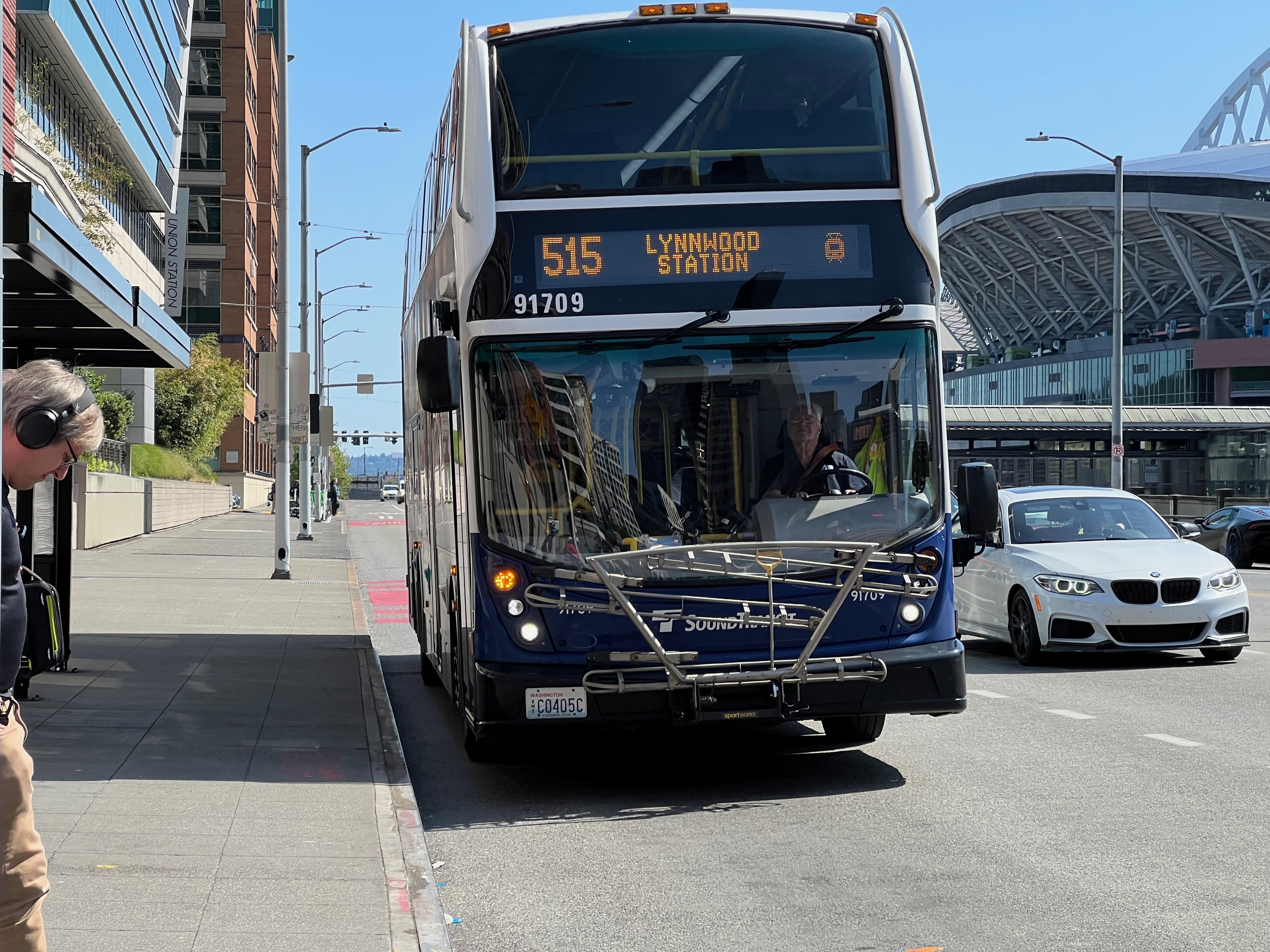
Today I took a ride, for the very first time, on one of Sound Transit’s double decker buses. I opted, since it would include some light rail usage, to take the 515 Express from downtown Seattle to Lynnwood. This is the story, of all the things I noticed along the way.

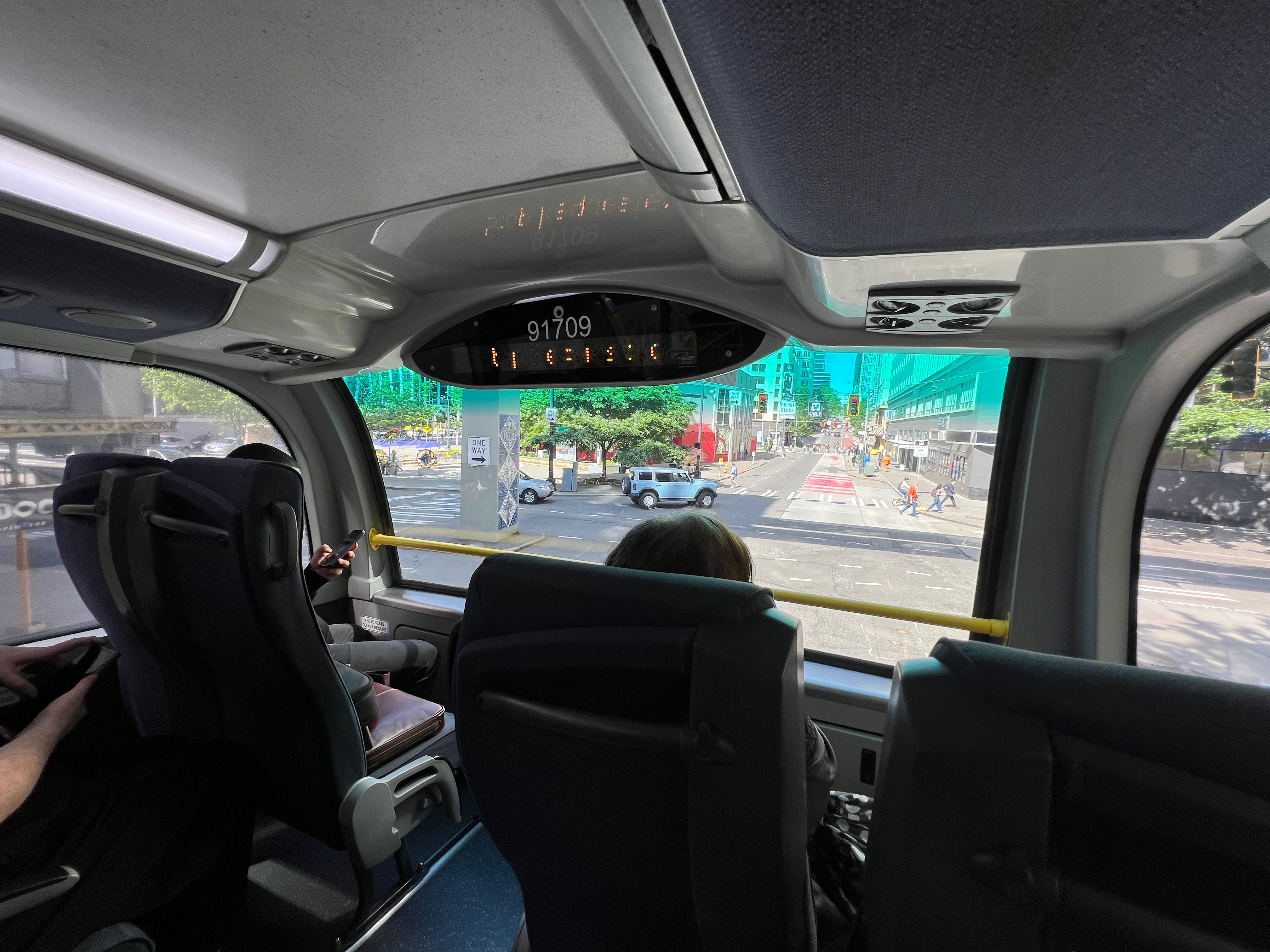
I believe it was the 4:15pm bus that I boarded between King Street Station and Union Station. I’d racked my bike, then stepped onto the bus, swiped my Orca card, took a video (see below) and climbed the steps upstairs.

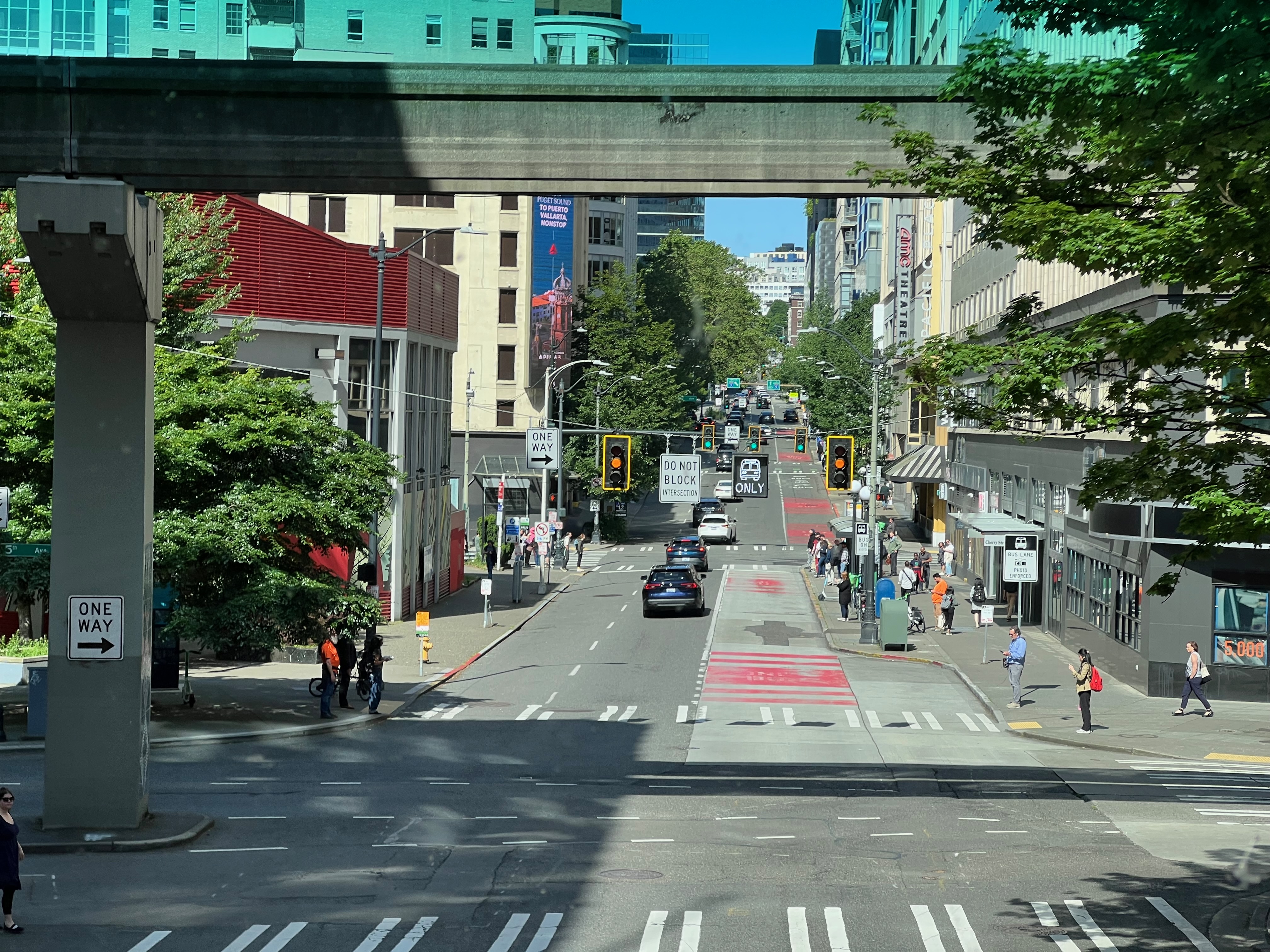
The bus then carefully, and very smoothly, traveled forth through the streets of Seattle. Slowly coming to and striking branches of trees because of the height. We stopped at about a dozen stops, from the originating stop I boarded at through to the egress point from downtown. When we left, we did it in relative style because we exited via the express lanes.

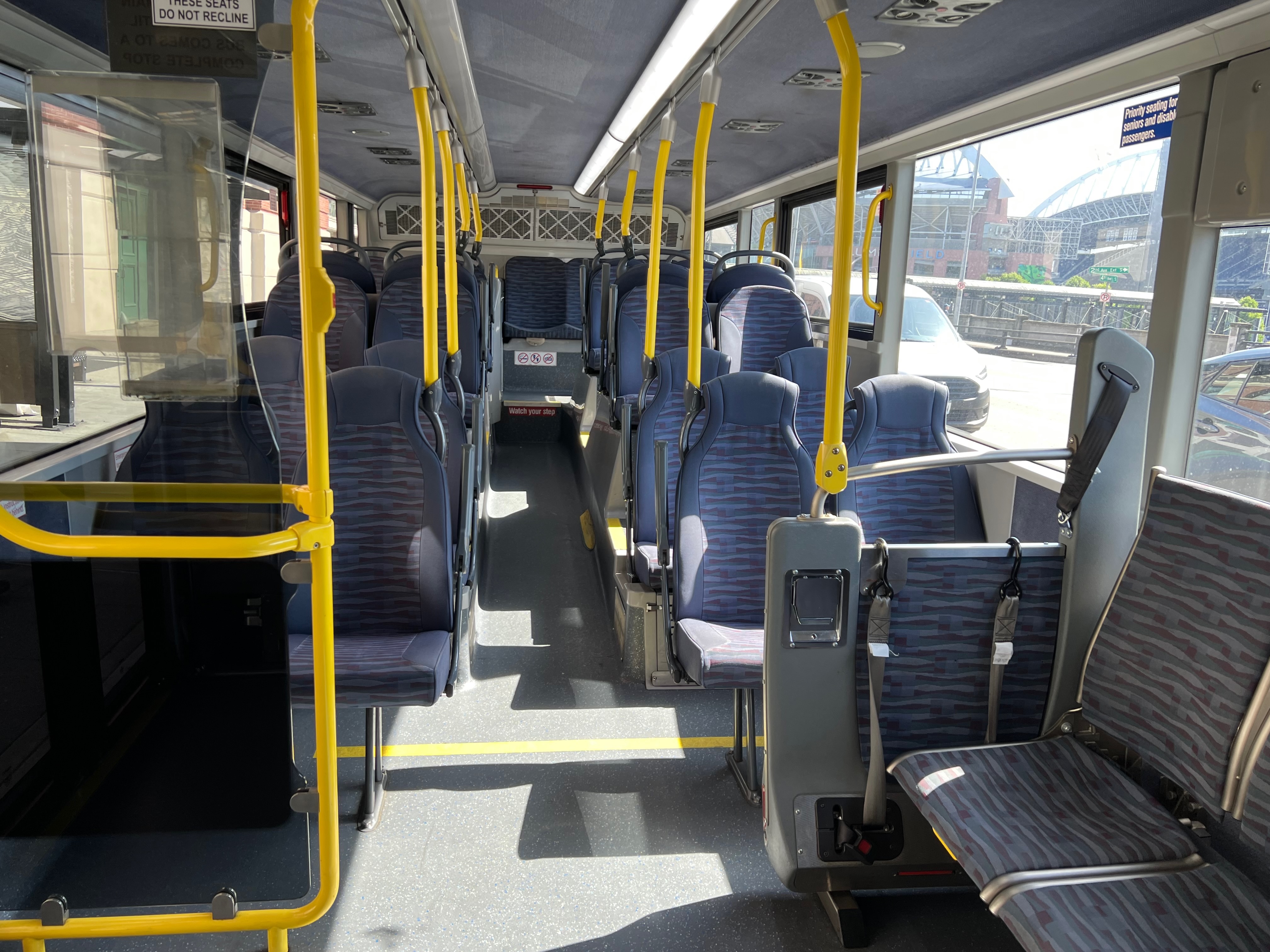
To note – when I showed the “empty” bus just after the first stop downtown, it was almost entirely full by the time we left downtown. Don’t get in your head that this is an empty route, it’s a very well used rush hour service. A kind of extra interlined service, in addition to the light rail and other Sound Transit Express lines that go out this way.

However, if you watch the video all the way through, you’ll notice the enjoyment of zooming along in the express lanes comes to an end before we even got past the Greenlake and Ravenna areas! Motorized “road” transportation without right of way is, and always will be a joke when it comes to speed and throughput.

But, that didn’t really matter much because being on a double decker, in a cool air conditioned environment with big ole’ windows to see as far as thee eye could see was a joy! We carried on, as you do, at a reasonable 20-35mph. The traffic slugged into a accodian like zig zag of slow drivers stuck behind entire cavalcades of other slow drivers under the guise of the inefficiencies and stupidities of mass transportation movement via single occupancy vehicles.

In other words, we were limited by the stupidity of cars as primary modal option at rush hour.

But it was entertaining and pleasant. I wrote up this blog entry and got some work done as I explored this new transportation choice for traveling north to Lynnwood.

At this point I also had zero idea what I would do once I got to Lynnwood, but I didn’t really care, I’d likely the board the Link Light Rail line back south and then take the 542 at University District back home.

The Bus Itself

The bus itself, being a double decker, is very smooth similar to one of those intercity buses. The air conditioner worked great, so it was a cool ride in spite of it being a bit warm outside.

Additional Observations

As we rolled forward and stopped, then moved forward again, and stopped, and then lurched and stopped, we made our way ever so slowly to Lynnwood. I couldn’t help but wonder, was this even faster than light rail with all this traffic? I had no idea, as I’d never even looked at the schedule vs. what time this was taking now.

At one point we just stopped for a solid 20+ seconds and sat. Traffic unmoving and a light rail train zipped by beside us, one going north full of people and one going south with a dramatically smaller number of people.

It really did seem like the light rail would have been the faster choice at this point. However this is likely the smoother option, considering how the double deckers ride! They really are not like other buses.

Drama!

In normal society fashion, at some point some guy got a phone call and began talking loudly – very “American” of him – about a financial situation that a child or someone in family was having difficulty with. He wanted to see funds and bank accounts and started “telling them” a number of things.

Why are people like this, what is the deal with the lack of situational awareness? So many parents bring up kids to become these adults that just utterly drives me nuts as a parent. I’ll take rowdy kids any day over an oblivious adult yapping drama out of the pie hole openly and loudly!

But even with that slight little interruption along the route, the ride was great. One more great way to commute in the Seattle area, so great I’d even put this up close right after “Ferries”, “Commuter Trains”, competitive with “Light Rail”, but definitely better than intercity buses!

Thursday Wrap Up, Some Standard Seattle.

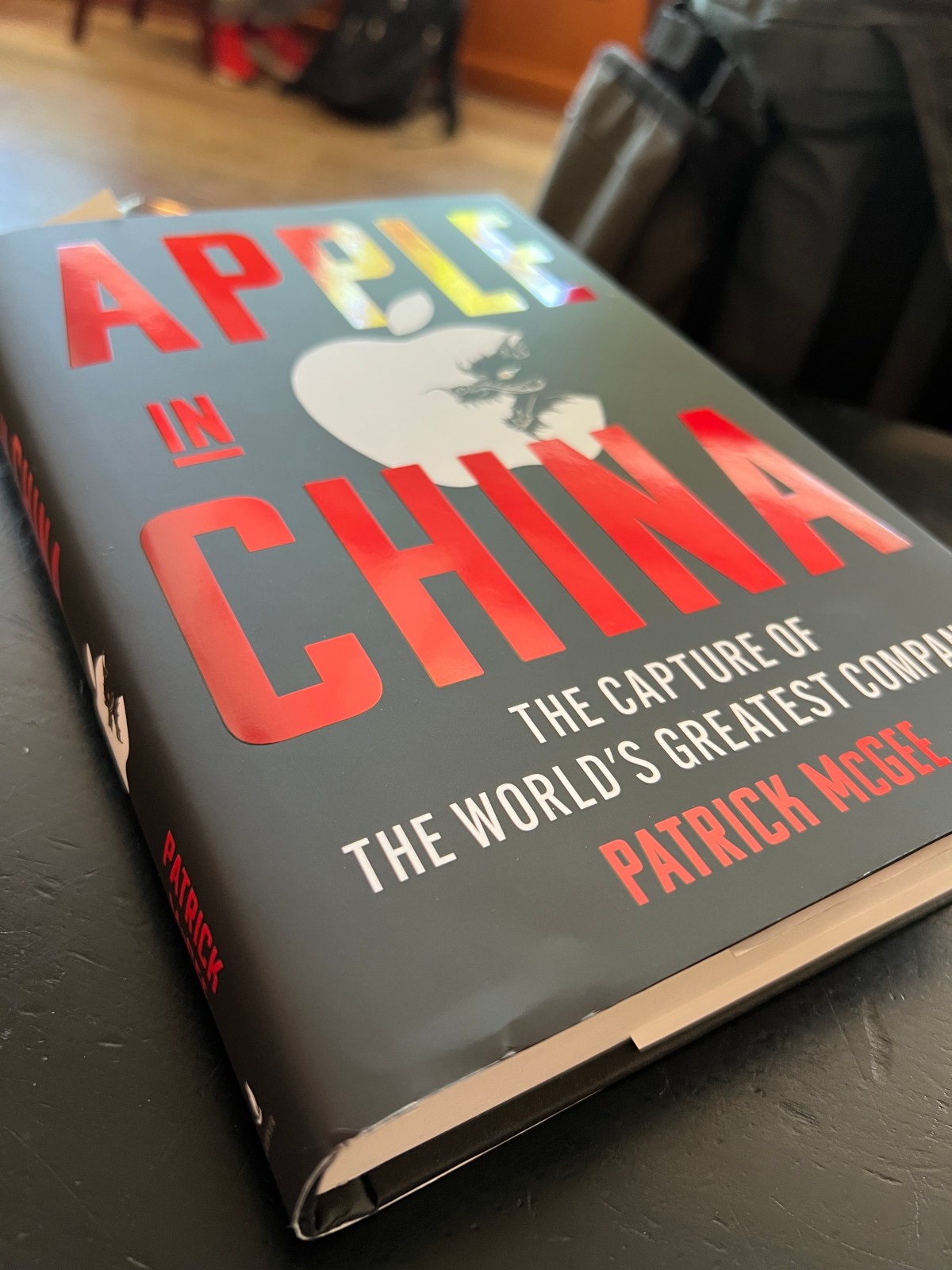
I ride up to Capital Hill and check out Elliot Bay Books. I find the book I’m looking for, “Apple in China: The Capture of The World’s Greatest Company” and have a sit down at book store coffee shop, Oddfellows, for a read and drink. Upon purchasing a delightful Arnold Palmer I take a seat and dive right into one of the chapters. It’s the section on Navy Seals, not the real Navy Seals mind you, but a group of security folks that ended up dubbed the Navy Seals. But I digress, after reading a while I purchased the book, tossed it in my backpack and back upon my steed I rode. After the drop back into downtown Seattle I went over to Union and boarded the next Sound Transit 550 Express.

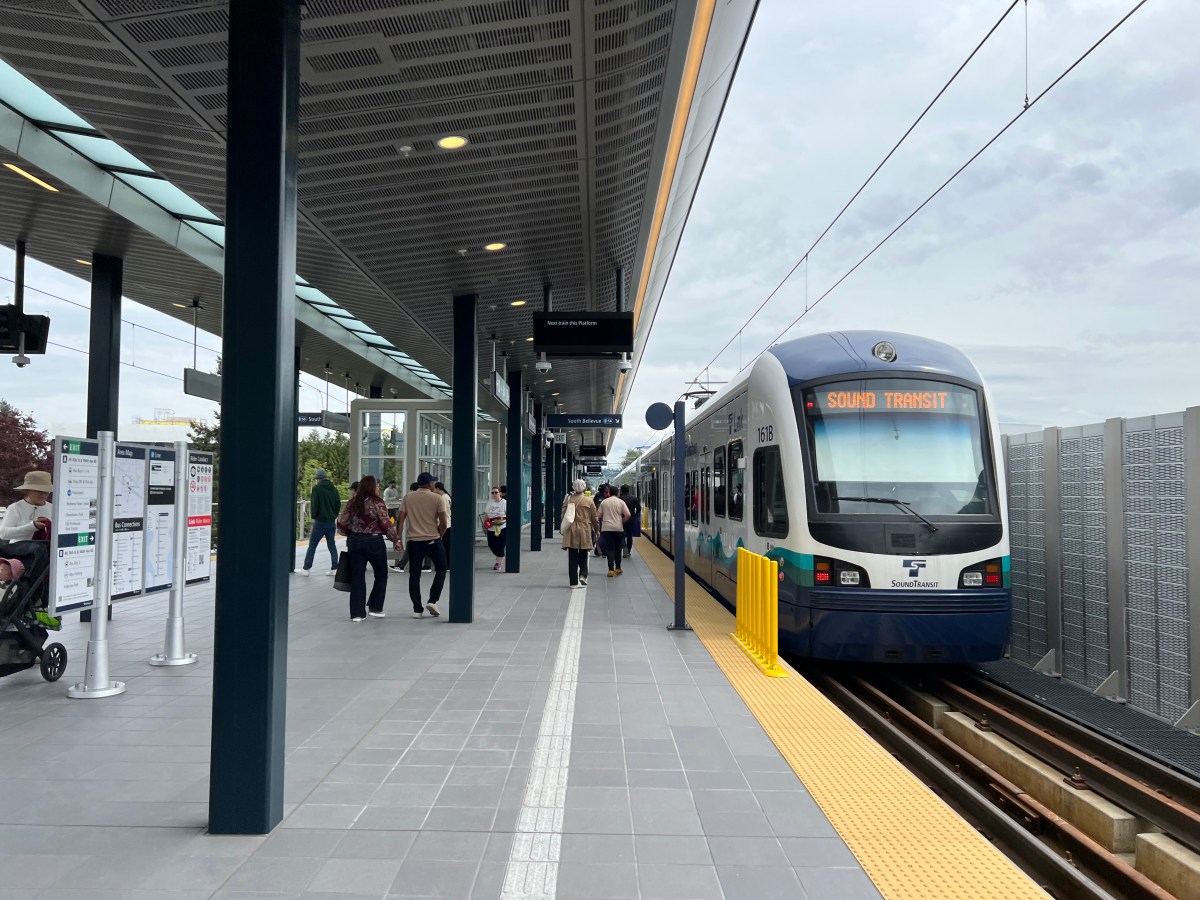
That’s where the stupid started. Upon arriving at the South Bellevue Station to transfer to the Link Light Rail, I realized the train was off. As in, there was no applied power. I had just took the elevator up to the platform, but the train power seemed to be off. I stook patiently by the train waiting, and listening to the driver’s radio chatter. It sounded like the power had just been restored. Great, I thought!

So I boarded. The AC kicked on, but the train had been there long enough without power in this 80+ degree day that it was hot inside. As the train sat there the driver exited his driver’s cabin (cockpit?) and tried over and over again to fix the front right door. It seemed to be stuck in a state of being closed but in alarm. The normally blue lights of the door shown red, and he worked on it and worked on it. Opening the bay overhead and fiddling and fiddling.

Finally, off we went with the door, theoretically, fixed. Arriving at the very next station however things went sideways again. The door opened, but then upon closing went into an alarm state again. After attempting to shut the doors several times, the driver again existed the driver’s cabin and started fiddling with the door again. The interesting thing, was the lights went green this time instead of red when the door was in alarm. The other oddball thing was, the train wouldn’t depart.

Yay Seattle issues! We’ve gold plated things at ludicrous prices yet still get these ridiculous toothing problems. I’ll give em’ this, at least on the east side the line is relatively new, so these kinds of things happen. But hot damn it’s rather ridiculous.

After a few more attempts and another half dozen Sound Transit employees and Sound Transit security showing up they fiddled and fiddle with it and eventually it shut, the lights went blue, and off we went.

Finally, after almost 8 minutes, we arrived in Bellevue. For the record, it usually takes about 2-3 minutes to get from South Bellevue to downtown Bellevue.

But whatever, it’s a nice day and things were going well otherwise. I got to read a book, enjoyed a nice drink, and rode my bike around the city. A solid day plus a significant number of code contributions for the day too.

As for the book mentioned above that I purchased, it’s a must read if you want to get a solid grasp of the magnitude of how much the west basically sold off to develop China (and hats off to China for benefiting off that) with the misleading idea that China would become more focused on freedom, liberty, individual rights, and opening up to the world. Even though the book is about Apple, the correlations to what Apple has done tightly correlates to what transit and transportation organizations and companies have done for and in China. But I digress, more on all that later!

A Re-introduction to Transit Sleuth via Link Light Rail

Today marks about the ~20th or so day I’ve ridden the light rail from Redmond to South Bellevue, and then transferred to the Sound Transit Express 550 from there to downtown.

My commute priority has always been about functional use versus speed or other criteria. When I write functional use, what I mean is can I use the commute for something besides just wasting away rotting like one might do in a cage (i.e. a car). Even when I have used a car in the past, the focus still remained exactly that.

Simply put, I despise the idea I follow the modern American tradition of plopping myself into a car, that I’ve worked a job to buy, to sit in traffic – often stop and go or just stopped – to go to a job that I work to do shit like buy a car. I prefer my job funds go to strategic and tactical things like living life. Travel, exploration, games, beer, good food, racing cars, bikes, more bikes, and other entertaining and enriching things vs. buying a car, maintaining a car, paying rent, and all that rat race bullshit.

So now that I’ve written this, I hope to be back soon on a regular basis writing on this blog. If for any other reason, because I enjoy it. But also to document my commuting adventures and related things. Hopefully I’ll conjure up the energy to also start putting videos together again, ya know like this one, this, or this.

Back to the Link Light Rail

With the opening of the Redmond Station, the commute – even in spite of it being 2 parts still – has dramatically improved. Largely because I can take a significant part of the trip via light rail. That means listening to music, getting some code written, videos watched, maybe edited, AI’s vibe coding, views observed, maybe a snack, some AI models processed, or simply enjoying my coffee while en route to the office.

Sometimes, shockingly, I’ll even meet someone and we’ll have a good solid kick ass conversation while en route! But why am I riding the light rail these days?

How Did I Get Here?

Ok, somewhat dreadfully, based on the Seattle area leadership’s inability to deliver on much of anything promised, the Ballard Link Light Rail didn’t look like it was ever going to happen in my life time (i.e. the next ~20-40 years at least). The house I lived in also wasn’t cutting it, so family deemed a new house was in order and we began to search a few years back.

It was hard going. Forget money even, which is it’s own problem with housing these days, houses just weren’t available. Not with the basic – for us – that put a house into qualifying. The characteristics of the house we wanted, in order of importance;

  • being on a trail(s) or dedicated bike infrastructure
  • being near park(s) and woodland space
  • being away from any primary interstate or highway arterial (preferable to stay away from carcinogens)
  • being near transit options to get into and out of Seattle downtown
  • being near transit options to get to King St Station and SEATAC and/or other airport with area departure options.
  • being away from any primary roadway arterial
  • being most quiet
  • being walkable (i.e. do sidewalks exist, do business exist?)
  • being low crime (honestly, only sort of important in certain ways)
  • minimum number of rooms for remote/home work in addition to kiddo space
  • no HOA cuz forget that shortsighted self-fascistic nonsense
  • MAGAt density is no more than 1 out of 10 (super easy in this area, since low crime areas have very low MAGAt density) **
  • minimum ~1600 square feet
  • enough land to use for a victory garden (i.e. something like ~200 sq ft minimum, more is better)

Redmond? What? Not intuitive!

Naturally we assumed we could only really get something that would have maybe ~3-5 of these items, and then maybe part of another 5-10. We searched and searched and searched and finally, after offers put in, offers turned down, we finally expanded our search outside of Seattle to some east side locations and landed an offer in Redmond. Somewhat shockingly it has a multitude of these things in full and all of them to a partial degree.

The only things Redmond, outside of its downtown core fails on is a few things;

  • Walkability to do anything useful outside of Redmond’s downtown core is questionable and often requires other modal options to complete. However, that said, almost everywhere in Redmond has sidewalks, clear paths, and ways to get places, it just might take 15-45 minutes depending on where one lives.
  • Transit options are spectacular if you are in the downtown core. However leaving the downtown core it becomes immediately questionable whether you will have good transit options.
  • The light rail, as this post is about, massively changes the dynamic into and out of Redmond, Bellevue, and in about a year – theoretically – into Seattle for the east side. Even without the bridge into Seattle being open, it’s still changed the dynamic of the east side in a very positive way.
  • Even though we’re away from primary arterials and highways, interstates, and the like. The roadway system is setup in an auto-focused way that leads people to some expediently stupid behaviors. Negligence and obliviousness – as you might expect – reign supreme with east side drivers. The majority do endeavor to be polite and all but people generally just suck at driving. So YMMV in your automotive driver interactions.

With that being the baseline we have ended up over here in Redmond. So far it’s actually pretty sweet, more so than I thought when we first made the decision and landed the house. Simply put, we live a very European style life over here in Redmond and recently I’ve started commuting to a downtown Seattle office.

Back to The Topic At Hand: Link Light Rail Line 2

My commute now ends up being an interesting and enjoyable string of modal options.

1st – To get to the Link station, I come down from the Redmond hills via bike. There I roll into the now open station, swipe my Orca Card, bump the elevator button and up I go to board the Link.

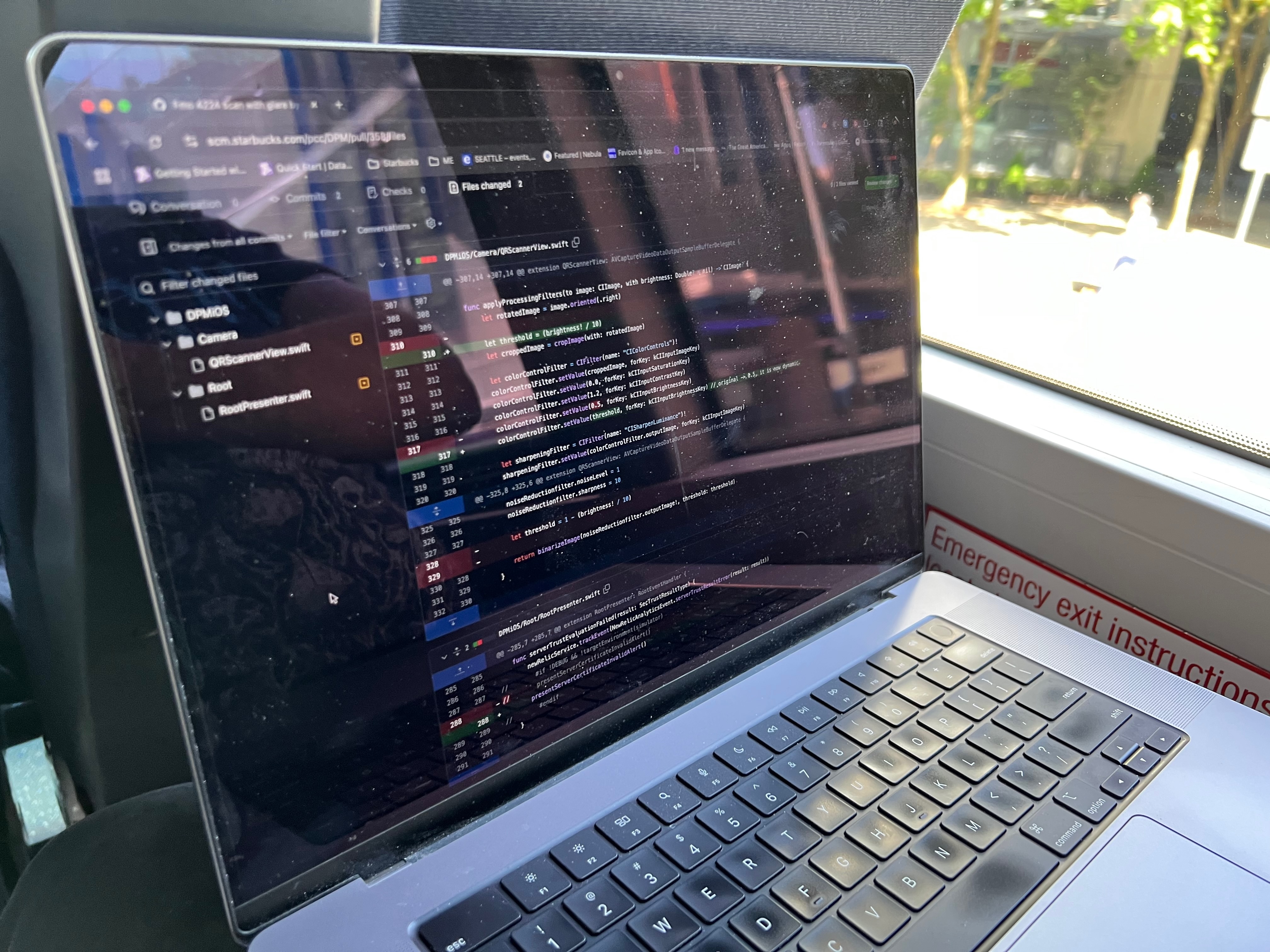
2nd – Upon boarding the Link I rack the bike. Extremely easy to do since this is the originating station and I generally board a train that has few people on it at its start. Then off we zip toward the – current – other end of the line in South Bellevue. During this segment of the trip I take a seat and out comes the laptop. As mentioned earlier in the post the code, videos, editing, or other activities ensue. After the short trip as we leave the stop just before South Bellevue I slip the laptop back into my pack, and unrack the bike for departure. Upon an elevator ride down, I roll over to wait for the arrival of the Seattle bound Sound Transit Express 550.

3rd – The bus fills the current gap while they wrap up construction work on the I-90. The 550 serves the purpose well, and it isn’t overly packed. This puts me in a position to whip the laptop back out and spend a little more time getting shit done, reading, or whatever I may. Upon arrival in downtown I alight the bus, unrack my bike, and then begin the last short segment to the office.

4th – I then enjoy this last segment riding Spacey to the office. It’s always a smooth, seamless, trip around and along various roads and bike infra in downtown. I tend to change up the route just a bit every time I take the trip.

That’s it. That’s my commute these days, and hot damn it’s an enjoyable one! This time of year especially as the weather gets nice and I’m a quick roll – amidst the hilarious insanity of the car oriented commute – to breweries, the epic Seattle waterfront, and other places to chill before the trip home.

More adventures, thoughts, and interludes of written words in the coming days and weeks. Hope your commute rocks, or if you don’t, that you’ve got an enjoyable day to day. Cheers!

** MAGA specifically. Not a fan of confused fascists. I realize this does not include general Republicans or conservatives, especially of the Reagan, Eisenhower, or even Lincoln variety. Since obviously, none of those Presidents were fascists, maybe shitty, but not wannabe fascists.