I rode the Link 1 Line down to Federal Way the other day. That’s what you do when new stations open, right? You check them out. You see what’s around them. You figure out if they’re actually useful. Or you determine if they are just in the middle of nowhere. Maybe they are in the middle of ticky tacky boring and uninspired suburban roads and sprawl. But at least you’ll know then to avoid any trips to those places! 🤣
Turns out, there’s actually something worth stopping for near the Federal Way Downtown station. It’s Crazy Pho Cajun. This place does exactly what the name suggests—mixes Vietnamese pho with Cajun food. It’s a weird combination, but sometimes weird combinations work.
The restaurant is right near the new light rail stop. This location makes it convenient if you’re coming from Seattle or anywhere else on the Link line. Let’s be honest. That’s part of the point of building transit. It gives people access to places they wouldn’t normally visit. This includes restaurants that blend two cuisines that don’t normally go together.
The Menu: Vietnamese Meets Louisiana
The menu is exactly what you’d expect from a place called Crazy Pho Cajun. You’ve got your traditional pho options. Then you’ve also got Cajun dishes like gumbo, red beans and rice, and etouffee. Then there’s the fusion stuff. One example is Cajun Crawfish Pho, which combines pho with crawfish tail meat. It also includes shrimp and andouille sausage. You can pick your spice level, which is nice if you’re not trying to burn your face off.
But here’s what I went for: the smothered catfish.
The Smothered Catfish
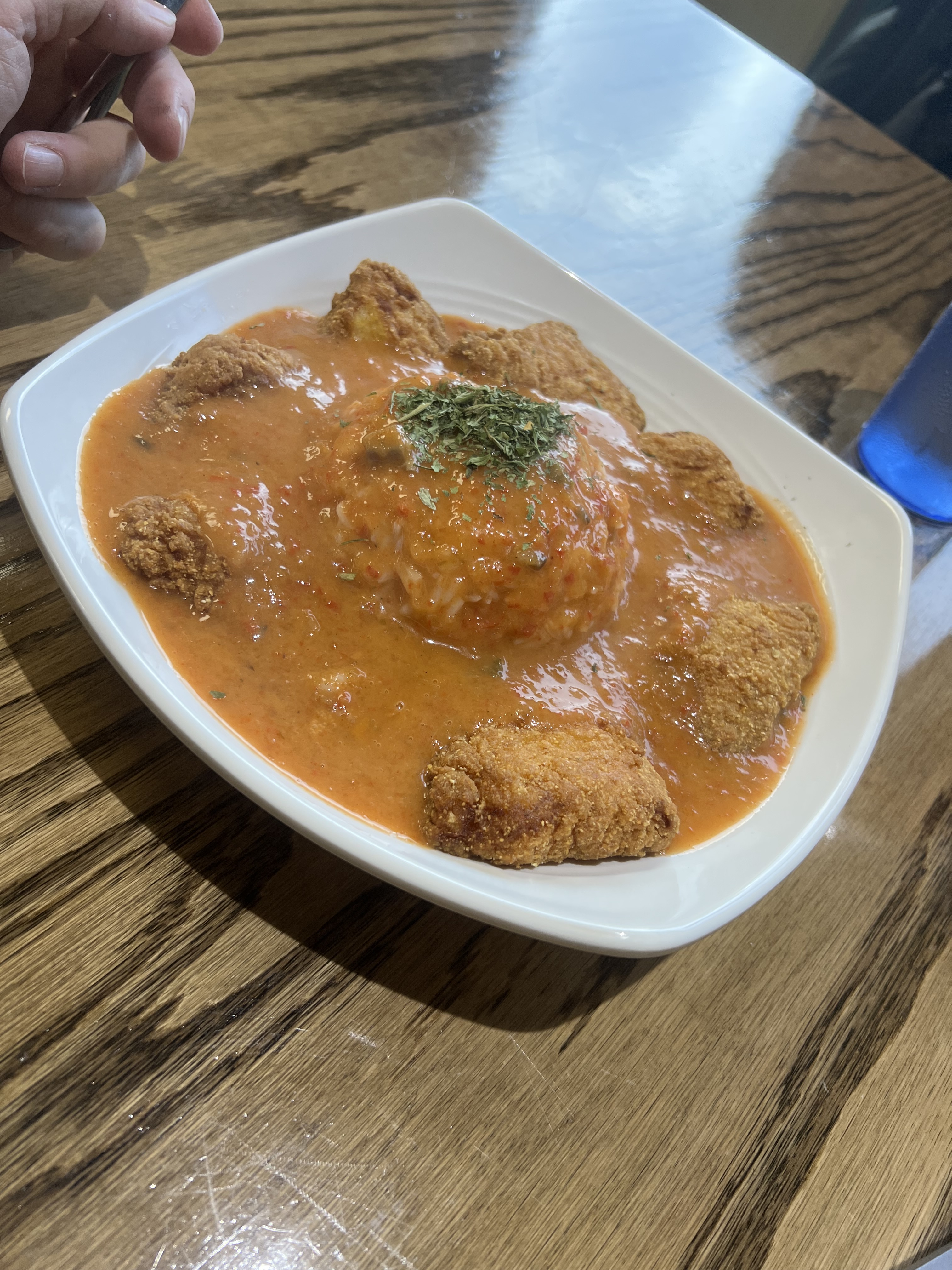
The smothered catfish is Cajun-battered fried catfish covered in a rich cream of etouffee, served over rice. It’s $11.95, which is reasonable for what you get. The catfish is crispy on the outside, tender on the inside—exactly how fried catfish should be. The etouffee sauce is creamy and flavorful, and it works with the fish in a way that makes sense.
Is it authentic Cajun? Probably not entirely. Is it authentic Vietnamese? Definitely not. But it’s good, and in the end that’s what matters. The fusion works because both cuisines have bold flavors, and they complement each other instead of fighting.
Why This Matters
Here’s the thing: Crazy Pho Cajun is exactly the kind of place that benefits from having a light rail station nearby. It’s a local restaurant that’s now accessible to people from all over the region. You can ride the train down from Seattle, grab lunch, and ride back. Transit-oriented development aims to connect people to places. It is not just about moving them from point A to point B.
The restaurant is casual, the staff is friendly, and the food is solid. It’s not fine dining, but it doesn’t need to be. It’s a good meal near a transit stop, and that’s valuable.
If you’re riding the Link 1 Line down to Federal Way, Crazy Pho Cajun is worth a stop. If you’re already in Federal Way and want to try something different, it’s a great choice. The smothered catfish is good, the fusion concept works, and it’s right there by the station. Sometimes the best discoveries are the ones you make because transit made them accessible.
For more details on their menu and offerings, check out their menu online.
On December 6, 2025 (YESTERDAY!) Sound Transit’s Link 1 Line extended south with three new stations, pushing the light rail system deeper into South King County. These aren’t just stops on a map—they’re infrastructure investments that will reshape how people move through the region, and they tell us a lot about what Sound Transit thinks South King County needs.
Let’s talk about each of these stations, because they’re all different, they all serve different purposes, and they all represent different bets on what transit-oriented development looks like in the suburbs.
Kent Des Moines Station: The College Connection
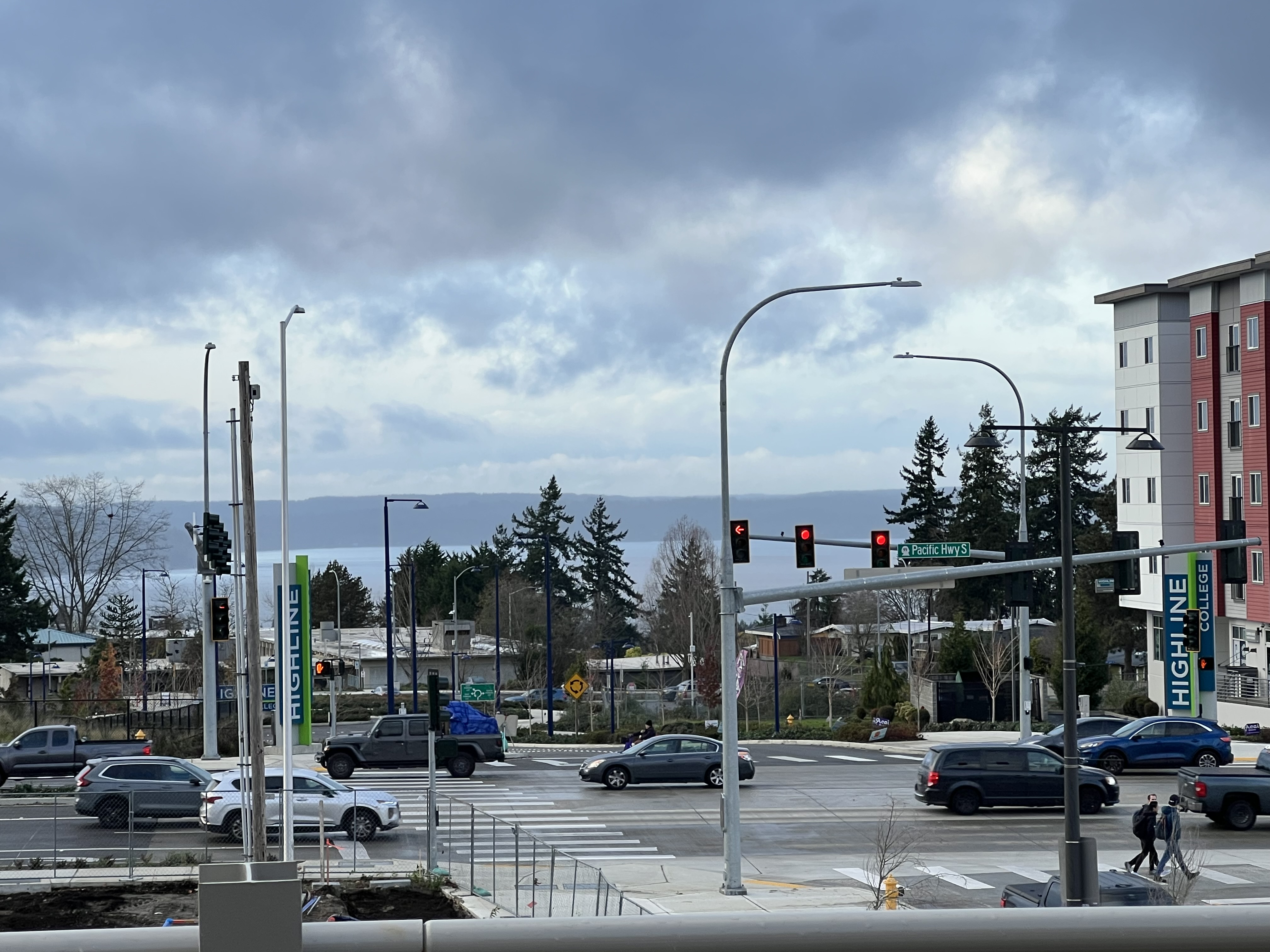
The first stop on the extension is Kent Des Moines Station, located east of I-5 at South 236th Street, right on the border between Kent and Des Moines. This is the station that serves Highline College, and that’s not accidental—colleges are transit goldmines. Students need to get to class, they don’t all have cars, and they’re willing to ride transit if it’s convenient.
The station is elevated, which means it’s above the street, and it includes a 500-space parking garage. That’s a lot of parking for a station that’s supposed to encourage transit-oriented development, but here’s the thing: South King County is car-dependent. You can’t just drop a light rail station in the middle of suburbia and expect people to walk to it. The parking garage is a necessary evil, a bridge between the car-centric present and the transit-oriented future.
What’s interesting about Kent Des Moines Station is what’s happening around it. Mercy Housing Northwest is building a 233-unit affordable housing project near the station, set to break ground this winter. This is the kind of transit-oriented development that actually matters—not just luxury condos for people who already have options, but housing for people who need transit because they can’t afford cars.
The station serves Highline College, which is good. But it’s also in an area that’s mostly residential, mostly suburban, and mostly not designed for walking. The station will work because of the college connection, but whether it becomes a true transit hub depends on whether the area around it develops into something more than parking lots and single-family homes.
Star Lake Station: The Interchange Hub
Star Lake Station, at South 272nd Street and 26th Avenue, is the big one. This is where Sound Transit is betting big on South King County’s transit future. The station acts as a key interchange for Link light rail, ST Express buses, and King County Metro services. It’s not just a light rail stop—it’s a transit hub.
The station includes a 1,100-space parking garage, replacing what was previously surface parking. That’s a lot of parking—more than double what Kent Des Moines has—and it tells you everything you need to know about how Sound Transit expects people to use this station. They’re driving to it, parking, and then taking transit. It’s a park-and-ride model, not a walkable urban center.
But here’s the thing: Star Lake Station is also a connection point. It connects to the existing freeway station, which means it’s serving people who are already using transit, just switching from buses to light rail. The station includes a new bike and pedestrian access path, which is nice, but let’s be honest—most people are driving to this station.
The 1,100 parking spaces are a statement. They’re Sound Transit saying, “We know you’re driving here, and that’s okay for now.” It’s a pragmatic approach to transit in the suburbs, where you can’t just expect people to walk to stations that are miles from their homes. But it’s also a missed opportunity. A station with 1,100 parking spaces is a station that’s designed around cars, not around people.
Star Lake Station will be busy. It’ll serve commuters heading north to Seattle and south to Tacoma. It’ll be a transfer point for people switching between buses and light rail. But it’ll also be a reminder that building transit in the suburbs means accommodating the reality of suburban life, even when that reality conflicts with transit-oriented ideals.
Federal Way Downtown Station: The Transit Center Anchor
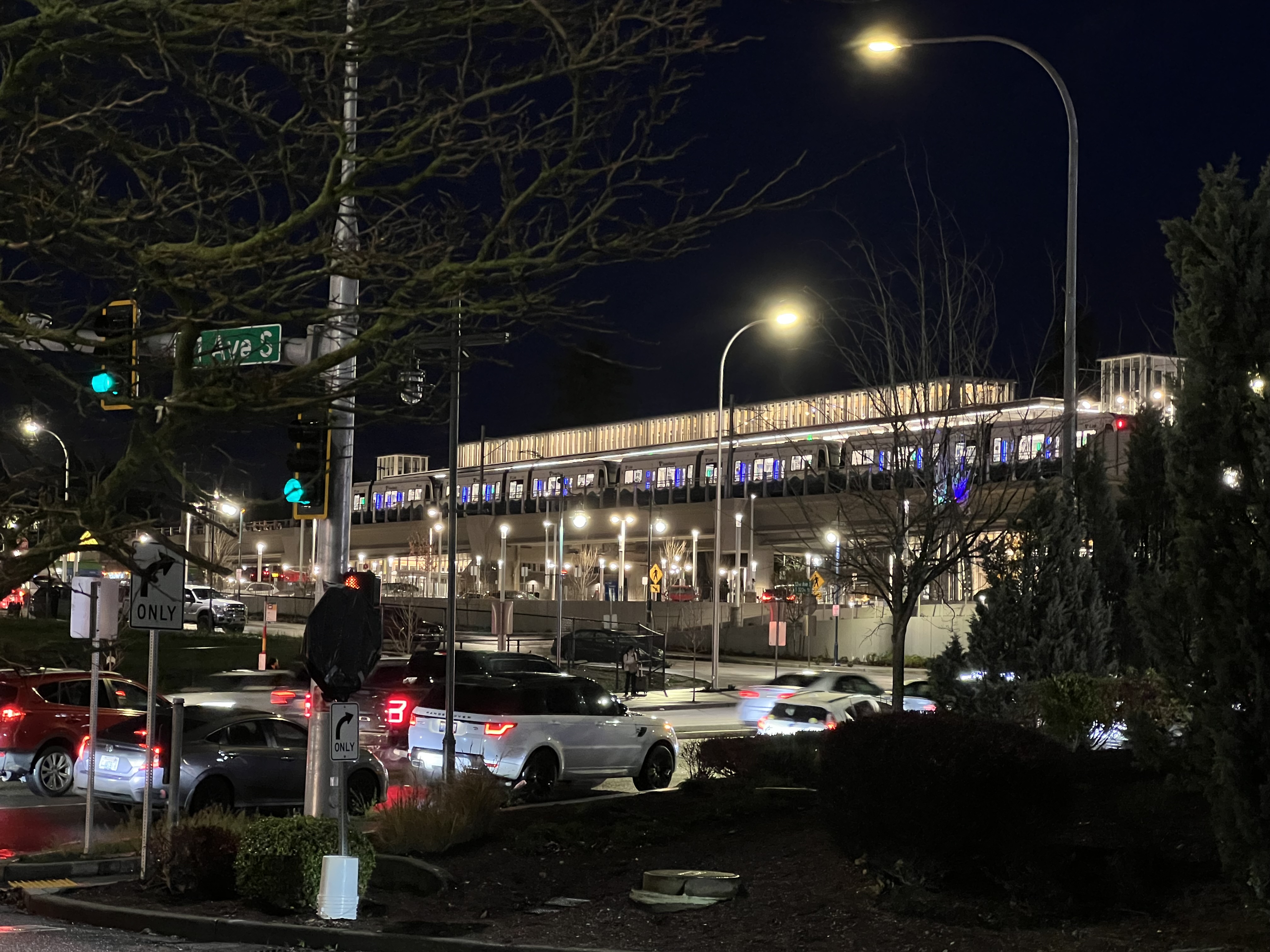
Federal Way Downtown Station is the anchor of the extension, located at the Federal Way Transit Center—one of the busiest transit centers in the region. This isn’t just a new station; it’s an upgrade to an existing transit hub, and that makes it different from the other two stops.
The station adds 400 new parking spaces to the existing garages, which means there’s already parking infrastructure here. It includes public restrooms, which is notable because not all Sound Transit stations have them. And it’s part of a rebuilt street grid with pedestrian and bicycle improvements, which suggests that Federal Way is actually trying to create a walkable downtown around the station.
This is the station that has the most potential for real transit-oriented development. It’s in a downtown area, it’s already a transit hub, and the city is investing in making the area more walkable. The station area offers opportunities for affordable housing and sustainable development, and unlike the other two stations, this one might actually see that development happen.
Federal Way Downtown Station is what happens when you put light rail in a place that’s already thinking about transit. It’s not just a station dropped in the middle of suburbia; it’s a station that’s part of a larger plan to create a more urban, more walkable downtown. Whether that plan succeeds depends on a lot of factors—zoning, development, political will—but at least the foundation is there.
The station serves one of the busiest transit centers in the region, which means it’ll have high ridership from day one. People are already using buses here, and now they’ll have the option to take light rail. It’s an upgrade, not a new service, and that makes it more likely to succeed.
Federal Way Station
What These Stations Tell Us
These three stations represent three different approaches to transit in the suburbs:
Kent Des Moines is the college connection—a station that serves a specific destination (Highline College) and hopes to attract development around it. It’s a bet on transit-oriented development, but it’s starting from a suburban baseline.
Star Lake is the park-and-ride hub—a station designed around cars, with massive parking capacity and connections to other transit services. It’s pragmatic, but it’s also a reminder that building transit in the suburbs means accommodating car culture.
Federal Way Downtown is the urban anchor—a station in an existing transit hub that’s part of a larger plan to create a walkable downtown. It has the most potential for real transit-oriented development, but it also requires the most coordination between Sound Transit and the city.
All three stations are elevated, which means they’re above the street, not at grade. This is expensive, but it also means the trains don’t have to deal with traffic, which keeps service fast and reliable. It’s the right choice for a high-capacity transit line, even if it makes the stations feel less integrated with the street level.
All three stations include parking garages, which tells you that Sound Transit knows people will drive to these stations. That’s the reality of suburban transit—you can’t just build stations and expect people to walk to them from miles away. But it’s also a compromise, a recognition that transit-oriented development takes time, and in the meantime, you need to serve the people who are already here.
The Future
These stations open in December 2025, and they’ll immediately change how people move through South King County. But whether they become true transit hubs or just park-and-rides depends on what happens around them. Transit-oriented development isn’t automatic—it requires zoning changes, developer interest, and political will.
Kent Des Moines has affordable housing planned, which is a good sign. Star Lake has massive parking, which suggests it’ll be a commuter hub. Federal Way Downtown has the most potential for real urban development, but it also requires the most coordination.
These three stations are the latest extension of the Link 1 Line spine, pushing deeper into South King County and connecting more people to the regional transit system. They’re not perfect—they’re compromises between transit ideals and suburban reality—but they’re progress. And in a region that’s slowly rebuilding the transit infrastructure it tore up decades ago, progress matters, even when it’s imperfect.
The extension stops are here. Now we’ll see what grows around them.
Further Reading
If you want more context on Sound Transit’s expansion efforts, I’ve written about the agency’s growth on Transit Sleuth:
Link Light Rail Opens in Redmond (May 10, 2025) – Observations from the opening day of service to Redmond Technology Station, including ridership stats and operational insights from the East Link extension.
These posts offer a broader perspective on Sound Transit’s ongoing expansion efforts, from the Eastside Link extension to the system-wide growth that’s reshaping how people move through the Puget Sound region. The Federal Way extension is just one piece of a much larger puzzle, and understanding the full picture helps put these three new stations in context.
I have a rather interesting commute these days. It consists of four parts for the time being.
Departure from home and arrival at the Redmond Link Station via e-bike.
Departure with Spacey (this bike) from the Redmond Link Station to South Bellevue Station.
Departure from South Bellevue Station via the Sound Transit Express 550 bus.
Then via bicycle to the little coffee shop (i.e. Starbucks HQ) in Seattle’s SODO.
Today I departed from home and traversed all of the parts of my commute until arrival at South Bellevue Station. I then realized I had forgotten my keys at home. The keys I use to lock my bike via u-lock at the coffee shop. No keys no lock, so that wouldn’t do.
So a good 1/2rds of the way into the city I made the u-turn to head back to get my u-lock keys. Back to the Redmond Link Station, I parked Spacey, and then took the e-bike back up the hill to home. I got my keys and headed back out again.
An Aside: Naming Chaos Among Key Chaos
Alright, let’s detail this topic for a moment. What the hell is wrong with Seattle and naming things. Before Redmond Technology Station became “Redmond Technology Center”, it was called Overlake Transit Center. They renamed it and the next station, which is still just touching Microsoft Campus, is called Overlake Village Station. No confusion to be had for anybody that has been in the area for more than a few years, no none at all.
Amidst that ridiculousness Marymoor Park Station is only tangentially connected to Marymoor Park. To get anywhere where people congregate in the park you’ve got to walk between 3-20 minutes to get there. Then there is the Symphony Station, once the University Station but not connected to the University District and confusing to folks about what University, if any, it connected to. Because the nearest was many blocks away. But I digress.
I could go on and on about this and the locations, because it is clear there were powers that worked diligently against the light rail to make it less than useful. However in spite of these assholes and short-sighted fools, it’s already immensely useful even with the stop locations.
Back to Key Chaos
Now that I had back tracked to get my keys, I was at least an hour behind my expected arrival at the office. In addition, a meeting was coming up that I wouldn’t make unless I only traversed part of my trip and stopped to have the meeting. I had done this before, where I would go part of the way, then stop at a coffee shop or somewhere that wifi exists to attend a meeting. Then I would continue onward.
Today I decided to stop at the Dote Coffee Shop at Redmond Technology Station. It seemed like a perfect, down to the minute, timing to get part of the way into the commute and also attend the meeting.
A Note on Dote @ Redmond Technology Station
The Dote located at the Redmond Technology Station (here) is a pretty cool location. It is however kind of a stand alone very transit station specific location. All of the other amenities that Softies (That’s what Microsoft employees are called, I kid you not) enjoy such as their walkable urban area is up the street a few blocks and not entirely evident – or that accessible without a little mischievousness or having a blue or orange badge. So this is the publicly accessible option in the area, and it’s pretty great.
However, even though it is a private business not particular part of Microsoft, this location is forced to use the Microsoft wifi. This has always been a bit of an odd logistical lift for Microsoft. The reason being is that Microsoft treats all of the businesses and amenities in the area – even when they are on public property and owned by the local city and public – as if it is their own owned amenities. It’s a weird relationship to say the least.
Amidst all that, I managed to arrive at the station in time to get into the shop in time for the meeting and a drink.
The Last Leg, Broken
Finally, my meetings wrapped up and I began the last leg to get into the office. I walked out of the store, unlocked my bike and progressed toward the Link tracks to board a south bound train. I arrived, saw a train sitting there and noticed it wasn’t moving. After a minute or so I gave up and headed over to the south bound 40th St stop to board – hopefully – the Sound Transit Express 542.
I opted for the 542 (direct to University District) instead of the 545 (the more direct shot into the city) because I could ride it for a short haul into U-District and then board the Link Light Rail through downtown to SODO. They key difference here is I could work on the Link vs. not so easy on the bumpy buses.
I locked out and as I rode my bike up over the highway pedestrian and bike bridge to the other side to board the south bound buses, I only had 4 minutes until the 542 arrived. It pulled in, I racked my bike, and off we went. Upon arriving at U-District I took the elevator down and onto the 1-Line Link Train south through the city. I was able to rack my bike and get a seat, working through the remainder of the trip.
So that was my rather chaotic commute today, one for the books of misadventures in getting the logistics wrong over forgotten keys. Until next trip, cheers!
First a bit about double tall busses. Then a bit about my trip out to Lynnwood to finally, after years of wanting to ride a double tall, doing so!
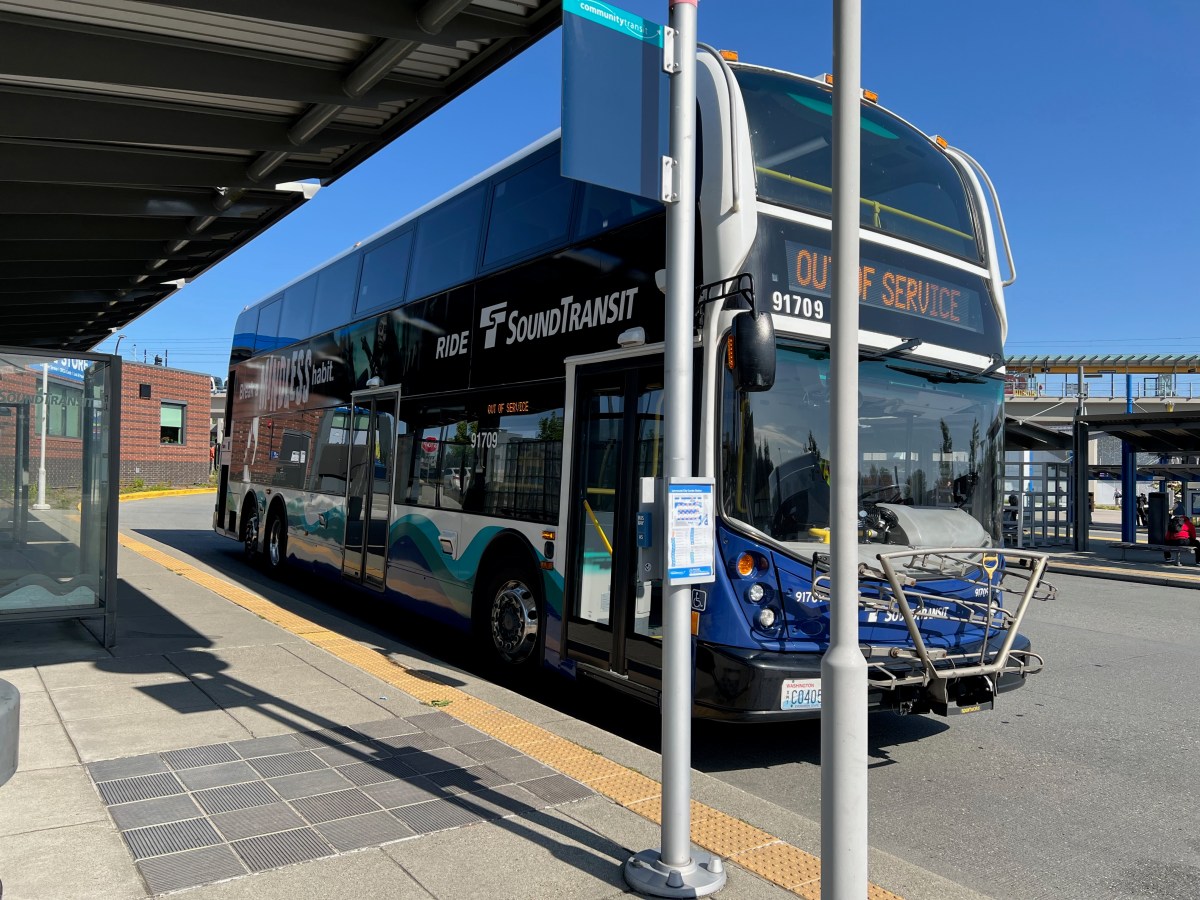
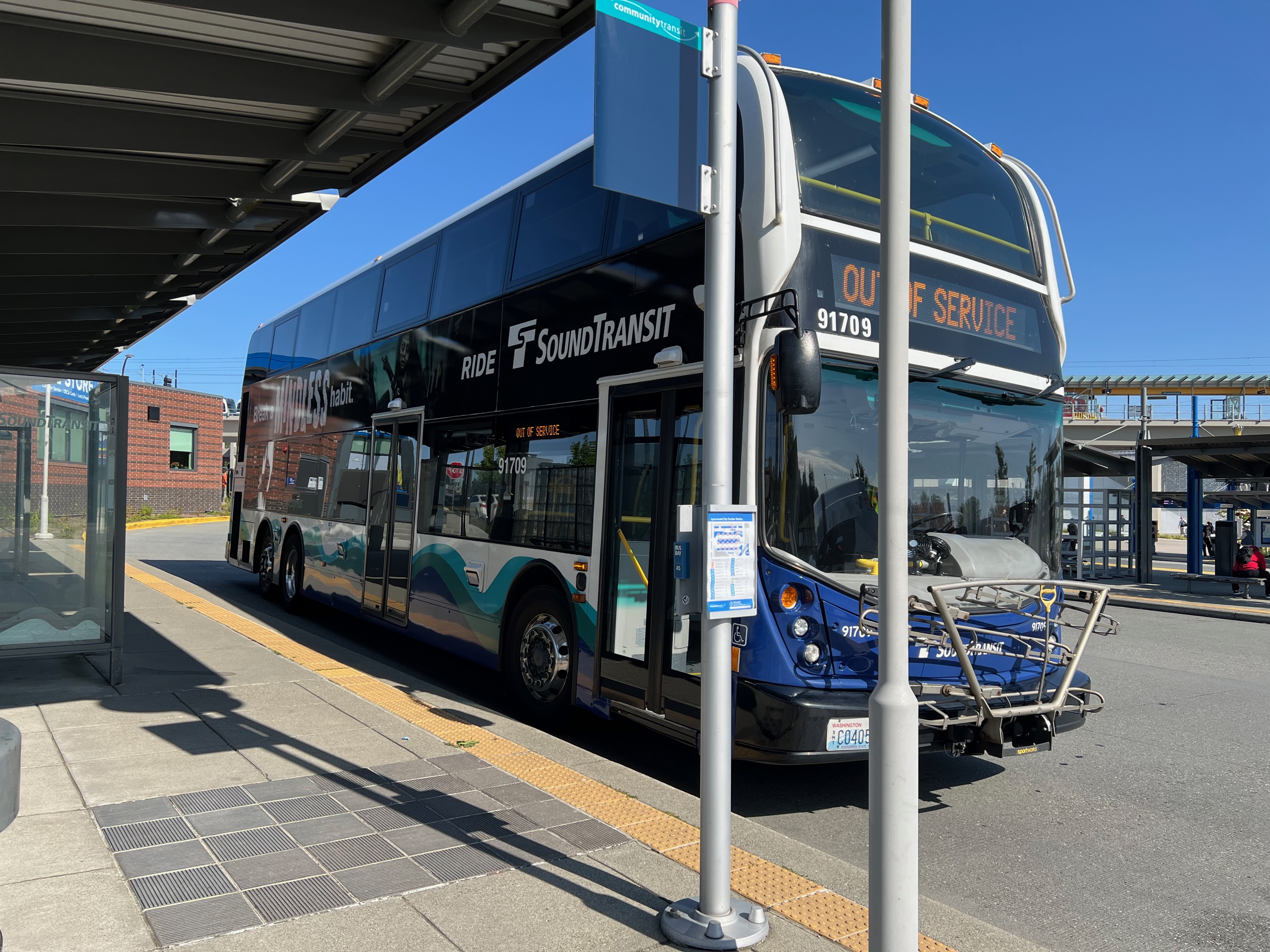
Double tall buses, also known as double-decker buses, have become an iconic part of Seattle’s public transportation landscape. These impressive vehicles offer increased passenger capacity while maintaining a smaller footprint on the road, making them an efficient solution for high-capacity routes.
The Alexander Dennis Connection
The majority of double-decker buses in the Seattle area are manufactured by Alexander Dennis Limited (ADL), a British bus manufacturer with a strong presence in North America. The company’s Enviro500 model has become the standard for double-decker operations in the region.
Sound Transit’s Fleet
Sound Transit operates a fleet of Alexander Dennis Enviro500 buses, specifically the MMC (Multi-Modal Coach) variant. These buses feature:
Length: 45 feet
Height: 14 feet
Capacity: 81 passengers (57 seated, 24 standing)
Engine: Cummins ISL9
Transmission: Allison B500R
Air conditioning and heating systems
Low-floor design for improved accessibility
USB charging ports and WiFi
The Enviro500 MMC is known for its modern design, fuel efficiency, and passenger comfort. Sound Transit primarily uses these buses on their ST Express routes, particularly on high-demand corridors like the 510/511/512 routes between Seattle and Everett.
Other Operators
While Sound Transit is the primary operator of double-decker buses in the region, other transit agencies have also incorporated them into their fleets:
Community Transit: Operates Enviro500 buses on their Swift Bus Rapid Transit lines
King County Metro: Has tested double-decker buses on certain routes
Technical Specifications
The Alexander Dennis Enviro500 MMC features several advanced technologies:
LED lighting throughout
Electronic destination signs
GPS tracking and real-time passenger information
Advanced driver assistance systems
Euro 6 compliant engines
Composite body construction for reduced weight
Impact on Seattle Transit
The introduction of double-decker buses has significantly improved capacity on key routes, particularly during peak hours. Their ability to carry more passengers while taking up the same road space as a standard bus has made them an efficient solution for Seattle’s growing transit needs.
Taking a Ride to Lynnwood
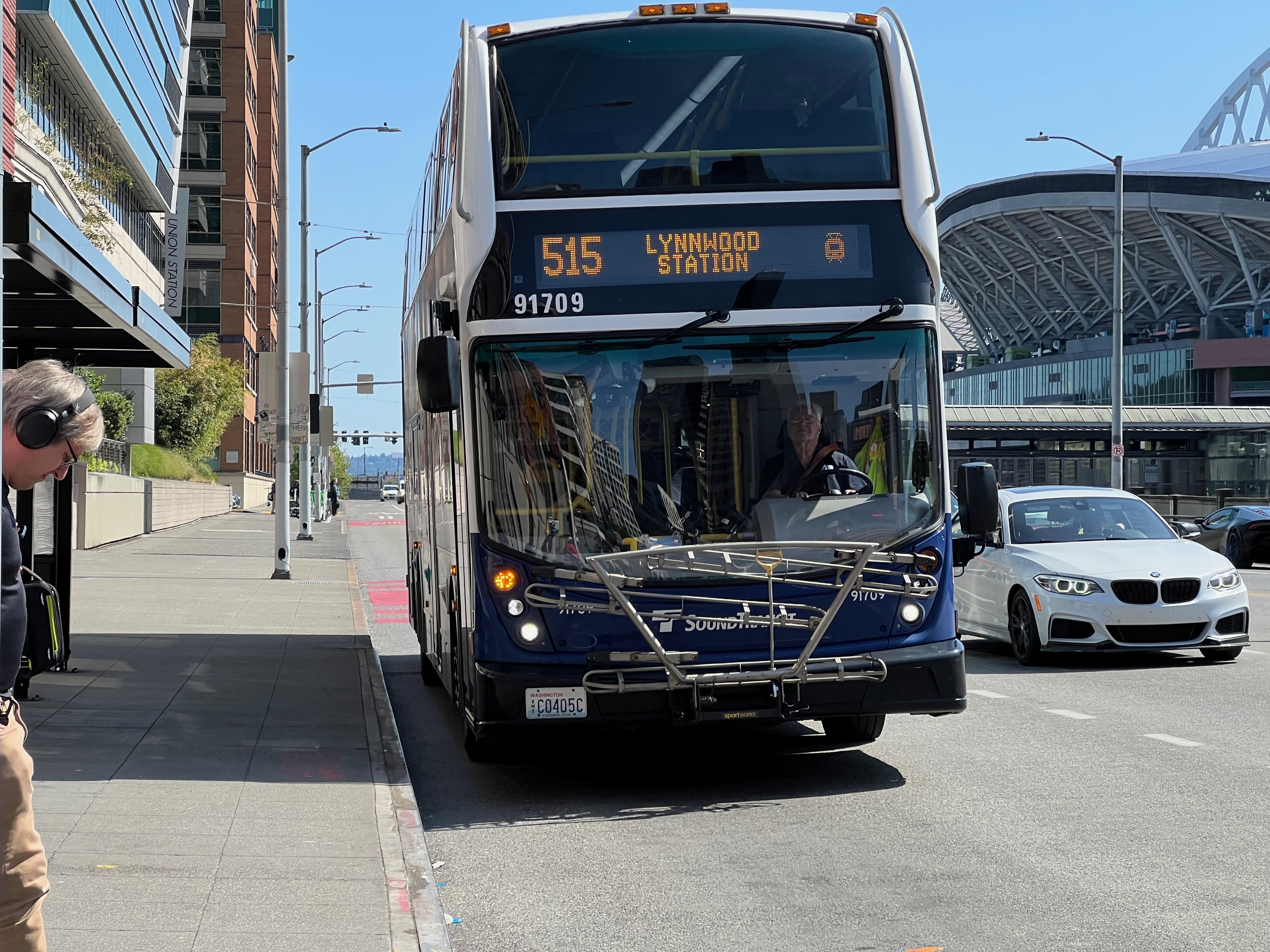
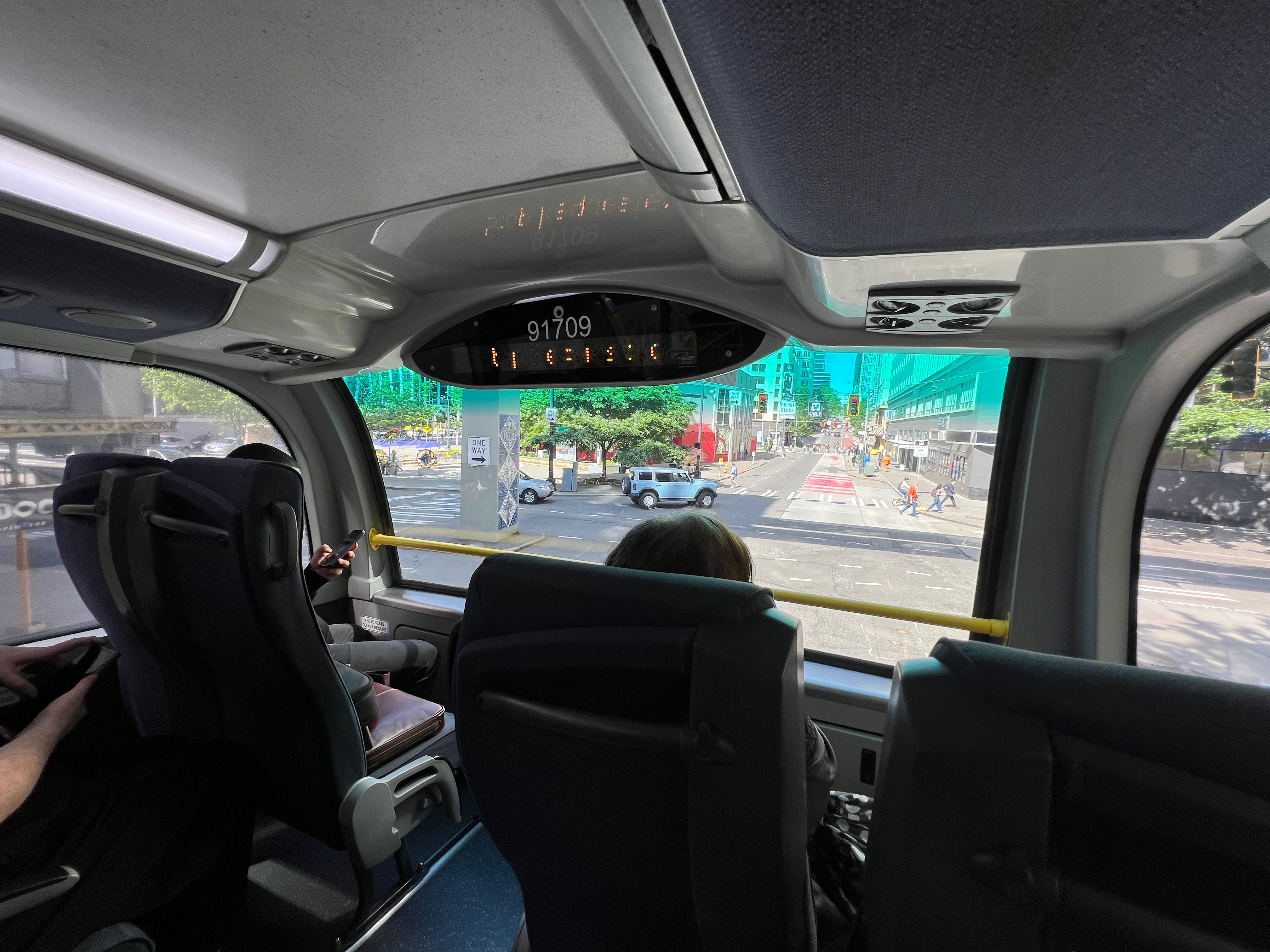
Today I took a ride, for the very first time, on one of Sound Transit’s double decker buses. I opted, since it would include some light rail usage, to take the 515 Express from downtown Seattle to Lynnwood. This is the story, of all the things I noticed along the way.
I believe it was the 4:15pm bus that I boarded between King Street Station and Union Station. I’d racked my bike, then stepped onto the bus, swiped my Orca card, took a video (see below) and climbed the steps upstairs.
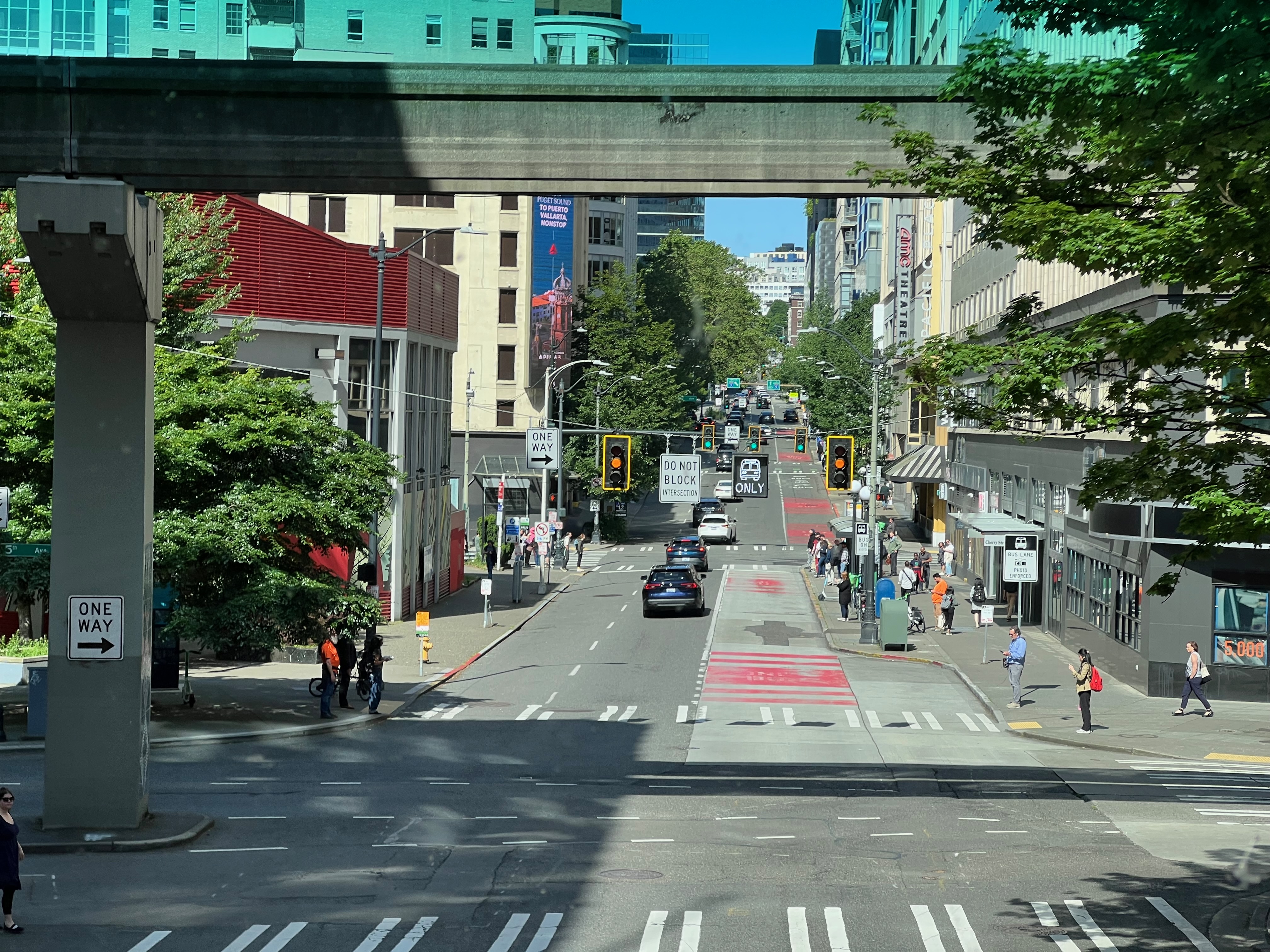
The bus then carefully, and very smoothly, traveled forth through the streets of Seattle. Slowly coming to and striking branches of trees because of the height. We stopped at about a dozen stops, from the originating stop I boarded at through to the egress point from downtown. When we left, we did it in relative style because we exited via the express lanes.
To note – when I showed the “empty” bus just after the first stop downtown, it was almost entirely full by the time we left downtown. Don’t get in your head that this is an empty route, it’s a very well used rush hour service. A kind of extra interlined service, in addition to the light rail and other Sound Transit Express lines that go out this way.
However, if you watch the video all the way through, you’ll notice the enjoyment of zooming along in the express lanes comes to an end before we even got past the Greenlake and Ravenna areas! Motorized “road” transportation without right of way is, and always will be a joke when it comes to speed and throughput.
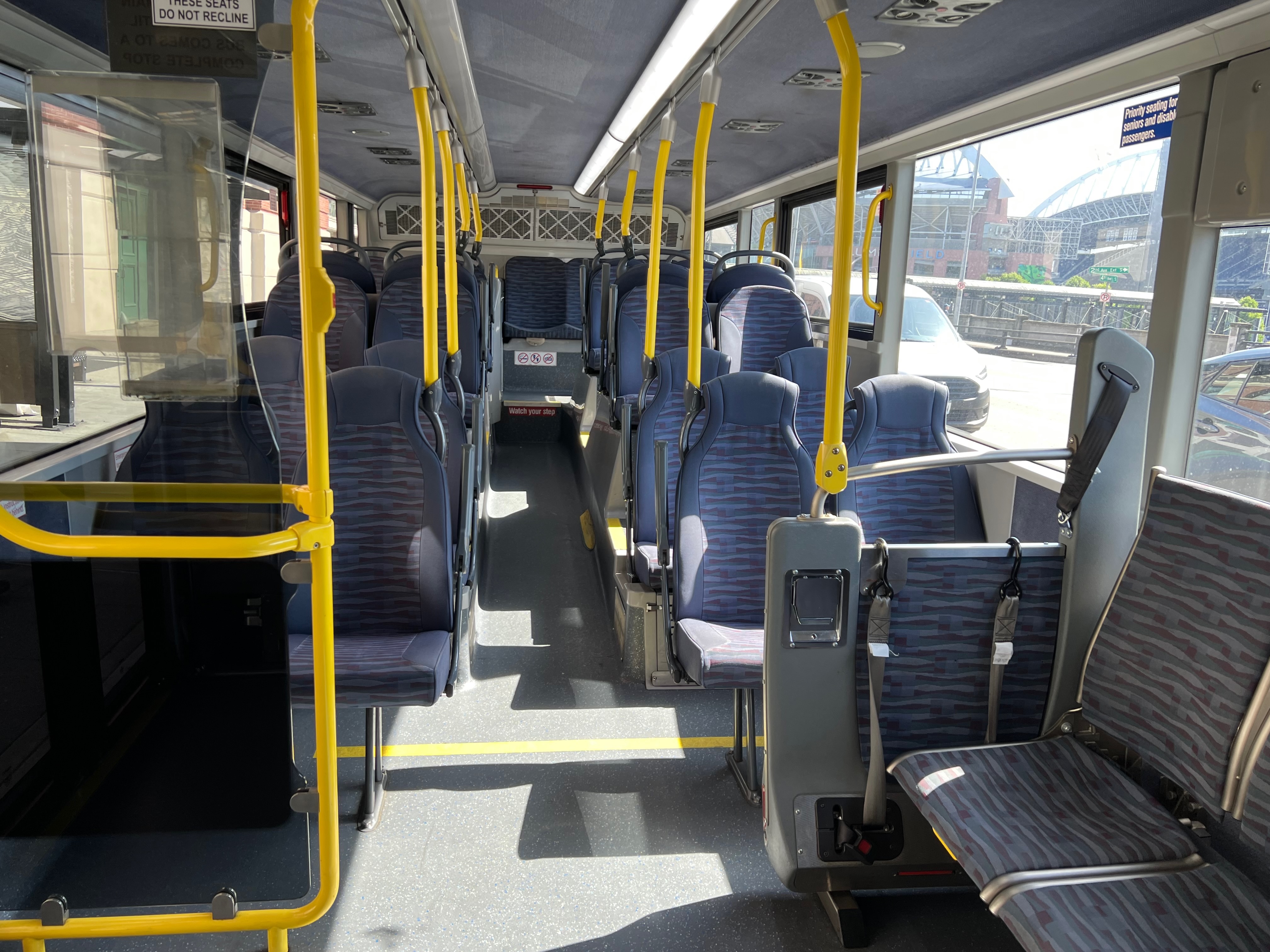
But, that didn’t really matter much because being on a double decker, in a cool air conditioned environment with big ole’ windows to see as far as thee eye could see was a joy! We carried on, as you do, at a reasonable 20-35mph. The traffic slugged into a accodian like zig zag of slow drivers stuck behind entire cavalcades of other slow drivers under the guise of the inefficiencies and stupidities of mass transportation movement via single occupancy vehicles.
In other words, we were limited by the stupidity of cars as primary modal option at rush hour.
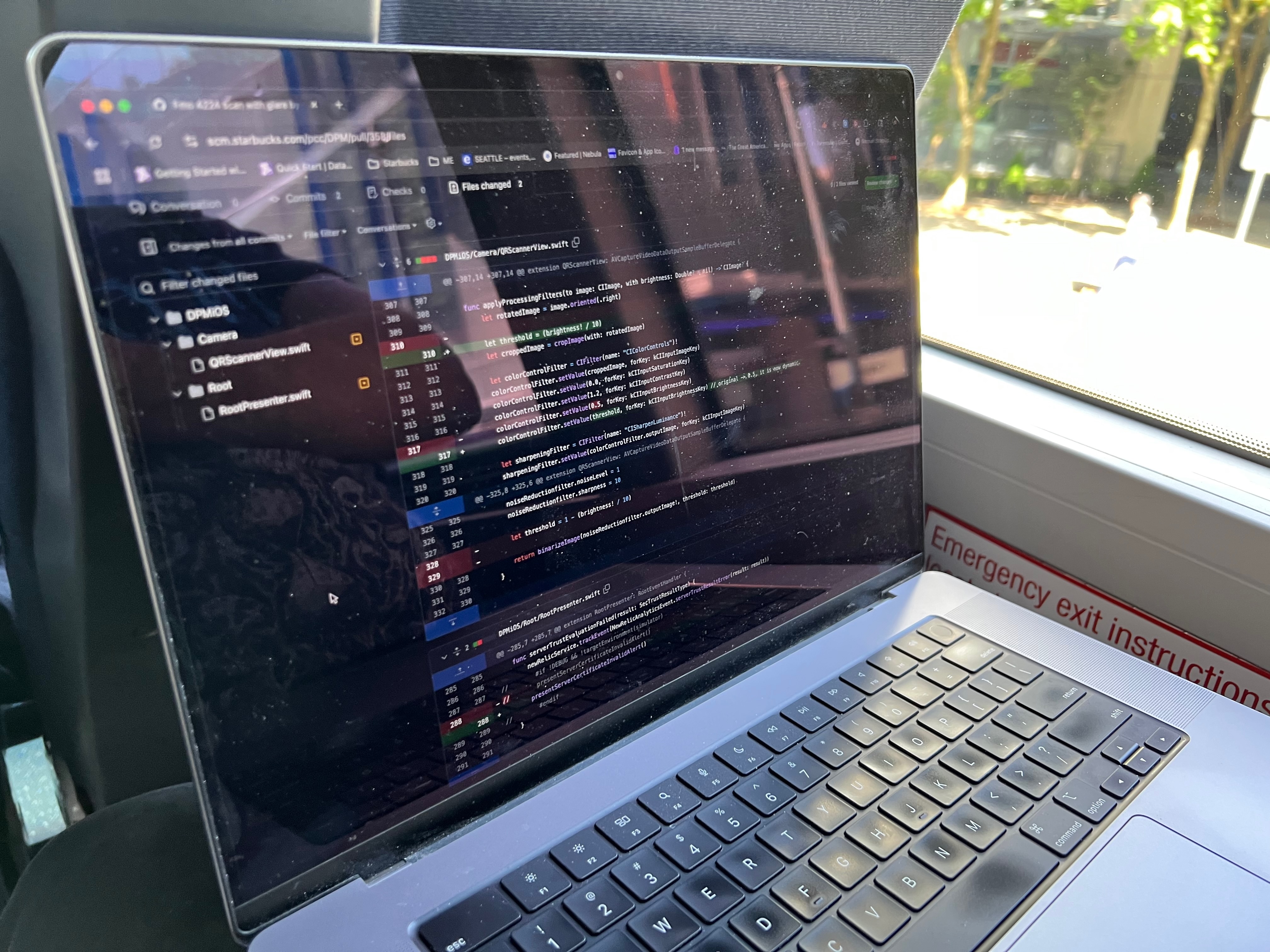
But it was entertaining and pleasant. I wrote up this blog entry and got some work done as I explored this new transportation choice for traveling north to Lynnwood.
At this point I also had zero idea what I would do once I got to Lynnwood, but I didn’t really care, I’d likely the board the Link Light Rail line back south and then take the 542 at University District back home.
The Bus Itself
The bus itself, being a double decker, is very smooth similar to one of those intercity buses. The air conditioner worked great, so it was a cool ride in spite of it being a bit warm outside.
Additional Observations
As we rolled forward and stopped, then moved forward again, and stopped, and then lurched and stopped, we made our way ever so slowly to Lynnwood. I couldn’t help but wonder, was this even faster than light rail with all this traffic? I had no idea, as I’d never even looked at the schedule vs. what time this was taking now.
At one point we just stopped for a solid 20+ seconds and sat. Traffic unmoving and a light rail train zipped by beside us, one going north full of people and one going south with a dramatically smaller number of people.
It really did seem like the light rail would have been the faster choice at this point. However this is likely the smoother option, considering how the double deckers ride! They really are not like other buses.
Drama!
In normal society fashion, at some point some guy got a phone call and began talking loudly – very “American” of him – about a financial situation that a child or someone in family was having difficulty with. He wanted to see funds and bank accounts and started “telling them” a number of things.
Why are people like this, what is the deal with the lack of situational awareness? So many parents bring up kids to become these adults that just utterly drives me nuts as a parent. I’ll take rowdy kids any day over an oblivious adult yapping drama out of the pie hole openly and loudly!
But even with that slight little interruption along the route, the ride was great. One more great way to commute in the Seattle area, so great I’d even put this up close right after “Ferries”, “Commuter Trains”, competitive with “Light Rail”, but definitely better than intercity buses!
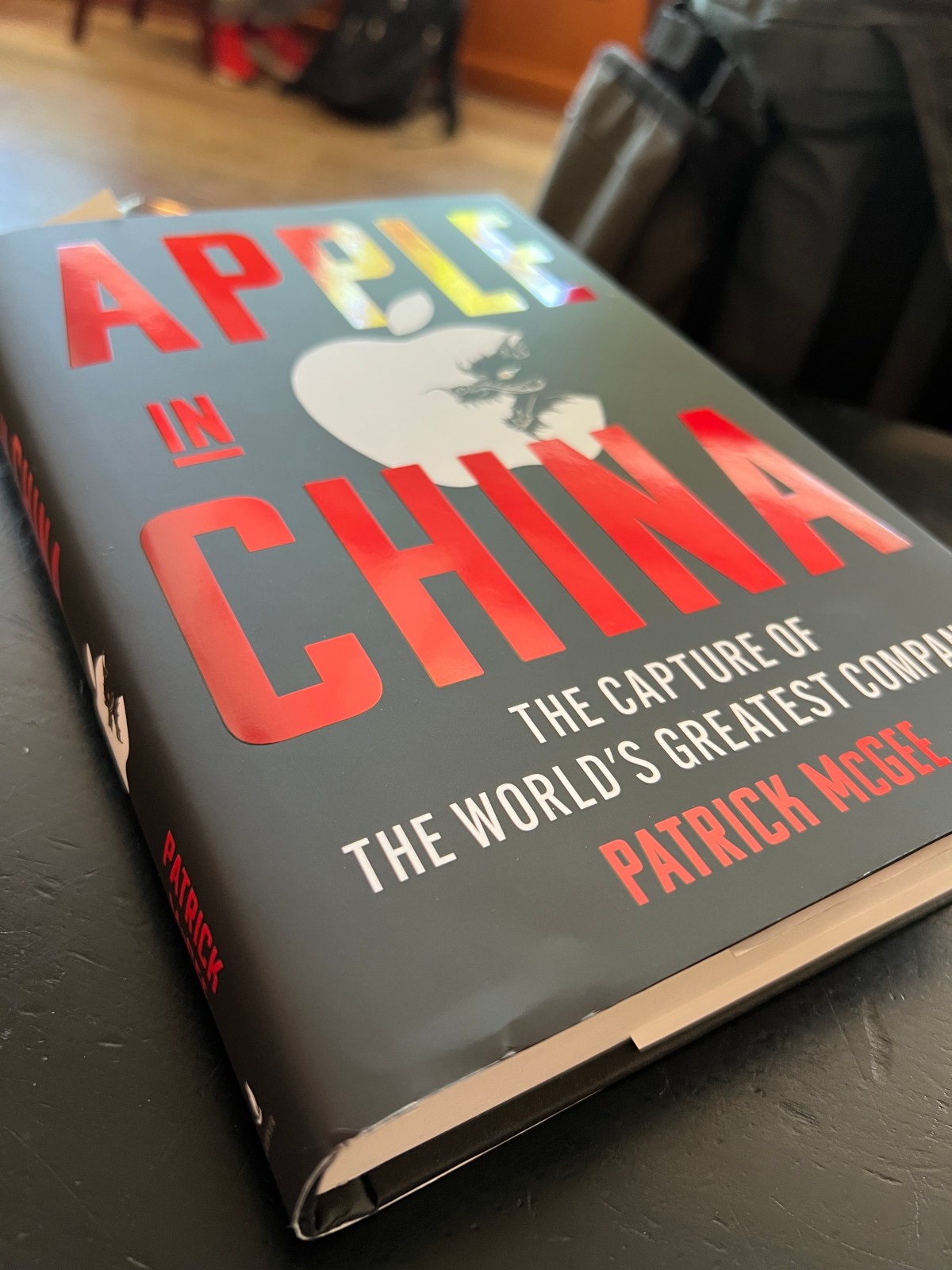
I ride up to Capital Hill and check out Elliot Bay Books. I find the book I’m looking for, “Apple in China: The Capture of The World’s Greatest Company” and have a sit down at book store coffee shop, Oddfellows, for a read and drink. Upon purchasing a delightful Arnold Palmer I take a seat and dive right into one of the chapters. It’s the section on Navy Seals, not the real Navy Seals mind you, but a group of security folks that ended up dubbed the Navy Seals. But I digress, after reading a while I purchased the book, tossed it in my backpack and back upon my steed I rode. After the drop back into downtown Seattle I went over to Union and boarded the next Sound Transit 550 Express.
That’s where the stupid started. Upon arriving at the South Bellevue Station to transfer to the Link Light Rail, I realized the train was off. As in, there was no applied power. I had just took the elevator up to the platform, but the train power seemed to be off. I stook patiently by the train waiting, and listening to the driver’s radio chatter. It sounded like the power had just been restored. Great, I thought!
So I boarded. The AC kicked on, but the train had been there long enough without power in this 80+ degree day that it was hot inside. As the train sat there the driver exited his driver’s cabin (cockpit?) and tried over and over again to fix the front right door. It seemed to be stuck in a state of being closed but in alarm. The normally blue lights of the door shown red, and he worked on it and worked on it. Opening the bay overhead and fiddling and fiddling.
Finally, off we went with the door, theoretically, fixed. Arriving at the very next station however things went sideways again. The door opened, but then upon closing went into an alarm state again. After attempting to shut the doors several times, the driver again existed the driver’s cabin and started fiddling with the door again. The interesting thing, was the lights went green this time instead of red when the door was in alarm. The other oddball thing was, the train wouldn’t depart.
Yay Seattle issues! We’ve gold plated things at ludicrous prices yet still get these ridiculous toothing problems. I’ll give em’ this, at least on the east side the line is relatively new, so these kinds of things happen. But hot damn it’s rather ridiculous.
After a few more attempts and another half dozen Sound Transit employees and Sound Transit security showing up they fiddled and fiddle with it and eventually it shut, the lights went blue, and off we went.
Finally, after almost 8 minutes, we arrived in Bellevue. For the record, it usually takes about 2-3 minutes to get from South Bellevue to downtown Bellevue.
But whatever, it’s a nice day and things were going well otherwise. I got to read a book, enjoyed a nice drink, and rode my bike around the city. A solid day plus a significant number of code contributions for the day too.
As for the book mentioned above that I purchased, it’s a must read if you want to get a solid grasp of the magnitude of how much the west basically sold off to develop China (and hats off to China for benefiting off that) with the misleading idea that China would become more focused on freedom, liberty, individual rights, and opening up to the world. Even though the book is about Apple, the correlations to what Apple has done tightly correlates to what transit and transportation organizations and companies have done for and in China. But I digress, more on all that later!
 Transit Sleuth